


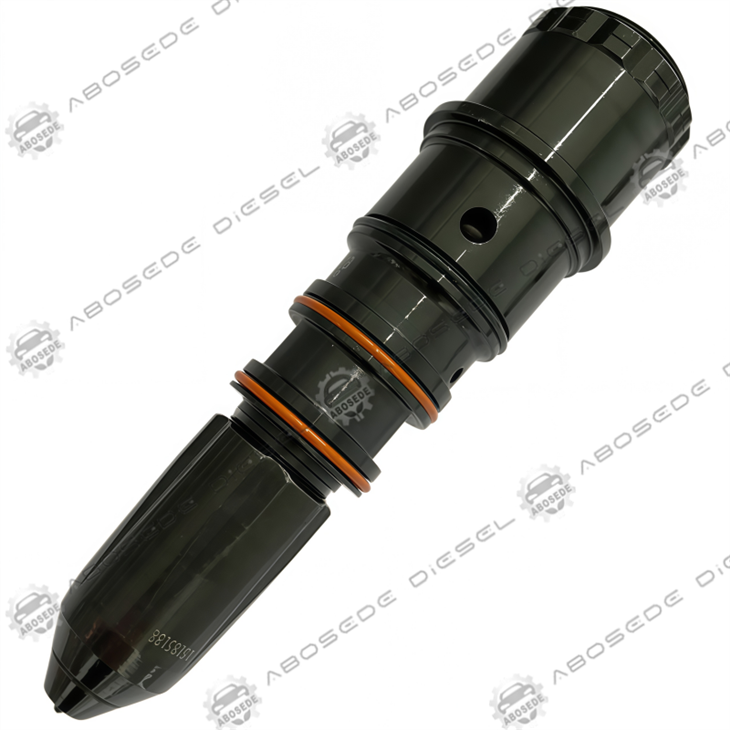
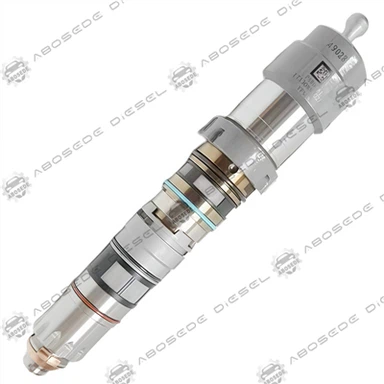
The Physics Of Balance: 4914308 PTN855 Injector & Common Rail Equilibrium
1. Product:4914308
2. Compatible Equipment: Diesel Fuel Injection Systems
3. Manufacturer: Aftermarket OEM Replacement
4. Condition: Brand New, Fully Tested
5. Origin: ABOSEDE Diesel
6. Shipping period: 3-5 business days
7. Payment terms: T/T, Western Union, PayPal
- Fast Delievery
- Quality Assurance
- 24/7 Customer Service
Product Introduction
In the complex ecosystem of a high-pressure common rail system, stability is paramount. The rail acts as an accumulator, dampening pressure pulses, but it relies on the precise behavior of its injectors to maintain equilibrium. The 4914308 PTN855 Injector is engineered not just to spray fuel, but to act as a stable hydraulic load within the system. This product analysis explores the critical role of the 4914308 in maintaining "rail stiffness"-the ability of the fuel manifold to resist pressure drops during rapid injection events. By minimizing internal leakage and optimizing control chamber dynamics, this injector ensures that the pressure available for the next injection event remains constant, preventing the "sawtooth" pressure fluctuations that lead to inconsistent combustion and noise.
🔍 Technical Overview & Application Scope
The PTN855 platform is a staple in heavy-duty diesel engineering, known for its robust solenoid design. The 4914308 variant represents a specific calibration within this family, tailored for engines that require a distinct balance between low-speed torque and high-speed linearity.
Primary Fitments: Heavy-duty on-highway trucks (Class 7-8), vocational vehicles (refuse, concrete mixers), and industrial power units.
System Integration: Designed for 24V common rail architectures where the ECU demands strict adherence to flow maps across a wide pressure range (300 to 1600+ bar).
Operational Goal: To provide consistent volumetric delivery despite the extreme cyclic fatigue inherent in modern emission-compliant duty cycles.
⚙️ Structural Integrity & Performance Data
To maintain hydraulic equilibrium, the internal tolerances of the 4914308 are microscopic. The interface between the armature, the control valve, and the nozzle needle is machined to sub-micron precision.
| Specification Parameter | Performance Metric |
|---|---|
| Part Number | 4914308 (PTN855 Series) |
| Control Type | Solenoid Valve (Magnetic Actuator) |
| Nominal Voltage | 24V DC |
| Max Operating Pressure | 1600 - 1800 Bar (System Dependent) |
| Leakage Class | Standard / Low Leak (Optimized for Rail Stability) |
Engineering Note: The "PTN" designation typically refers to the specific nozzle retention method and body geometry. In the 4914308, this structure is reinforced to handle the mechanical stress of high-frequency pressure pulsing without deformation.
💡 Selection Logic: The "Flow Match" Imperative
When replacing or specifying the 4914308, the selection logic must prioritize "flow matching" over simple physical compatibility.
Rail Pressure Sensitivity: Some injectors are "stiff" (require high pressure to open), while others are "soft." The 4914308 is calibrated to a specific opening pressure threshold. Using an incorrect substitute can cause the rail pressure to oscillate, confusing the ECU's PID control loop.
Return Flow Dynamics: A key selection criterion is the injector's return rate. The 4914308 is designed to manage heat through a specific volume of return fuel. If a replacement flows too little, the injector overheats; too much, and the high-pressure pump cannot maintain rail pressure at high RPMs.
Solenoid Inductance: The electrical "lag" time of the coil must match the engine's firing order requirements. The 4914308 features optimized winding inductance to ensure the magnetic field collapses rapidly, allowing for precise shut-off-critical for preventing "dripping" or after-injection.
🛠️ Maintenance & Diagnostic Protocols
Diagnosing issues with the 4914308 PTN855 requires looking beyond the engine codes to the physical behavior of the fuel system.
The "Cut-Out" Test: A classic diagnostic for common rail systems. By electronically cutting off one cylinder at a time, a technician can determine if the 4914308 is contributing its fair share of torque. A lack of RPM drop indicates a weak or non-firing injector.
Seal Integrity: The transition from the injector body to the cylinder head is a high-pressure seal. Carbon buildup here is common. When servicing the 4914308, the seat must be cleaned with a specialized reamer tool-never with abrasive pads-to ensure the copper washer seals perfectly against combustion gases.
Fuel Quality Monitoring: Because the control valve moves thousands of times per minute, even microscopic debris (4-5 microns) can cause the valve to stick open, leading to a "hard start" condition where the rail cannot build pressure.
❓ Frequently Asked Questions (FAQ)
Why does the rail pressure fluctuate when using the 4914308?
Fluctuation usually indicates a mismatch in flow capacity or excessive leak-off. If the 4914308 has worn internal clearances, the return flow increases, draining the rail faster than the pump can fill it, causing the ECU to constantly adjust the pressure regulator valve.
Can I use the 4914308 in a piezo-driven system?
No. The 4914308 is a solenoid-based injector. Piezo systems operate on crystal expansion principles and have completely different electrical interfaces and response characteristics. They are not interchangeable.
What is the function of the "PTN" nozzle assembly?
The PTN assembly defines the physical envelope and the hydraulic path. It ensures that the high-pressure fuel is directed efficiently to the nozzle needle, minimizing the "dead volume" that causes delayed injection timing.
How does this injector handle "Post-Injection" for DPF regeneration?
The 4914308 is capable of multi-pulse strategies. However, post-injection generates significant heat. The solenoid coil in this model is potted to withstand these thermal spikes without shorting out, ensuring reliable regeneration cycles.
Is coding required for the 4914308?
Yes. Like most modern common rail injectors, the 4914308 comes with a unique calibration code (QR code/Data Matrix). This must be entered into the ECU so it can compensate for the specific flow variances of that individual injector.
What causes "ticking" noises from this injector?
A rhythmic ticking is often the sound of the solenoid actuating. However, erratic or loud ticking can indicate that the nozzle needle is bouncing or sticking due to carbon deposits or a weakened return spring.
Basic Information about the Company


Flexible Payment Methods for Your Convenience
To make your purchasing experience smooth and easy, we offer a variety of secure payment options:

Bank Transfer
Pay directly in 15 supported currencies.

Western Union
Quick and global money transfers.

PayPal
Safe and convenient online payment.

Alibaba
Enjoy extra protection with trusted Alibaba transactions.
We're here to make your order process worry-free - choose the payment method that works best for you!
Shipping Made Simple

Customer reviews

Hot Tags: the physics of balance: 4914308 ptn855 injector & common rail equilibrium, China the physics of balance: 4914308 ptn855 injector & common rail equilibrium manufacturers, suppliers, factory
You Might Also Like
-
Dynamic Response & Thermal Management: 3054213 PTN85...
-
Precision Fuel Delivery: 3047985 PTN855 Injector Ass...
-
F 00B J10 006 Fuel Injector For Cummins QSK19/38/50/...
-

4326783 QSK60 Modular Common Rail Injector | Extreme...
-
Maximizing Uptime in Extreme Environments: The Engin...
-

Elite Performance: Cummins M11 Diesel Injector 49033...
