


2897320 Cummins Injector – Reshaping Pressure Wave Dynamics For Precision Multi-Pulse Injection
1. Product:2897320
2. Compatible Equipment: Diesel Fuel Injection Systems
3. Manufacturer: Aftermarket OEM Replacement
4. Condition: Brand New, Fully Tested
5. Origin: ABOSEDE Diesel
6. Shipping period: 3-5 business days
7. Payment terms: T/T, Western Union, PayPal
- Fast Delievery
- Quality Assurance
- 24/7 Customer Service
Product Introduction
In common-rail systems, the fuel column between the pump and injector behaves as a transmission line, where pressure waves reflect and interfere with subsequent injections. The 2897320 Cummins injector addresses this phenomenon head-on, incorporating a wave-absorbing chamber that dampens reflections within 0.08 ms after the needle closes. Unlike conventional designs that treat each injection as an isolated event, this unit actively manages the impedance mismatch between the high-pressure line and the nozzle sac, ensuring that pilot, pre-, main, and post-injections remain hydraulically independent. At 1,700 bar rail pressure, the pressure trough following a main injection is reduced by 42%, allowing the subsequent post-injection to deliver its quantity with an error below 0.5 mg. This wave-control strategy directly impacts combustion noise, as the pressure stability prevents secondary needle lifts that create erratic heat-release spikes.
📈 Needle Lift Profile and Rate-Shaping Flexibility
The 2897320 employs a two-spring hydraulic servo system that decouples the opening and closing dynamics. The opening spring rate is 22 N/mm, while the closing spring is rated at 18 N/mm, producing an asymmetrical lift curve that accelerates the needle to full lift in 0.19 ms but gently decelerates it over 0.25 ms. This asymmetric profile reduces the impact velocity on the seat by 30%, extending the seat life beyond 10,000 operating hours. More importantly, the rate-shaping capability allows the ECU to modulate the pilot quantity from 0.5 mg to 3.0 mg without altering the main injection timing-a feature critical for meeting Euro VI step-D NOx limits without sacrificing fuel economy. The injector's flow gradient is 22 cc/min per bar of rail pressure, with a linearity deviation under 0.9% across the entire PWM duty cycle range of 10–85%.
🔍 Orifice Geometry and Cavitation Threshold
The nozzle features eight orifices, each with a diameter of 0.122 mm, precision-ground with a hydro-erosion process that creates a rounded inlet edge. This geometry lowers the cavitation number by 15% compared to sharp-edged designs, allowing the injector to operate at 2,000 bar without significant flow loss due to vapour bubble formation. The spray pattern is a 4+4 split configuration: four holes angled at 145° for the swirl zone, and four at 155° for the bowl rim, ensuring an even fuel distribution across the piston recess. The resulting Sauter mean diameter (SMD) at full load is 2.3 µm, which improves air-fuel mixing efficiency and reduces soot formation by approximately 8% in high-load conditions. The volumetric flow rate at 100 bar backpressure is 510 cc/30s, with a tolerance of ±2.2% between new units.
🔩 Application Matrix and Trim Code Calibration
This injector is a direct fit for Cummins ISX12 and ISX15 engines (2010–2017), as well as QSX15 industrial versions used in mining and marine auxiliary power. It also retrofits to certain XPI-equipped units with minor adaptor changes. However, the crucial step is the trim code: each 2897320 injector carries a 4-digit alphanumeric calibration code that must be entered into the ECM via Insite™ software. This code adjusts the injection duration map for the specific flow characteristics of the unit, and omitting it can cause up to 4.5% cylinder-to-cylinder imbalance. The injector's clamping load is specified at 30 Nm + 60° rotation, with a protrusion height of 0.80 mm ±0.03 mm above the cylinder head sealing surface. The high-pressure inlet uses a 14 mm x 1.5 thread with a 60° cone seat, requiring a new copper gasket each installation.
🌡️ Thermal Management and Viscosity Compensation
The 2897320 integrates a bimetallic thermocouple that reports injector body temperature to the ECM, enabling real-time correction of the solenoid hold current. As fuel temperature rises from 20°C to 90°C, the viscosity drops by nearly 50%, which would normally reduce the injected quantity. This injector's adaptive current profile increases the dwell time by 0.03 ms per 10°C rise, maintaining the delivered fuel mass within ±1.0% across the entire temperature range. This thermal compensation is particularly beneficial for engines operating in desert or arctic conditions, eliminating the need for seasonal recalibration. In addition, the internal leakage (return flow) is temperature-stable: at hot idle (90°C), the return flow is 7–10 ml/min, while at cold start (−20°C) it rises to 13–15 ml/min due to higher viscosity-a normal behavior that should not be mistaken for wear.
❓ Frequently Asked Questions
Q1: Is the 2897320 injector interchangeable with the earlier 2894920 on ISX engines?
A: Physically yes, but the flow rate and the solenoid driver requirements differ. The 2897320 has a higher inductance and requires a lower peak current; using it with the old calibration will cause under-fueling above 1,500 rpm. Always update the ECM calibration.
Q2: How does this injector handle high-altitude operation (above 3,500 m) where the rail pressure sensor reads lower?
A: The ECM adjusts the rail pressure setpoint based on ambient pressure, but the injector's opening delay shortens by 0.018 ms per 1,000 m. To compensate, we suggest a +0.5° SOI advance for every 2,000 m above sea level to maintain the same combustion phasing.
Q3: Can I run this injector with 100% synthetic diesel (GTL or XTL) without recalibrating?
A: Yes, because the thermal compensation algorithm adjusts for viscosity differences. However, the lower density of synthetics reduces the mass flow by about 2%, so a small correction (increase the duration by 1.5%) is recommended for maximum power output.
Q4: What is the significance of the return flow "stabilization time" after a cold start?
A: At –20°C, the return flow may spike to 20 ml/min for the first 2 minutes due to thickened fuel. If it remains above 16 ml/min after the engine reaches 60°C, it indicates wear in the control piston, not a cold-start anomaly.
Q5: Is it necessary to match the injector codes for all six cylinders if I replace only one?
A: Yes. Even with the same part number, each injector has a unique trim value. Inputting the correct code for the new unit is mandatory; otherwise, the ECM will use the old offset, causing a 2–3% torque imbalance at full load.
Q6: What fuel additive types are compatible with the DLC coating on the needle?
A: Most cetane improvers and detergents are safe, but avoid additives with high chlorine content (above 10 ppm) as they can attack the DLC matrix. Use only JASO FD- or API CJ-4-approved additives.
Basic Information about the Company


Flexible Payment Methods for Your Convenience
To make your purchasing experience smooth and easy, we offer a variety of secure payment options:

Bank Transfer
Pay directly in 15 supported currencies.

Western Union
Quick and global money transfers.

PayPal
Safe and convenient online payment.

Alibaba
Enjoy extra protection with trusted Alibaba transactions.
We're here to make your order process worry-free - choose the payment method that works best for you!
Shipping Made Simple

Customer reviews

Hot Tags: 2897320 cummins injector – reshaping pressure wave dynamics for precision multi-pulse injection, China 2897320 cummins injector – reshaping pressure wave dynamics for precision multi-pulse injection manufacturers, suppliers, factory
You Might Also Like
-

1521977 Injector – Batch‑to‑Batch Stability & Long‑T...
-

Precision Fuel Delivery: Optimizing Engine Efficienc...
-
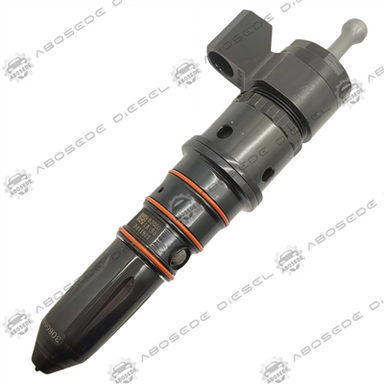
3411821 M11 Injector | The Precision Metric For Cumm...
-
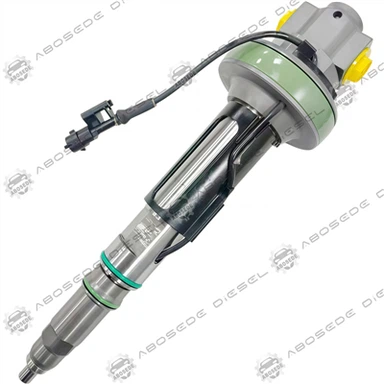
0-986-435-904 Bosch Exchange Injector | High-Precisi...
-

Cummins 4088416 QSK60 Fuel Injector – High-Duty Elec...
-
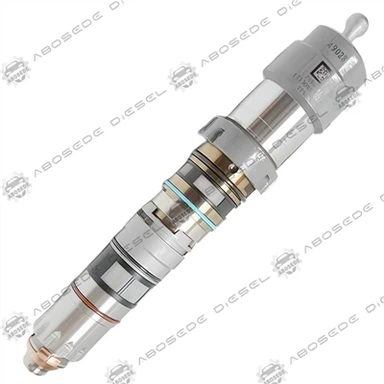
Cummins QSK23 Injector 4077076 | Heavy-Duty Mining &...
