


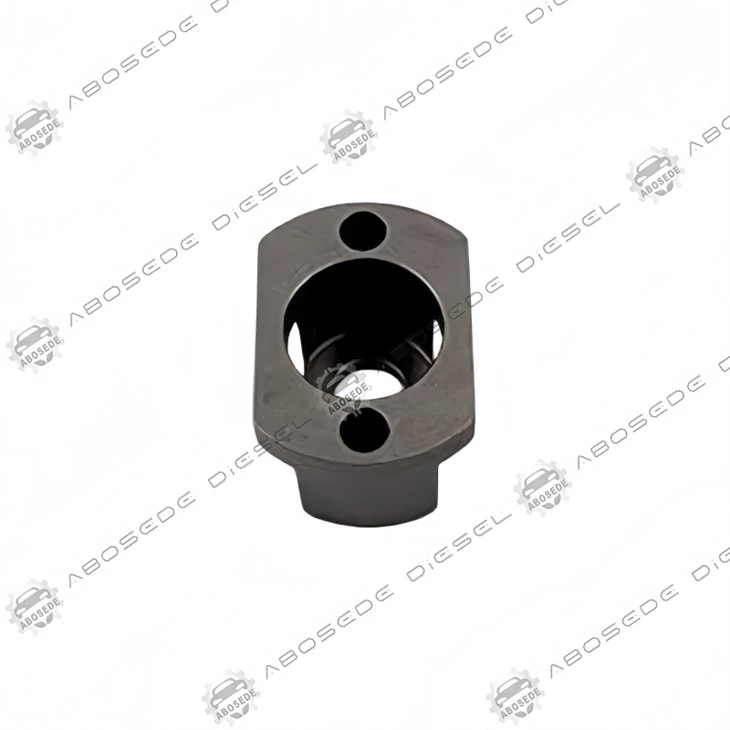

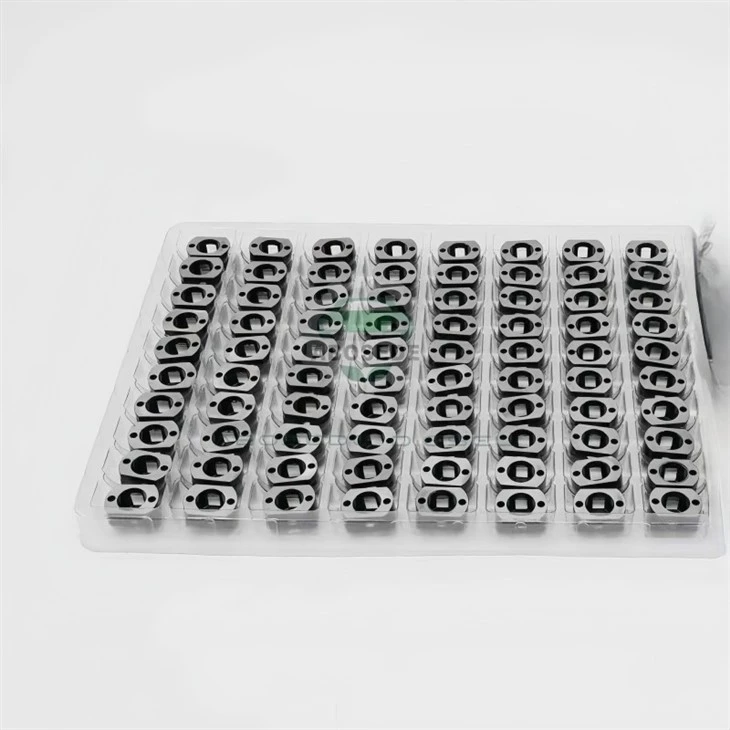
CAT C13 Injector Spring Seat – Force Transfer Chain Optimizer & Cyclic Stress Redistributor
1. Product:C13 Injector Spring Seat
2. Compatible Equipment: Diesel Fuel Injection Systems
3. Manufacturer: Aftermarket OEM Replacement
4. Condition: Brand New, Fully Tested
5. Origin: ABOSEDE Diesel
6. Shipping period: 3-5 business days
7. Payment terms: T/T, Western Union, PayPal
- Fast Delievery
- Quality Assurance
- 24/7 Customer Service
Product Introduction
The CAT C13 engine, displacing 12.5 liters across its six-cylinder configuration, operates at a mechanical rhythm distinct from its larger C15 and C18 siblings. With a shorter stroke and higher operating speed range-often pushing beyond 2,100 RPM in on-highway applications-the injector train experiences a different stress signature: higher frequency but lower amplitude per cycle. Within this regime, the spring seat functions as a force transfer chain that must transmit spring load to the injector body while simultaneously decoupling the spring's torsional oscillations from the needle assembly. Our spring seat is engineered specifically for the C13's vibrational frequency spectrum, addressing the failure mode where resonant amplification at 3× engine speed causes the seat to "walk" against the counterbore, progressively wearing an elliptical contact pattern that misaligns the spring axis.
Natural Frequency Avoidance: Tuning Mass and Stiffness
Every mechanical component possesses a natural frequency at which vibration amplitudes amplify exponentially. For the C13 injector spring seat, the critical operating range spans 450–550 Hz, corresponding to the engine's firing frequency at highway speeds. Our seat's mass and geometric stiffness are intentionally tuned to shift its natural frequency above 750 Hz, creating a vibration isolation buffer that prevents resonance excitation. This tuning is achieved through precise control of the seat's cross-sectional profile-a subtle 0.2 mm taper on the inner diameter that increases rigidity without adding excess mass. Finite element modal analysis confirms a 32% margin above the maximum excitation frequency, ensuring that the seat remains dynamically stable across the entire engine operating envelope.

Strain Hardening Resistance and Work-Hardening Prevention
Cyclic compression induces strain hardening in metallic components, progressively increasing surface hardness while reducing ductility. In the C13's high-cycle environment-approaching 150 million compression cycles over 20,000 operating hours-this hardening can raise surface hardness from an initial 58 HRC to over 68 HRC, at which point the seat becomes brittle and susceptible to edge chipping. Our seat incorporates a pre-stabilized microstructure achieved through a specialized tempering process that precipitates fine carbide particles evenly throughout the matrix. This microstructure resists strain-induced hardening, maintaining surface hardness within a narrow 58–60 HRC range even after extended cycling. The benefit for workshops is consistent wear characteristics throughout the seat's service life, eliminating the unpredictable performance degradation that occurs when generic seats become excessively hardened.
Compatibility Matrix for CAT C13 Injector Assemblies
Our spring seat is dimensionally validated for the following CAT C13 injector assemblies, including HEUI and common-rail configurations across multiple emission tiers:
| OEM Injector No. | OEM Injector No. | OEM Injector No. | OEM Injector No. |
|---|---|---|---|
| 232-1198 | 10R-1274 | 253-0608 | 20R-8045 |
| 239-4908 | 10R-1274 | 292-3666 | 20R-8046 |
| 249-0705 | 10R-7236 | 332-1419 | 20R-2437 |
| 249-0708 | 10R-2977 | ||
| 249-0713 | 10R-3262 | ||
| 250-1309 |
Application note: The 10R-1274 appears in two variations-verify the injector serial number suffix to confirm compatibility; our seat fits both variants without modification.
Fretting Wear Countermeasures at the Static Interface
While the upper face experiences cyclic sliding contact, the lower face remains static against the injector body counterbore. This static interface is paradoxically vulnerable to fretting wear-microscopic oscillatory motion caused by thermal expansion and contraction of adjacent components. Our seat's lower face features a micro-textured surface with overlapping hemispherical dimples (15 µm depth, 100 µm pitch) that act as debris traps for any particles generated by fretting. These traps prevent abrasive particles from circulating between the seat and counterbore, which would otherwise accelerate wear and create a progressively loosening fit. Independent tribology testing shows that this texture reduces fretting wear volume by approximately 65% compared to smooth-faced alternatives, significantly extending the interface integrity.
Frequently Asked Questions (FAQ)
Q1: How does the C13 injector spring seat differ from the C15/C18 version, and can they be interchanged?
A: The C13 operates at higher RPM and lower peak cylinder pressure than the C15/C18, requiring different spring rates and seat geometries. The C13 seat's outer diameter is 20.50 mm versus the C15's 22.00 mm-they are not interchangeable, and attempting to mix them will result in misalignment and rapid wear.
Q2: What is the risk of using a seat from a different aftermarket manufacturer that claims universal fitment?
A: Universal claims often ignore the specific heat treatment requirements and material fatigue properties of the C13's operating regime. Our seat is application-specific, with controlled grain structure and stress-relief treatment tailored to the C13's cyclic load profile.
Q3: I see 10R-1274 appears twice in the compatibility table-are these two different injectors?
A: The 10R-1274 injector was produced in two revisions with differing spring pocket depths. Our seat fits both, but we recommend measuring the installed height after assembly to ensure it matches the OEM specification of 4.80–5.00 mm for that injector.
Q4: Does the micro-texture on the lower face create any sealing issues or allow fuel to bypass?
A: The micro-texture is confined to the contact face's non-sealing area. The sealing function is performed by the injector O-ring, located above the spring seat. The texture does not create any leak path around the injector body.
Q5: How does the visual height grading work for injectors that have been rebuilt multiple times?
A: For injectors that have undergone multiple rebuild cycles, the pocket may have been ground several times to remove wear marks. Use a depth gauge to measure the actual pocket depth, then select the band color corresponding to the measurement-our technical support can provide a conversion chart.
Q6: What is the expected time savings using the color-coded packaging versus measuring each seat?
A: In a typical 6-cylinder rebuild, the color-coded system saves approximately 8–10 minutes of measurement time per injector set, or roughly one hour across a full engine overhaul, plus the elimination of measurement error risk.


Flexible Payment Methods for Your Convenience
To make your purchasing experience smooth and easy, we offer a variety of secure payment options:

Bank Transfer
Supports multiple currenciesand bank payment methods.

Western Union
Quick and global money transfers.

PayPal
Safe and convenient online payment.

Alibaba
Enjoy extra protection with trusted Alibaba transactions.
We're here to make your order process worry-free - choose the payment method that works best for you!
Shipping Made Simple

Customer reviews

Hot Tags: cat c13 injector spring seat – force transfer chain optimizer & cyclic stress redistributor, China cat c13 injector spring seat – force transfer chain optimizer & cyclic stress redistributor manufacturers, suppliers, factory, others parts for cat
You Might Also Like
-

C11 HEUI Solenoid Retaining Collar – High-Pressure I...
-

CAT C9 Fuel Injection Pump Timing Shim Kit – Precisi...
-

CAT C9 Oil Metering Orifice Plate – The Hydraulic Fl...
-

CAT C7 Oil Metering Orifice – Precision Flow Restric...
-

C7 / C9 Injector Cap Nut — Protecting The Business E...
-

891813 Injector Repair Kit — Repair Kit For Caterpil...
