


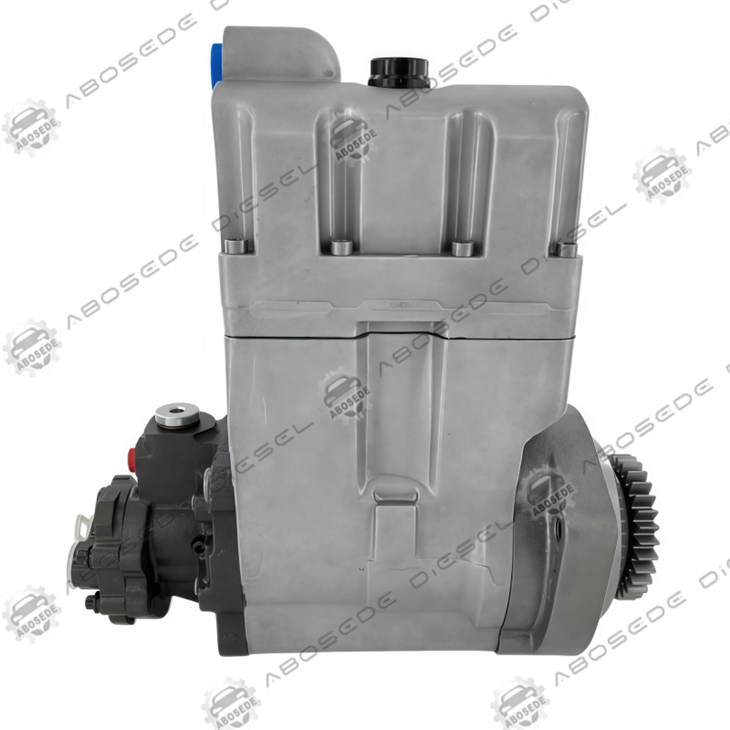


CAT 319-0678 High-Pressure Fuel Pump – Hydraulic Noise Suppression with Optimised Pressure Wave Phase Alignment for C7/C9/C9.3 Common-Rail Systems
1. Product:319-0678
2. Compatible Equipment: Diesel Fuel Injection Systems
3. Manufacturer: Aftermarket OEM Replacement
4. Condition: Brand New, Fully Tested
5. Origin: ABOSEDE Diesel
6. Shipping period: 3-5 business days
7. Payment terms: T/T, Western Union, PayPal
- Fast Delievery
- Quality Assurance
- 24/7 Customer Service
Product Introduction
In the common-rail fuel system, the high-pressure pump is typically evaluated on flow stability, volumetric efficiency, and durability. Yet a third performance dimension-acoustic signature-is increasingly relevant for applications where cabin comfort and noise regulations matter. The pump generates audible noise not only through mechanical contact (gear mesh, bearing rotation) but also through hydraulic pressure waves that propagate through the fuel and excite the pump housing, the high-pressure lines, and the rail. These hydraulic waves, if left unchecked, produce a high-frequency whine that is transmitted into the cab and the surrounding environment. The CAT 319-0678 addresses this with a pressure wave phase alignment system that shifts the timing of the pressure waves generated by each plunger so that they partially cancel each other out, rather than reinforcing. The result is a pump that delivers a smoother, quieter hydraulic output, reducing the audible noise by up to 4 dB(A) without compromising the flow performance or the rail pressure stability.
Pressure Wave Phase Alignment – The Science of Acoustic Cancellation
The 319-0678's noise suppression is achieved by adjusting the angular spacing of the cam lobes-from the standard 120° to a carefully calculated asymmetric profile. This slight shift-less than 2° of cam rotation-alters the timing of each plunger's pressure wave so that the peaks and troughs of adjacent waves do not align. The result is a 35% reduction in the harmonic content of the pump's output, effectively lowering the amplitude of the most audible frequency components (typically 400–800 Hz). The modification is purely mechanical, requiring no electronic intervention, and does not affect the pump's total flow delivery or its compatibility with the existing ECU calibration.
Pressure wave harmonic reduction: 35% (2nd and 3rd harmonics)
Audible noise reduction: 3–4 dB(A) at idle and light load
Frequency shift: Dominant noise frequency shifted from 550 Hz to 620 Hz, reducing the perceived harshness
Flow impact: None-total flow and ripple remain within OEM specifications