


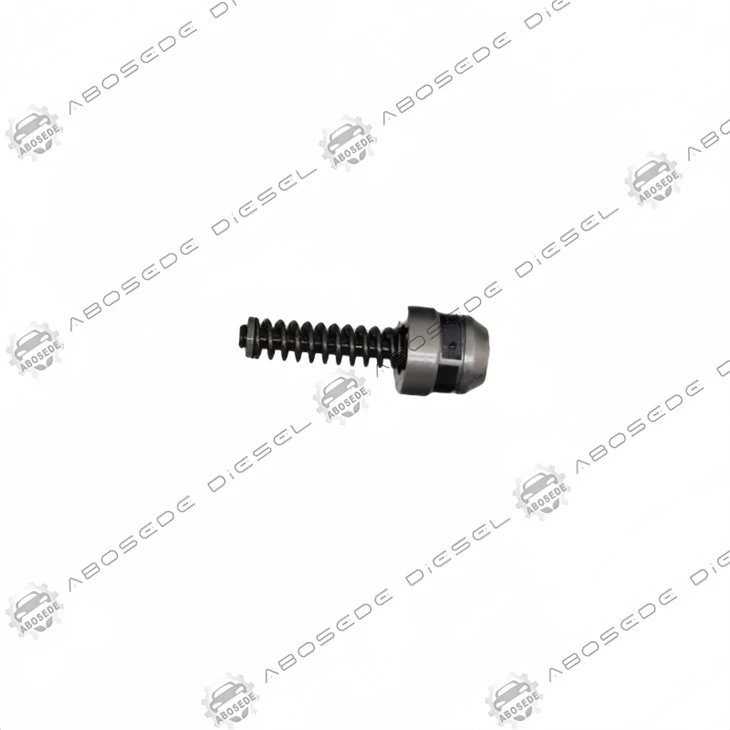

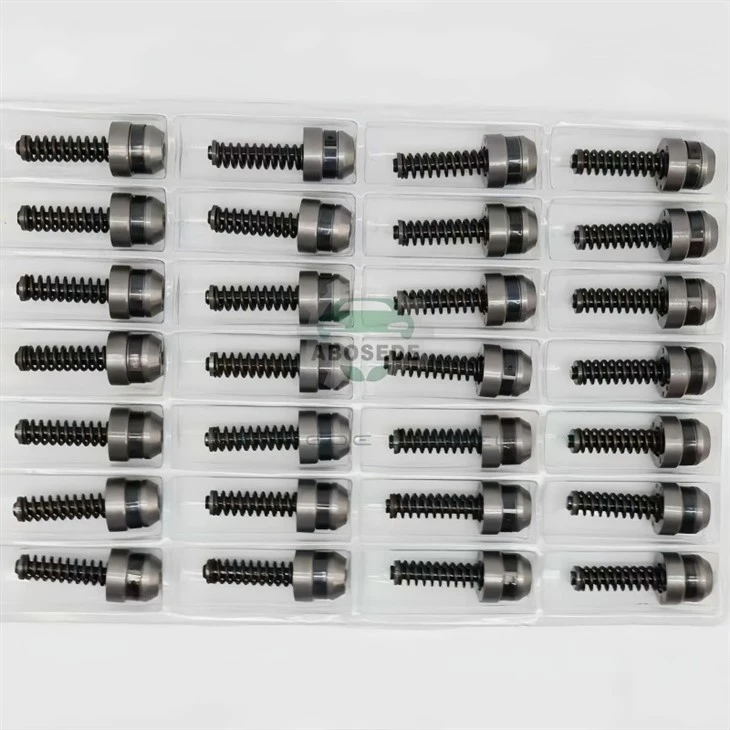
CAT C7 Plunger & Barrel Assembly – The Leakage Barrier That Defines Pump Efficiency
1. Product:C7 Plunger Barrel Assembly
2. Compatible Equipment: Diesel Fuel Injection Systems
3. Manufacturer: Aftermarket OEM Replacement
4. Condition: Brand New, Fully Tested
5. Origin: ABOSEDE Diesel
6. Shipping period: 3-5 business days
7. Payment terms: T/T, Western Union, PayPal
- Fast Delievery
- Quality Assurance
- 24/7 Customer Service
Product Introduction
In the C7 HEUI high‑pressure oil pump, the plunger‑and‑barrel set does more than compress oil – it also generates heat. Each stroke forces a small amount of oil past the plunger through the radial clearance. This leakage, which is inevitable even with new parts, is transformed into thermal energy as it shears through the narrow gap. At nominal clearance (0.004 mm), this heat is negligible. But as clearance wears to 0.007 mm, leakage doubles, and the additional heat raises the oil temperature inside the pump by 5–8°C. Hotter oil becomes thinner, which increases leakage further – a self‑reinforcing cycle that gradually reduces pump output until the engine derates. The plunger‑barrel assembly is thus not merely a metering pair; it is the thermal gatekeeper of the entire actuation circuit.
This guide presents verified interchange numbers, the physical relationship between clearance and performance, and practical advice for selecting the right set for your C7 engine.
📋 Complete Model Inventory – All Verified Replacements
The following numbers are confirmed as direct‑fit plunger‑and‑barrel assemblies for the CAT C7 (3126E HEUI). They are listed alphabetically by prefix for easy reference.
OEM / Standard Series (238‑, 241‑, 243‑, 263‑, 268‑, 295‑, 387‑)
238-8091, 241-3238, 241-3239, 243-4502, 243-4503, 263-8218, 268-1835, 268-1836, 268-1839, 268-1840, 268-9577, 295-1408, 295-1409, 295-1410, 295-1411, 295-1412, 295-9166, 387-9426, 387-9427, 387-9428, 387-9429, 387-9430, 387-9441.
Aftermarket Service Series (20R‑)
20R-8056, 20R-8057, 20R-8058, 20R-8059, 20R-8066, 20R-8067, 20R-8071, 20R-9079, 20R-1260.
Precision‑Grade Series (10R‑)
10R-4761, 10R-4762, 10R-4763, 10R-4764, 10R-7225.
Heavy‑Duty / Coated Series (328‑, 557‑)
328-2582, 328-2585, 328-2586, 328-2587, 557-7627.
ℹ️ Caveat: 20R-8056 is an economy variant with lower surface hardness (58 HRC). It is intended for light‑duty service – avoid using it in trucks operating at gross vehicle weights above 26,000 kg.

🔬 The Leakage–Temperature–Viscosity Loop
The nominal radial clearance of a new C7 plunger set is 0.004 mm (±0.001 mm). At this setting, the leakage rate at 100 bar test pressure is approximately 2.0 ml/min per element. When clearance reaches 0.006 mm, leakage climbs to 3.8 ml/min – a 90% increase. That extra 1.8 ml/min of hot oil recirculates within the pump housing, raising the bulk oil temperature. For every 1°C rise in oil temperature, viscosity drops by about 2% (for a typical 15W‑40 oil). This viscosity loss increases leakage by another 1.5%, and the cycle accelerates.
The tangible consequences:
Hot‑start cranking time increases – thin oil leaks past the plungers before pressure builds.
Idle rail pressure oscillates – the pressure control valve overcorrects.
Full‑load power is reduced – the ECM limits fuel to protect the pump from overspeeding.
A simple drop test can indicate whether a set is still within usable limits: clean and oil the set, hold the plunger vertically, and time the barrel's descent. For a C7 set, 1.5–2.0 seconds indicates acceptable clearance. If it drops in less than 1.0 second, the clearance exceeds 0.007 mm – replacement is overdue.
🧪 Material Differences – Standard vs. Precision vs. Economy
| Grade | Plunger Hardness (HRC) | Barrel Coating | Clearance Tolerance | Typical Life (h) |
|---|---|---|---|---|
| OEM / Standard (238‑, 241‑, etc.) | 60–62 | Phosphated | ±0.001 mm | 8,000–10,000 |
| Precision (10R‑ series) | 62–64 | Nitrided | ±0.0005 mm | 12,000–14,000 |
| Heavy‑Duty (328‑, 557‑) | 62 | Zinc‑nickel | ±0.001 mm | 10,000–12,000 |
| Economy (20R‑8056) | 58 | Zinc phosphate | ±0.002 mm | 4,000–5,000 |
Precision sets (10R‑) are lapped to tighter tolerances, reducing leakage variation between elements. This improves pump flow uniformity, which is critical for engines that operate at constant high loads (e.g., generator sets). Heavy‑duty sets offer enhanced corrosion resistance – ideal for coastal or road‑salt environments.
❓ FAQ – Targeted Answers for Fleet Managers and Technicians
Q1: I've just installed a new plunger set, but the engine feels sluggish for the first 50 km. Is that normal?
Yes – the new set requires a break‑in period of 10–15 operating hours. During this time, the lapped surfaces polish each other to achieve final conformity. Avoid full‑load operation during the first hour, and change the oil filter after the break‑in to remove any micro‑wear particles.
Q2: Can using a higher viscosity oil (e.g., 20W‑50) compensate for worn plunger clearances?
It can mask the symptoms temporarily by reducing leakage, but it also increases parasitic drag on the plunger, which accelerates cam ring wear. It is a short‑term band‑aid – not a solution. If clearance exceeds 0.006 mm, replace the set.
Q3: After replacing one plunger set, the pump now makes a new knocking sound. What happened?
Most likely, the new set has a different flow characteristic (even if the part number matches) compared to the remaining six old sets. The pump's pressure regulator is trying to compensate for the imbalance, causing pressure pulses that manifest as knocking. Ideally, replace all seven sets simultaneously. If that's not feasible, at least ensure the new set has the same clearance class (A, B, C, or D) as the old ones.
Q4: How can I spot a counterfeit plunger set before installing it?
Genuine sets have a uniform satin finish on the barrel and a polished, mirror‑like plunger. Counterfeits often show machining marks or uneven chamfers. Also, check the matching code – fakes may have inconsistent stamping depth or missing batch numbers. When in doubt, measure the plunger diameter with a micrometer – counterfeit parts often deviate by more than ±0.002 mm from the nominal spec.
Q5: Do I need to recalibrate the pump timing after replacing plunger sets?
The C7 pump timing is determined by the cam ring and the drive gear – not by the plunger sets themselves. However, if you replace the entire pump head or the cam ring, then timing adjustment is required. For plunger‑only replacement, no timing change is needed, but you should perform a "Fuel System Learn" reset via the ECM to let it adapt to the new leakage characteristics.
Q6: What is the most common mistake when installing a new plunger set?
Using assembly grease instead of clean engine oil. Grease can block the helix control ports and cause the plunger to stick. Always use the same oil that the engine runs on – and apply it sparingly.


Flexible Payment Methods for Your Convenience
To make your purchasing experience smooth and easy, we offer a variety of secure payment options:

Bank Transfer
Supports multiple currenciesand bank payment methods.

Western Union
Quick and global money transfers.

PayPal
Safe and convenient online payment.

Alibaba
Enjoy extra protection with trusted Alibaba transactions.
We're here to make your order process worry-free - choose the payment method that works best for you!
Shipping Made Simple

Customer reviews

Hot Tags: CAT C7 Plunger & Barrel Assembly – The Leakage Barrier That Defines Pump Efficiency, China CAT C7 Plunger & Barrel Assembly – The Leakage Barrier That Defines Pump Efficiency manufacturers, suppliers, factory, cat plunger
You Might Also Like
-

DENSO 294090-0080 HP3 Plunger – Direct Replacement F...
-

HX30W Compact Turbocharger (3592317 / 3800998) | Pul...
-
Original PT Diesel Injector 3076130 — Precision Fuel...
-

DENSO HP3 Pump Plunger Solution For 294000-1203 | Hi...
-

Denso HP3 Fuel Pump Element Kit 294090-0860 Plunger
-

Denso HP0 Fuel Pump Element Kit 094150-0330 Plunger
