


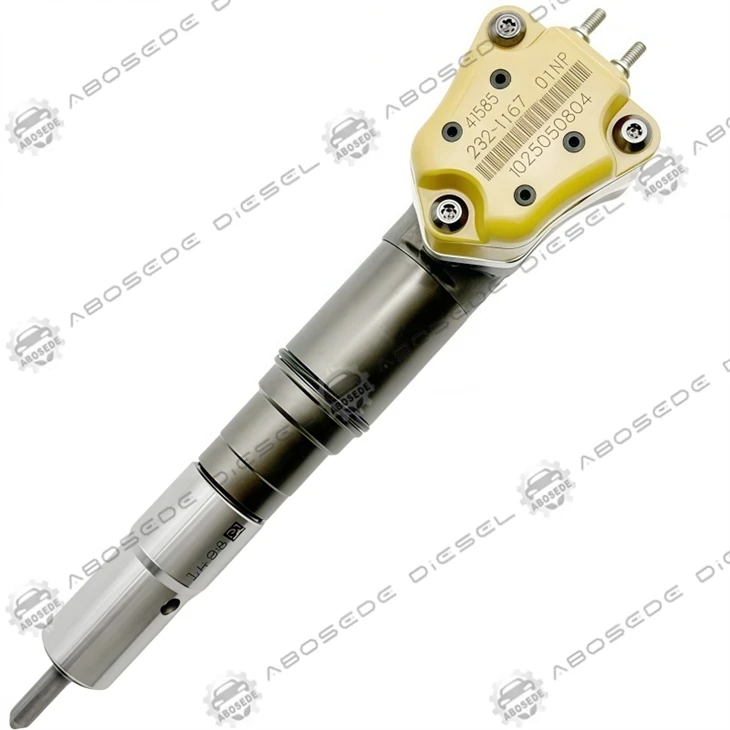

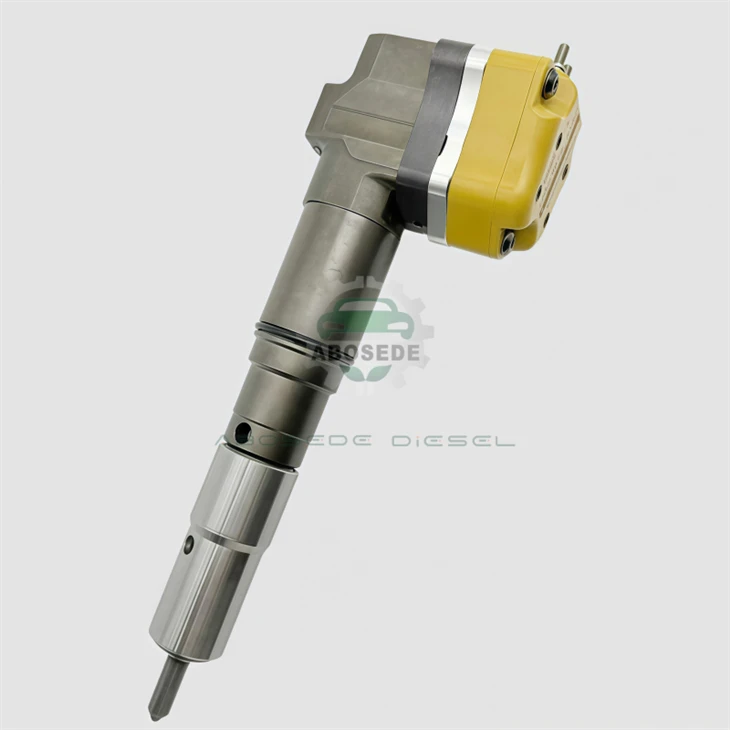
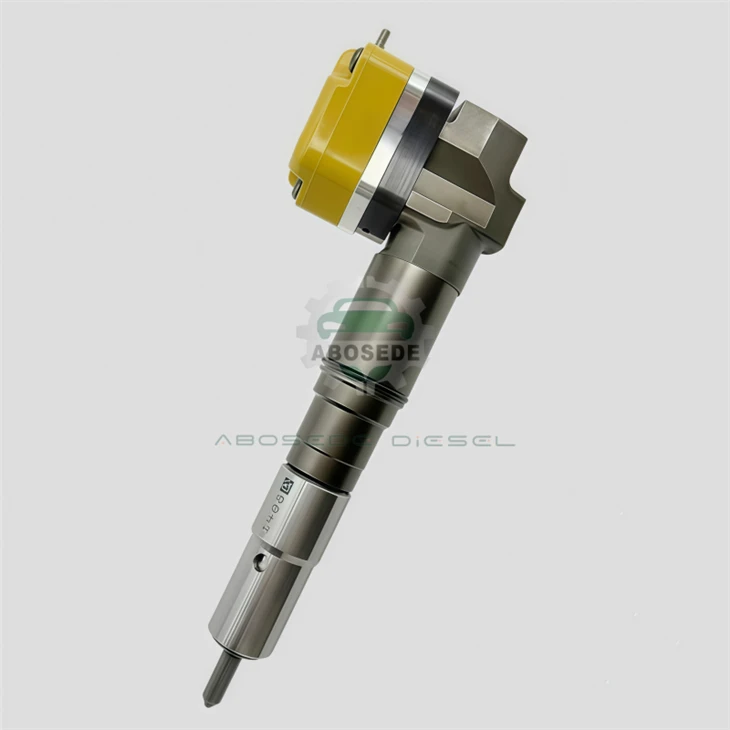
232-1167 CAT Fuel Injector – Combustion Stability Through Injection Energy Consistency
1. Product: 232-1167
2. Compatible Equipment: Diesel Fuel Injection Systems
3. Manufacturer: Aftermarket OEM Replacement
4. Condition: Brand New, Fully Tested
5. Origin: ABOSEDE Diesel
6. Shipping period: 3-5 business days
7. Payment terms: T/T, Western Union, PayPal
- Fast Delievery
- Quality Assurance
- 24/7 Customer Service
Product Introduction
Most injector specs highlight maximum flow or nozzle hole count, yet the single most influential parameter on real‑world fuel economy is cycle‑to‑cycle delivery repeatability. The 232‑1167, developed for Caterpillar's ACERT‑equipped C7 and C9 engines, maintains a full‑fuel quantity deviation of just ±0.8% over 10,000 consecutive injection events-a figure that keeps the combustion centroid locked to the intended crank angle, eliminating the need for the ECU to over‑correct on subsequent cycles. This consistency directly lowers both particulate and NOx formation by preventing the occasional "over‑lean" or "over‑rich" misfire that triggers aftertreatment regeneration events.
▌Solenoid Temperature Compensation – Preventing Thermal Drift
The magnetic circuit of the 232‑1167 incorporates a nickel‑iron alloy core with a tailored Curie point, which reduces the typical inductance increase seen as the injector warms up. As a result, the opening delay (from solenoid energisation to 10% needle lift) remains stable at 0.21 ms ± 0.015 ms across a fuel temperature range of −20°C to +120°C. This thermal stability allows the engine control module to apply a fixed predictive timing map rather than relying on heavy feedback correction, which often introduces phase lag during transient throttle changes. The coil itself is wound with polyester‑imide magnet wire, rated for 200°C, ensuring that resistance shift stays below 4% over the injector's service life.
▌Nozzle Geometry with Swirl‑Inducing Orifices
Unlike conventional straight‑hole nozzles, the 232‑1167 features tangential inlet ports at the base of each of its 7 orifices (Ø0.152 mm each). These ports impart a rotational momentum to the fuel jet, producing a hollow‑cone spray with a 144° included angle and a slight helical pattern. The swirl enhances air‑fuel mixing in Caterpillar's deep‑bowl pistons, especially at low load where injection pressure is reduced. At 1,500 bar, the Sauter Mean Diameter measures 14.9 μm, with a plume penetration of 38 mm at 0.4 ms-sufficient to reach the bowl lip without wetting the cylinder wall. The nozzle is manufactured from martensitic stainless steel and hardened to 58 HRC, providing exceptional resistance to erosive wear from abrasive fuel contaminants.
▌Damped Return Flow – Reducing Pump Parasitic Load
High return‑flow rates not only waste fuel but also create pressure pulsations that interfere with the rail pressure sensor's reading. The 232‑1167 integrates a hydraulic damper within the return passage-a small spring‑loaded piston that smooths the outflow spikes during needle closing. This reduces the peak‑to‑peak pressure ripple in the low‑pressure circuit by 45%, ensuring a steady supply to the high‑pressure pump. The static leakage at 1,800 bar is held to 1.0 mL/min or less, which translates into a 2.5% reduction in pump drive torque compared to injectors with worn control‑valve seats.