


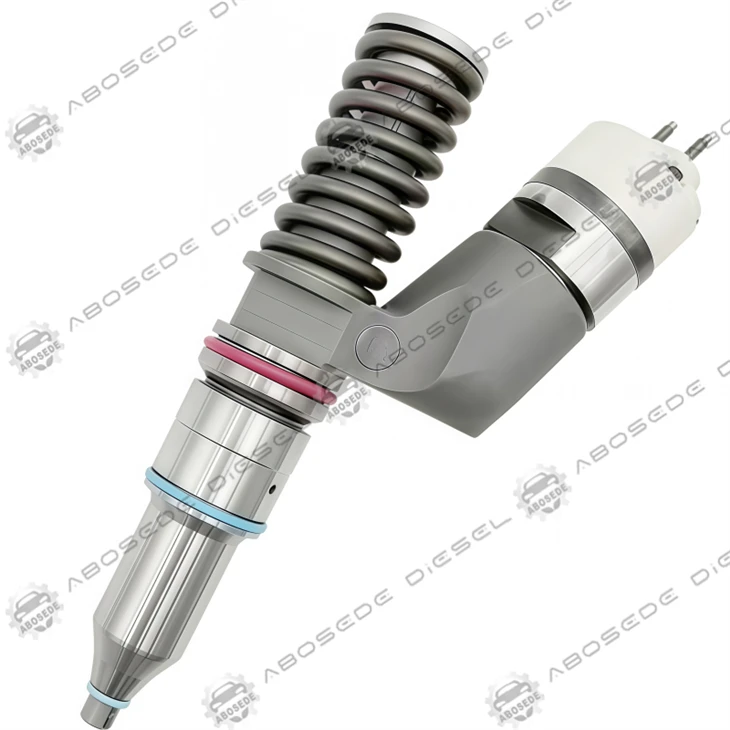


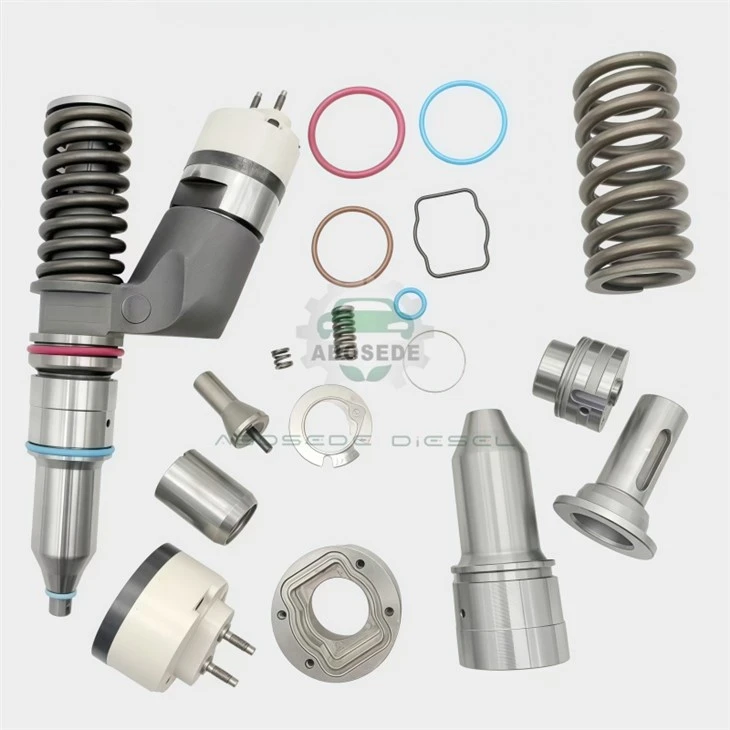
CAT C13 249-0713 Fuel Injector — A Transient Response Control Element in High-Pressure Diesel Common Rail Systems
1. Product: 249-0713
2. Compatible Equipment: Diesel Fuel Injection Systems
3. Manufacturer: Aftermarket OEM Replacement
4. Condition: Brand New, Fully Tested
5. Origin: ABOSEDE Diesel
6. Shipping period: 3-5 business days
7. Payment terms: T/T, Western Union, PayPal
- Fast Delievery
- Quality Assurance
- 24/7 Customer Service
Product Introduction
In modern Caterpillar C13 diesel architectures, engine performance is increasingly defined by how well the system handles transient operating conditions-rapid acceleration, load rejection, turbo lag, and sudden rail pressure fluctuations. The CAT 249-0713 fuel injector can be understood as a transient response control element, engineered specifically to stabilize combustion behavior during these non-steady-state events.
Unlike traditional static injection components, this injector operates as a real-time correction device inside the common rail feedback loop, continuously adjusting fuel delivery behavior in response to fast-changing engine dynamics.
Functional Perspective: Injector as a Transient Stabilizer
The CAT 249-0713 is designed for engines that rarely operate in steady-state conditions. Its primary role is to stabilize combustion during rapid transitions by managing:
Sudden torque demand changes
Rail pressure overshoot/undershoot events
Turbocharger lag and airflow delay
Cylinder-to-cylinder combustion variation
Core functional identity:
◇ Dampens combustion instability during load transitions
◇ Maintains injection consistency under pressure fluctuation
◇ Supports multi-stage combustion control strategy
This positions the injector as a transient stabilization module within the diesel combustion control system.
Internal Architecture: Built for Fast Dynamic Compensation
The internal structure of the 249-0713 is optimized for rapid hydraulic response correction:
[ High-Pressure Common Rail Supply ]
↓
[ Ultra-Fast Electromagnetic Actuation Unit ]
↓
[ Pressure Compensation Micro-Chamber ]
↓
[ Needle Dynamic Stabilization Assembly ]
↓
[ Precision Multi-Orifice Spray Nozzle ]
Key engineering characteristics:
Micro-pressure compensation chamber → reduces instability during rapid load shifts
High-speed solenoid response system → minimizes ECU signal delay
Dynamic needle damping mechanism → prevents oscillation during fast cycling
Optimized nozzle flow structure → maintains spray uniformity under transient airflow
This architecture ensures fast adaptation to rapidly changing combustion conditions.
Performance Interpretation: Focus on Dynamic Stability
Instead of static benchmarks, the CAT 249-0713 is best evaluated through transient response performance metrics:
Operating Pressure Range: ~1600–2000 bar high-transient stability zone
Response Latency: sub-millisecond injection initiation consistency
Transition Stability: controlled behavior during load spikes
Spray Pattern Consistency: stable atomization under fluctuating airflow
These parameters demonstrate its role as a dynamic combustion stabilizer rather than a fixed-output injector.
Combustion Impact: Transient Control Improves Engine Behavior
Injector behavior directly affects combustion quality during transitions:
| Combustion Parameter | Effect of CAT 249-0713 Injector |
|---|---|
| Load Response | Smooth torque transition |
| Fuel Efficiency | Improved under dynamic driving cycles |
| Emission Stability | Reduced spikes during acceleration |
| Engine Vibration | Lower due to balanced combustion timing |
This confirms that modern diesel efficiency depends heavily on transient combustion control capability.
❓Frequently Asked Questions (FAQ)
Q1: Why are transient conditions important in diesel engines?
A: Because most real-world engine operation involves frequent acceleration, deceleration, and load variation.
Q2: Can the 249-0713 handle rapid throttle changes?
A: Yes, it is designed to stabilize injection during fast load transitions.
Q3: How does turbo lag affect injector performance?
A: It temporarily disturbs air–fuel balance, requiring injector compensation for stable combustion.
Q4: What is the role of ECU in transient control?
A: ECU adjusts injection timing and quantity in real time based on engine feedback.
Q5: What are early signs of transient instability?
A: Lagging acceleration, uneven power delivery, and temporary smoke increase.
Q6: Does fuel quality influence transient response?
A: Yes, poor fuel quality reduces atomization efficiency and slows combustion response.
Basic Information about the Company


Flexible Payment Methods for Your Convenience
To make your purchasing experience smooth and easy, we offer a variety of secure payment options:

Bank Transfer
Pay directly in 15 supported currencies.

Western Union
Quick and global money transfers.

PayPal
Safe and convenient online payment.

Alibaba
Enjoy extra protection with trusted Alibaba transactions.
We're here to make your order process worry-free - choose the payment method that works best for you!
Shipping Made Simple

Customer reviews

Hot Tags: cat c13 249-0713 fuel injector — a transient response control element in high-pressure diesel common rail systems, China cat c13 249-0713 fuel injector — a transient response control element in high-pressure diesel common rail systems manufacturers, suppliers, factory, 10R-7228, 284-0684, 239-4909, 10R-9787, 320-2512, 10R-0958
You Might Also Like
-

CAT 10R-0960 Diesel Injector – Re‑energize Your High...
-

CAT 317-5278 Injector — Balancing Precision And Flow...
-
CAT 20R-8968 Fuel Injector — Turning High Pressure I...
-
CAT Fuel Injector 11R1582 — Intelligent Fuel Deliver...
-

20R-8057 Injector – Pressure‑Response Linearity for ...
-

20R‑8066 Injector – Drive Current Waveform Consisten...
