


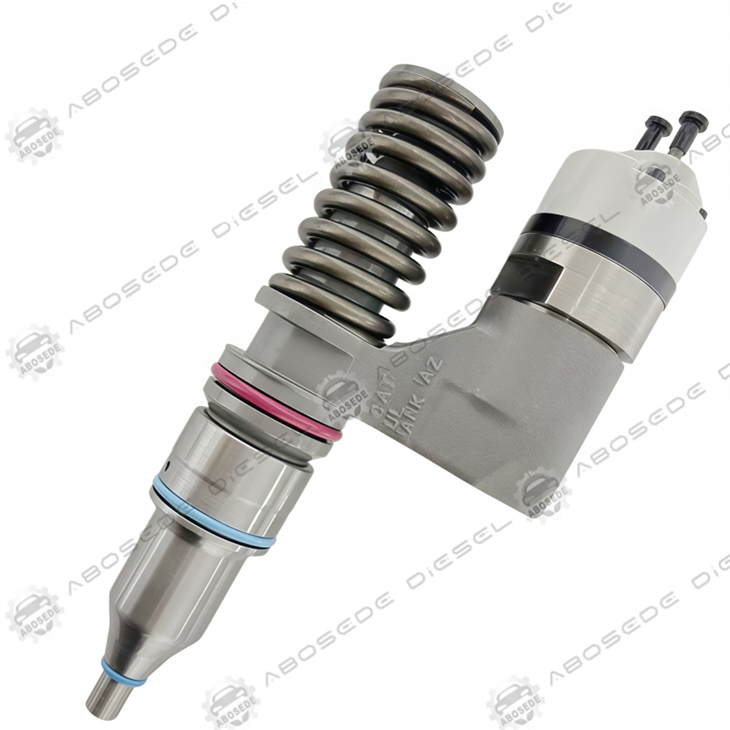

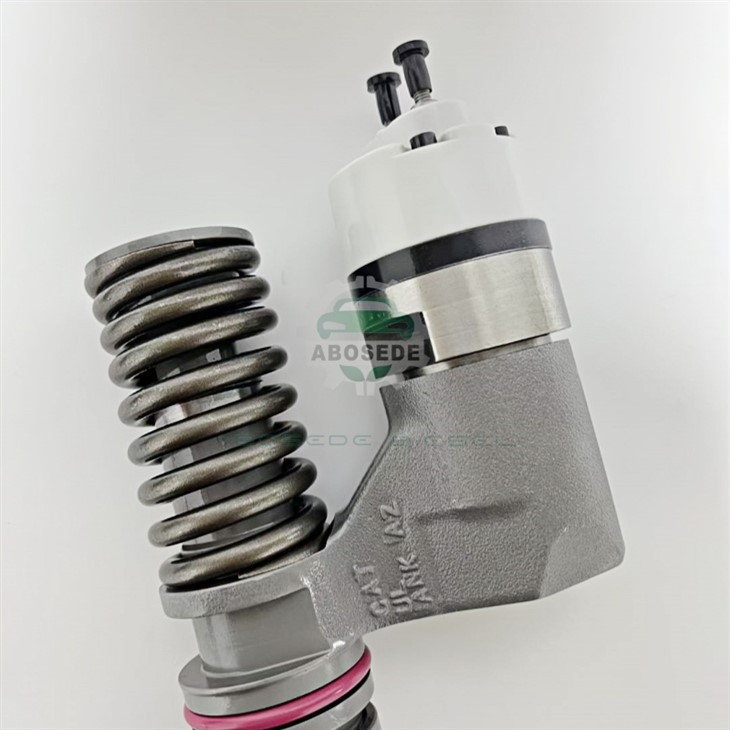
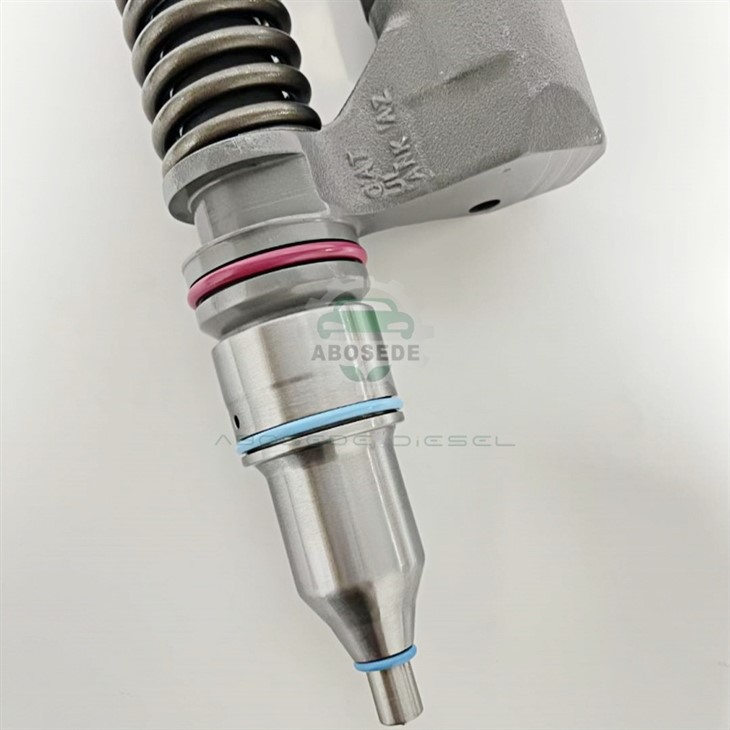
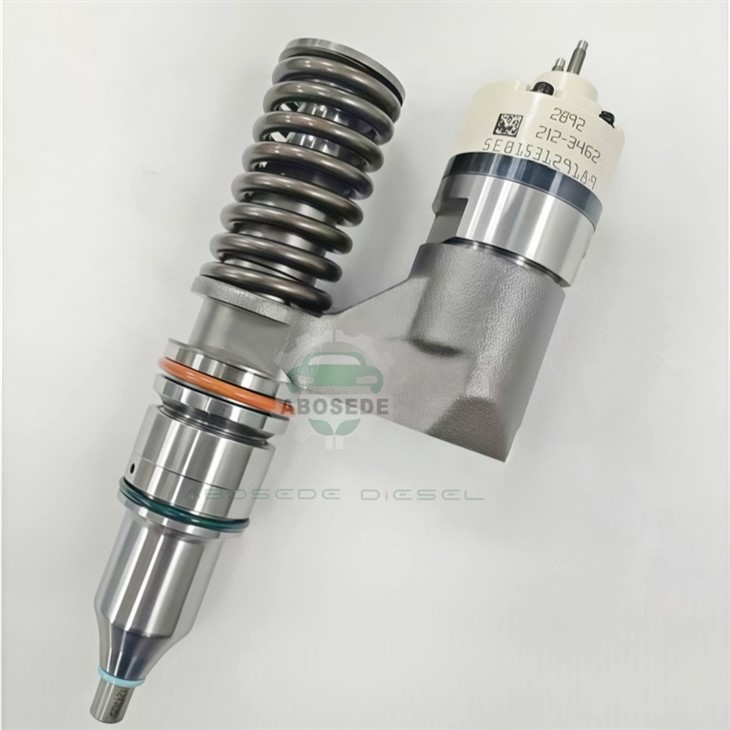
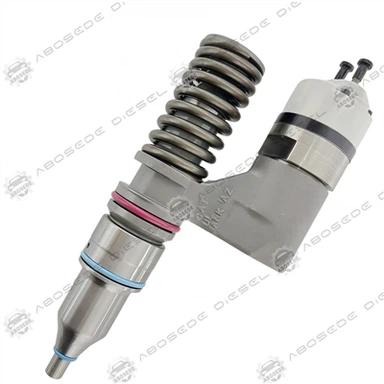
CAT 212-3462 Fuel Injector – Pressure-Driven Precision Node in Common Rail Diesel Architecture
1. Product:212-3462
2. Compatible Equipment: Diesel Fuel Injection Systems
3. Manufacturer: Aftermarket OEM Replacement
4. Condition: Brand New, Fully Tested
5. Origin: ABOSEDE Diesel
6. Shipping period: 3-5 business days
7. Payment terms: T/T, Western Union, PayPal
- Fast Delievery
- Quality Assurance
- 24/7 Customer Service
Product Introduction
In a high-pressure diesel engine, combustion does not begin at ignition-it begins inside the rail, where pressure is continuously generated, damped, and redistributed through microsecond-scale hydraulic interactions. Within this environment, CAT 212-3462 operates less as a conventional injector and more as a pressure transition regulator, determining how stored hydraulic energy is released into controlled combustion events under rapidly shifting engine loads.
Understanding this component requires viewing it as part of a full electro-hydraulic control loop, where ECU strategy, rail pressure behavior, and injector response timing form a tightly coupled system rather than independent subsystems.
System Role: A Controlled "Pressure Gate" in the Rail Network
Within a common rail fuel system, the injector operates as a high-speed hydraulic gate that opens and closes in microseconds. The 212-3462 is designed to respond to electronic signals while simultaneously resisting extreme internal rail pressures that can fluctuate rapidly depending on engine demand.
In this configuration, the injector contributes directly to:
Pressure wave damping inside the rail
Fuel metering accuracy during transient load changes
Synchronization between combustion cycles across cylinders
Instead of acting as a passive outlet, it behaves like an active regulator influencing rail pressure dynamics across the system.
Injection Behavior Under Variable Combustion Conditions
Diesel combustion environments are highly non-linear. Temperature, load, and turbo boost conditions constantly shift injection requirements. The 212-3462 is engineered to maintain consistent spray behavior under these fluctuations.
Key performance behavior includes:
Stable atomization even under high back-pressure conditions
Reduced spray deviation during rapid acceleration phases
Improved response consistency under low-temperature combustion cycles
These characteristics directly influence diesel injector performance, especially in engines operating under frequent load cycling such as construction machinery, marine auxiliary engines, and heavy-duty transport systems.
ECU Coordination and Signal Interpretation Layer
Modern injectors no longer operate purely mechanically; they are deeply integrated into electronic control strategies. The 212-3462 functions as an execution point for ECU commands, translating electrical pulses into precise hydraulic events.
This relationship enhances ECU control precision in several ways:
Microsecond-level injection timing alignment
Multi-stage injection capability (pilot, main, post injection strategies)
Adaptive response to sensor-driven combustion feedback loops
The injector effectively becomes a "translation layer" between digital control logic and physical fuel delivery.
Lifecycle Behavior and Maintenance Sensitivity
Unlike simpler mechanical components, common rail injectors exhibit performance drift over time due to microscopic wear, fuel contamination, and thermal cycling.
From a lifecycle perspective, operators often monitor:
Changes in injection response time
Variation in return flow rate
Deviation in cylinder balancing data
Understanding these indicators is essential for maintaining system-wide balance in a common rail fuel system, where one injector deviation can influence overall engine smoothness.
❓FAQ – System-Level Diesel Injection Diagnostics
Q1: How does the 212-3462 influence overall engine stability?
It stabilizes combustion cycles by ensuring consistent injection timing and uniform fuel atomization across varying load conditions.
Q2: What role does it play in common rail pressure behavior?
It acts as a controlled discharge point, helping regulate pressure fluctuations within the rail during rapid demand changes.
Q3: Is injector performance linked to ECU calibration?
Yes, injector behavior is directly dependent on ECU mapping, which defines timing, duration, and injection phases.
Q4: What are common signs of injector degradation?
Irregular idle, increased fuel return flow, delayed response time, and imbalance in cylinder output are typical indicators.
Q5: Why is atomization quality so important?
Better atomization ensures more complete combustion, reducing fuel waste and improving thermal efficiency.
Q6: Can this injector affect emissions performance?
Yes, stable injection patterns contribute to more controlled combustion, which directly impacts emission output characteristics.
Basic Information about the Company


Flexible Payment Methods for Your Convenience
To make your purchasing experience smooth and easy, we offer a variety of secure payment options:

Bank Transfer
Pay directly in 15 supported currencies.

Western Union
Quick and global money transfers.

PayPal
Safe and convenient online payment.

Alibaba
Enjoy extra protection with trusted Alibaba transactions.
We're here to make your order process worry-free - choose the payment method that works best for you!
Shipping Made Simple

Customer reviews

Hot Tags: cat 212-3462 fuel injector – pressure-driven precision node in common rail diesel architecture, China cat 212-3462 fuel injector – pressure-driven precision node in common rail diesel architecture manufacturers, suppliers, factory, 326 4756 32F61 00014, 32F61-00012, 10R-1000, 292-3749, 326-4634, 361-4036
You Might Also Like
-
CAT 10R-0961 Injector — Precision Fuel Architecture ...
-

CAT C9 328-2574: Reconstructing Fuel Rhythm in High-...
-

328-2582 Common Rail Injector Engineering Consistenc...
-

268-1839 Injector – Pulse-Shaping Precision for Ther...
-

CAT 3116 Fuel Injector 127-8211 High-Performance Die...
-

CAT C16 Fuel Injector 253-0616 High-Performance Dies...
