


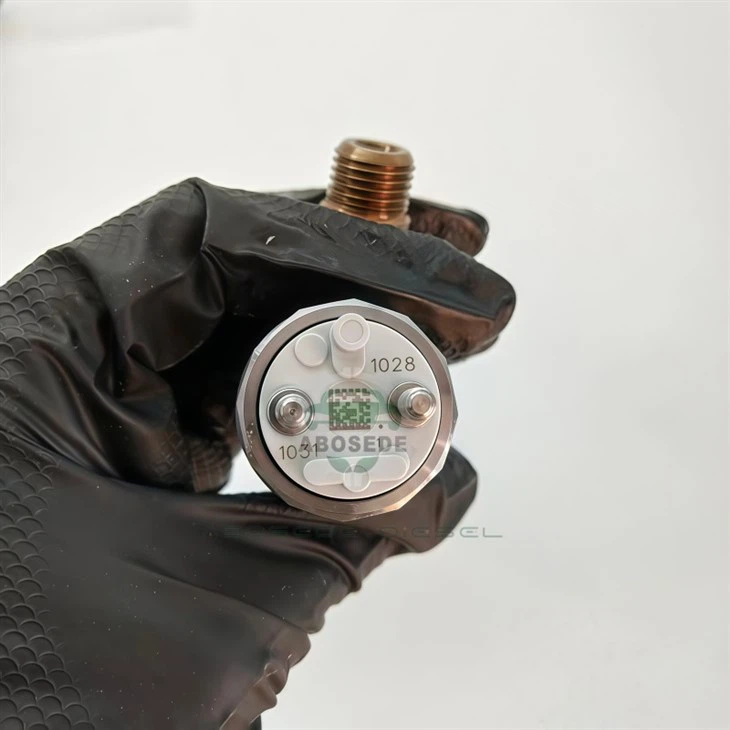

CAT 326-4756 / 32F61-00014 Fuel Injector – Precision Common-Rail Injector with Multi-Layer Coating and Enhanced Solenoid Durability for C13/C15 Applications
1. Product:326-475632F61-00014
2. Compatible Equipment: Diesel Fuel Injection Systems
3. Manufacturer: Aftermarket OEM Replacement
4. Condition: Brand New, Fully Tested
5. Origin: ABOSEDE Diesel
6. Shipping period: 3-5 business days
7. Payment terms: T/T, Western Union, PayPal
- Fast Delievery
- Quality Assurance
- 24/7 Customer Service
Product Introduction
In the life cycle of a common-rail injector, the solenoid is the component that experiences the most electrical stress. Each injection event cycles the solenoid through a rapid current rise (opening) and decay (closing), generating heat and mechanical wear on the armature and stator surfaces. Over time, the solenoid's performance degrades, leading to an increase in the opening delay and a drift in the fuel delivery. The CAT 326-4756, also known as 32F61-00014, addresses this with a multi-layer solenoid coating that combines a high-temperature insulation layer with a wear-resistant topcoat. The coating reduces the armature-stator friction by 30% and provides thermal protection that limits the solenoid temperature rise to 15°C above the fuel temperature, compared to 25°C for standard solenoids. The result is a solenoid that maintains its opening delay within 0.02 ms of its original value over a 6,000-hour service life.
Coating Technology – The Science of Solenoid Protection
The 326-4756's solenoid features a multi-layer coating system applied via a plasma-spray process. The base layer is a polyimide-based insulation that provides electrical isolation and resists the high temperatures generated during holding current. The top layer is a PTFE (polytetrafluoroethylene) composite that reduces the friction between the armature and stator, ensuring that the armature moves freely and consistently. The coating system is tested to 10 million cycles without measurable wear, providing a service life that significantly exceeds the typical engine overhaul interval.
Multi-Layer Coating – The Quantitative Advantage
The multi-layer coating provides the following performance improvements:
Friction reduction: 30% lower armature-stator friction
Temperature rise: 15°C above fuel temperature (vs. 25°C typical)
Wear resistance: 10 million cycles with no measurable wear
Insulation resistance: ≥ 100 MΩ at 500 V DC
Coating thickness: 0.025 mm (base layer) + 0.015 mm (top layer)