


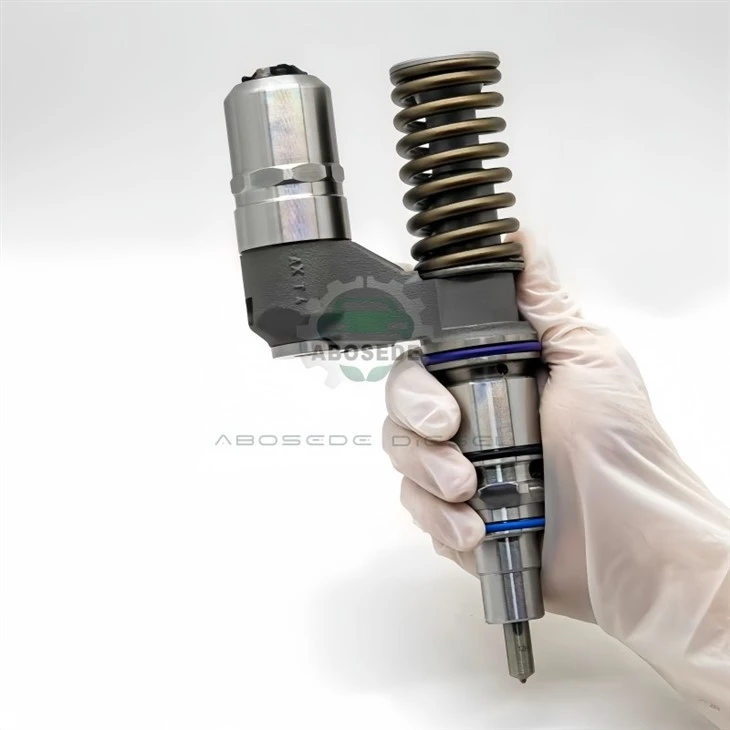
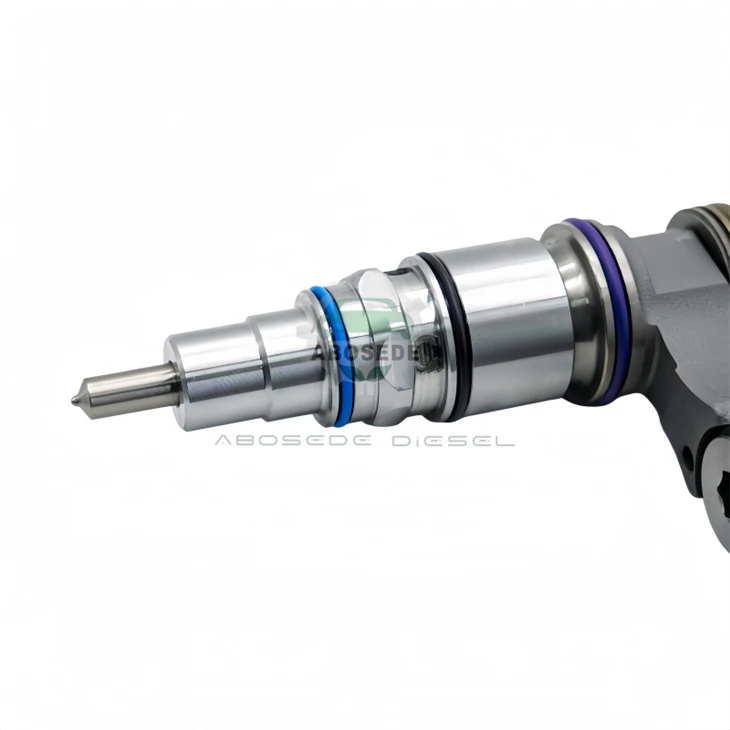
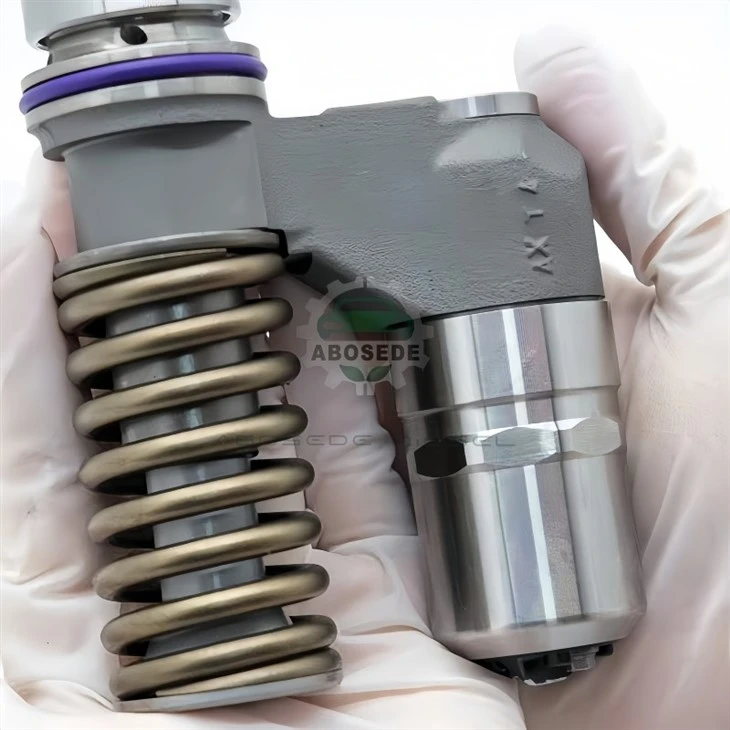
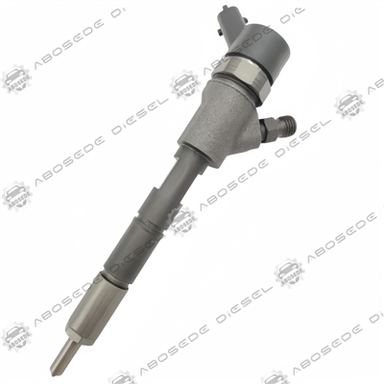
Bosch 1734493 Scania Injector — When Microseconds Define Diesel Economics
1. Product:1734493
2. Compatible Equipment: Diesel Fuel Injection Systems
3. Manufacturer: Aftermarket OEM Replacement
4. Condition: Brand New, Fully Tested
5. Origin: ABOSEDE Diesel
6. Shipping period: 3-5 business days
7. Payment terms: T/T, Western Union, PayPal
- Fast Delievery
- Quality Assurance
- 24/7 Customer Service
Product Introduction
The Bosch 1734493 is not a generic replacement unit. It is a calibration-specific solenoid injector engineered to integrate with Scania's ECU injection maps, pressure cycles, and emission management logic. Getting this component right isn't a maintenance detail - it's a combustion management decision.
◈ Component Specification at a Glance
1,800 bar in physical terms: this pressure surpasses the crush depth of most submarine hulls. Fuel exits the nozzle tip at velocities approaching 1,500 meters per second. Over a service life, the injector needle reseats against this force hundreds of millions of times. Engineering choices at the material and geometry level are not incidental - they are direct responses to documented failure modes across high-mileage Scania fleets.
◈ Multi-Shot Combustion: The Architecture Behind the Numbers
Scania's engine management executes up to five injection events per combustion cycle on certain configurations. Each event demands that the solenoid actuates, seats, and re-actuates with microsecond precision. Components that cannot sustain this rhythm without timing drift become the system's limiting factor - not the pump, not the rail, not the ECU.
◈ Fitment Scope: Scania Engine Families
| Engine Series | Displacement | Primary Application Field |
|---|---|---|
| Scania DC09 | 9.3L Inline-5 | P-series medium trucks, city buses |
| Scania DC13 | 12.7L Inline-6 | R/G-series long-haul transport |
| Scania DC16 | 16.4L V8 | Heavy haulage, extreme-load logistics |
| Industrial / Marine DC variants | DC09 / DC13 | Power generation, marine auxiliary |
Scania's engine coding embeds displacement, configuration, and emission tier simultaneously. Always cross-reference the full engine designation (e.g., DC13 480, DC13 115) - not just displacement class - before committing this part number to a repair order.
◈ Three Diagnostic Dimensions Procurement Teams Consistently Overlook
Most sourcing decisions focus on price and availability. These three technical checkpoints rarely appear on purchase orders - yet they determine whether a replacement genuinely restores performance or simply defers the next failure:
▸ Hydraulic Flow Matching A mismatch of even 3–5% between cylinder flow rates creates measurable torque imbalance, visible through Scania SDP3's cylinder cut-out contribution test. Factory-calibrated IMA code data is embedded in the Bosch 1734493 - enter it via diagnostic interface before first crank, not after symptoms appear.
▸ Return Circuit Condition Elevated leak-back flow (above 80–100 ml/min at idle) is the earliest indicator of internal needle-seat wear - it manifests before hard starting, smoke, or fault codes. Verify this at installation baseline.
▸ Solenoid Coil Resistance Nominal resistance for this injector class sits in the 0.4–0.6 Ω range. Drift outside this band shifts commanded vs. actual injection timing. A two-minute multimeter check before installation prevents misdiagnosis hours later.
◈ Symptoms That Redirect Attention to Injector Condition
A degrading Scania diesel injector rarely announces itself with a single clean fault code. Common presentations include:
→ Extended cranking or hard cold starts → Unstable idle that persists after warm-up → Black or grey exhaust smoke under load → Rising fuel correction values (cylinder-specific trim out of range) → Increased leak-back / return flow volume → DPF regeneration cycles shortening unexpectedly → SDP3 fault: injection quantity at idle out of specified band
These symptoms frequently overlap with turbo, air intake, or sensor faults. The Bosch 1734493 should be evaluated in context - alongside rail pressure behavior, filter condition, and contribution balance data - rather than condemned in isolation.
◈ Supply Chain Intelligence: Avoiding Counterfeit Units
The Scania common rail injector aftermarket contains a documented volume of non-specification product. Traceability indicators for authentic Bosch units:
Laser-etched IMA code (not printed sticker, not ink stamp)
Bosch packaging with batch-traceable QR code
Physical weight and connector geometry matching Scania harness without adapter
Solenoid resistance within specification band on arrival inspection
Counterfeit units frequently pass visual inspection. Failures typically occur at 50–200 operating hours due to non-specification internal clearances and inferior solenoid winding materials.
❓ FAQ - Diesel Common Rail System Perspectives
Q1: How does the Bosch 1734493 differ operationally from earlier Scania unit injector (PDE) designs? Scania's previous PDE (Pumpe-Düse-Element) system used camshaft-driven mechanical timing - predictable, but fixed. The 1734493 operates in a fully software-defined environment where timing, duration, and pressure are recalculated every combustion cycle by the ECU. This means the system adapts in real time to load, altitude, coolant temperature, and estimated fuel quality - a dynamic capability mechanically timed systems cannot replicate.
Q2: Can the Bosch 1734493 be remanufactured, or is it a replace-only component? Certified Bosch remanufacturing is viable and practiced: the process includes ultrasonic cleaning, needle and seat re-lapping, solenoid testing, and full flow-bench recalibration with new IMA code assignment. However, many aftermarket reman suppliers skip IMA recalibration - which requires Bosch-authorized test bench access. A rebuilt injector body without updated calibration data is mechanically restored but metrologically blind.
Q3: What SDP3 fault codes typically accompany 1734493 degradation on Scania platforms? Common fault patterns include: injector contribution deviation (cylinder-specific fuel trim exceeds threshold), injection quantity at idle out of range, solenoid circuit open or short, and high-pressure deviation during post-injection phase. SDP3's injector contribution test isolates cylinder imbalance in under ten minutes - this should precede any physical component replacement decision.
Q4: Does ambient operating temperature meaningfully affect this injector's performance across global Scania routes? Yes, at both extremes. In sub-zero conditions (below -20°C), high-viscosity diesel increases hydraulic resistance in the needle control circuit, delaying needle response slightly. In sustained high-heat operation (Middle East long-haul, Sub-Saharan routes), solenoid resistance rises with thermal load, shifting injection timing by microseconds - enough to affect NOₓ output and combustion noise at high load. Scania's ECU incorporates fuel temperature compensation maps, but these assume injector components within tolerance. Out-of-spec units lose compensation coverage.
Q5: When replacing one injector in a set, does cylinder balance remain achievable via ECU fuel trim alone? Partially. Scania's fuel trim authority can compensate for moderate flow mismatch between a new injector and worn neighbors. However, when mismatch exceeds trim authority - common in high-mileage sets - residual imbalance remains, visible in contribution data. Fleet operators prioritizing total-cost efficiency over short-term parts cost often document 2–4% fuel consumption recovery after full-set replacement at high mileage intervals.
Q6: What role does the fine-filter stage play in protecting this specific injector? Common rail injectors operate with internal clearances measured in single-digit microns. The 2–5 micron absolute fine filter positioned before the high-pressure pump is the last defense barrier before fuel reaches the injector needle and seat. A bypassed or saturated filter allows abrasive particles to score these surfaces, accelerating leak-back development independent of injector quality. On any Scania common rail platform, filter condition must be confirmed before attributing injector wear to the component itself.


Flexible Payment Methods for Your Convenience
To make your purchasing experience smooth and easy, we offer a variety of secure payment options:

Bank Transfer
Supports multiple currenciesand bank payment methods.

Western Union
Quick and global money transfers.

PayPal
Safe and convenient online payment.

Alibaba
Enjoy extra protection with trusted Alibaba transactions.
We're here to make your order process worry-free - choose the payment method that works best for you!
Shipping Made Simple

Customer reviews

Hot Tags: Bosch 1734493 Scania Injector — When Microseconds Define Diesel Economics, China Bosch 1734493 Scania Injector — When Microseconds Define Diesel Economics manufacturers, suppliers, factory, bosch injector
You Might Also Like
-

Bosch 0445110654 Common Rail Injector – The Service-...
-

0445120135 Injector – Break‑In Period Characteristic...
-
Bosch 0445110260 – Engineered Common Rail Injector R...
-
Bosch 0445110307 — Next‑Generation Common Rail Diese...
-

Bosch 0445110647 Common-Rail Injector — Unlocking Fu...
-

Bosch 0445111180 — CRI2-18 Common-Rail Fuel Injector
