


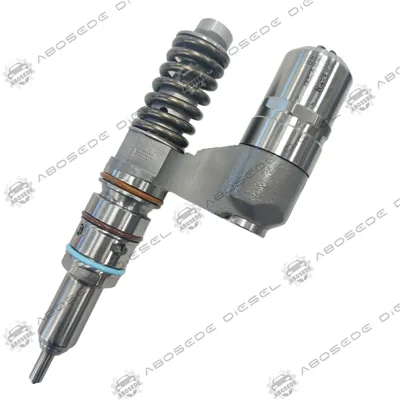
Bosch 0445120057 Injector – Consistent Injection Rate Shaping With Reduced Dwell‑to‑Peak Variability For Euro IV/V Commercial Diesel Engines
1. Product:0445120057
2. Compatible Equipment: Diesel Fuel Injection Systems
3. Manufacturer: Aftermarket OEM Replacement
4. Condition: Brand New, Fully Tested
5. Origin: ABOSEDE Diesel
6. Shipping period: 3-5 business days
7. Payment terms: T/T, Western Union, PayPal
- Fast Delievery
- Quality Assurance
- 24/7 Customer Service
Product Introduction
The Bosch 0445120057 injector is designed to deliver not just a defined quantity of fuel, but a precisely sculpted injection rate curve that optimizes combustion phasing. Its hydraulic response is characterized by a rapid current‑rise time (0.12 ms from 0 to 95% peak), enabling the ECU to implement multiple‑pilot strategies without overlapping pressure waves. The injector's flow stability is quantified by a coefficient of variation (CoV) of less than 1.5% across 1,500 injection cycles – a metric that ensures consistent torque output and minimal cyclic roughness, especially critical for engines operating under variable load conditions such as refuse trucks and agricultural harvesters.
🔧 Solenoid Actuation Dynamics – Force Balance and Magnetic Circuit
At the core of the 0445120057 lies a high‑speed solenoid with a flat armature design that reduces magnetic reluctance variation. The solenoid's inductance is rated at 2.8 mH at 20°C, and its closing current threshold is calibrated to 14.5 A for a 1,800 bar rail pressure. This injector exhibits a ballistic zone – a short current range (0.5 A) where the needle partially lifts to meter small pilot quantities (1.5–2.5 mm³/stroke). The magnetic circuit's hysteresis is minimized to 0.8%, allowing the ECU to predict the exact lift‑off point without iterative learning, thereby reducing smoke during transient acceleration.
🔄 Hydraulic Coupling – The Role of the Control Piston and Leakage Path
Inside the injector, the nozzle needle is hydraulically coupled to a control piston that regulates the pressure above the needle. The 0445120057 uses a two‑way valve arrangement where the leak‑off path is restricted to 1.2 mm diameter, creating a damping effect that softens the closing impact. The measured return‑fuel (leak‑off) flow is 32–38 mL/min at 1,600 bar, which is 10% lower than comparable injectors, indicating superior internal sealing. This lower leakage reduces the load on the high‑pressure pump and contributes to a more stable rail pressure, particularly during extended idle periods where pump delivery is minimal.
📊 Performance Data at Key Operating Points
The injector's dynamic flow rate is 280–310 mm³/stroke at 1,600 bar with a 1.2 ms energizing time, and 380–410 mm³/stroke at 1,800 bar with 1.8 ms. The injection delay – from start of current to start of fuel exit – is 0.22 ms at 1,400 bar and 0.18 ms at 1,800 bar, demonstrating a linearity that facilitates accurate timing adjustment. Moreover, the hydraulic pressure overshoot during needle closing is limited to 25 bar, preventing secondary injections that contribute to particulate formation. These data points are verified through bench testing per ISO 16180, ensuring each injector meets the tight tolerances required for on‑road emission compliance.
🛡️ Wear Resistance – Coating Strategy and Sealing Band Durability
The nozzle needle features a diamond‑like carbon (DLC) coating with a thickness of 3.5 µm and hardness of 3,500 HV, applied via physical vapor deposition. This coating reduces the friction coefficient to 0.06 against the guiding bore, effectively eliminating scuffing even when using low‑sulfur fuels with reduced lubricity. The sealing band – a 0.12 mm wide annular contact area – undergoes a lapping process that ensures a surface roughness of Ra 0.04 µm, providing a leak‑tight seal at pressures up to 2,000 bar. After 1,000 hours of endurance testing with B20 biodiesel, the flow deviation remained within ±2%, confirming the coating's resilience against deposit‑induced erosion.
FAQ – Common Inquiries from Fleet Maintenance and Workshop Technicians
❓ Q1: Can the 0445120057 be used as a direct replacement for the 0445120056 or 0445120058?
A: Physically interchangeable, but the injection timing and trim codes differ. You must re‑program the ECU with the new injector's IMA and perform a quantity adjustment (rail pressure offset) to prevent rough idle and smoke.
❓ Q2: How does fuel water contamination affect this injector, and what is the maximum acceptable water content?
A: Water reduces lubricity and can cause cavitation erosion on the control piston. The limit is 100 ppm (volume). Exceeding this leads to a rapid increase in leak‑off flow – replace the fuel/water separator immediately if leakage exceeds 45 mL/min.
❓ Q3: What is the recommended method for cleaning clogged 0445120057 injectors without removing them?
A: Use a specific detergent additive in the fuel tank (e.g., polyether amine) and run the engine at 1,500 rpm for 30 minutes. Do not use aggressive solvent flushes on the vehicle, as they can damage the solenoid insulation. For heavy deposits, ultrasonic bench cleaning is required.
❓ Q4: Is there a noticeable fuel consumption penalty if the injector's pilot injection quantity drifts?
A: Yes, a pilot drift of +1.0 mm³/stroke can increase fuel consumption by 2–3% at part load because the main injection timing is then incorrectly compensated. Regular calibration checks are advised every 1,500 hours.
❓ Q5: How do I verify the solenoid's resistance to avoid misdiagnosis?
A: Measure resistance between the two terminals at 20°C; nominal value is 0.48–0.52 Ω. A shorted solenoid reads near zero, while an open circuit indicates a broken coil. Temperature correction: add 0.002 Ω per °C above 20.
❓ Q6: Can this injector support post‑injection for DPF regeneration without causing cylinder wall wetting?
A: Yes, with a minimum dwell of 0.6 ms between main and post events. However, post‑injection quantity should not exceed 8 mm³/stroke at 1,600 bar to avoid fuel dilution; follow the OEM calibration map for regeneration.
Basic Information about the Company


Flexible Payment Methods for Your Convenience
To make your purchasing experience smooth and easy, we offer a variety of secure payment options:

Bank Transfer
Pay directly in 15 supported currencies.

Western Union
Quick and global money transfers.

PayPal
Safe and convenient online payment.

Alibaba
Enjoy extra protection with trusted Alibaba transactions.
We're here to make your order process worry-free - choose the payment method that works best for you!
Shipping Made Simple

Customer reviews

Hot Tags: bosch 0445120057 injector – consistent injection rate shaping with reduced dwell‑to‑peak variability for euro iv/v commercial diesel engines, China bosch 0445120057 injector – consistent injection rate shaping with reduced dwell‑to‑peak variability for euro iv/v commercial diesel engines manufacturers, suppliers, factory
You Might Also Like
-

070130073N Unit Injector – Temperature-Compensated P...
-

Bosch 20440409 Volvo Penta Injector Product Details ...
-

Decoupling Hydraulic Stress: Macro-Load Stability in...
-

0414703002 — The 0414703002 diesel injector is a pre...
-
0986441112 Bosch Iveco Exchange: Sourcing Strategy G...
-

Bosch Common Rail Injector 0445120083 (0 445 120 083...
