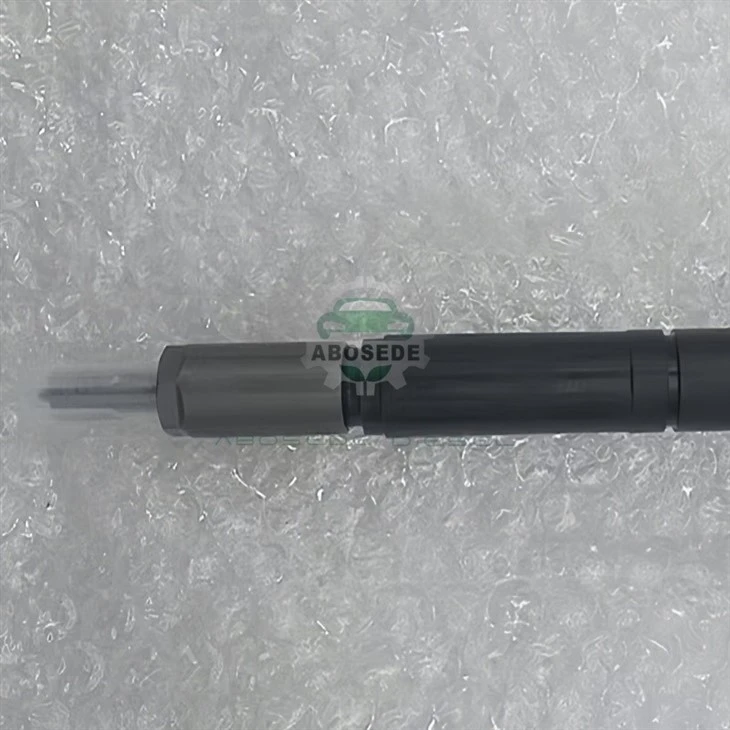
0445110856 Injector – Residual Pressure Management & Post‑Closure Drip Suppression for DPF‑Friendly Combustion
video
0445110856 Injector – Residual Pressure Management & Post‑Closure Drip Suppression for DPF‑Friendly Combustion

0445110856 Injector – Residual Pressure Management & Post‑Closure Drip Suppression for DPF‑Friendly Combustion

1. Product:0445110856
2. Compatible Equipment: Diesel Fuel Injection Systems
3. Manufacturer: Aftermarket OEM Replacement
4. Condition: Brand New, Fully Tested
5. Origin: ABOSEDE Diesel
6. Shipping period: 3-5 business days
7. Payment terms: T/T, Western Union, PayPal

  • Fast Delievery
  • Quality Assurance
  • 24/7 Customer Service
Product Introduction

The injection event does not end when the solenoid de‑energises-it ends when the pressure in the nozzle sac and the control chamber have fully stabilised. Any residual pressure in the nozzle after needle seating can force a small amount of fuel through the spray holes, creating post‑injection drip that contributes to hydrocarbon emissions and soot loading in the Diesel Particulate Filter (DPF). The 0445110856 is a solenoid‑actuated CRI 2 injector whose control chamber and nozzle geometry have been engineered to accelerate pressure decay after closure, reducing the nozzle sac residual pressure to below 20 bar within 0.5 ms of needle seating. This rapid pressure collapse ensures that no fuel escapes after the commanded injection ends, minimising the risk of cylinder wall wetting and DPF overloading. This injector's defining characteristic is its residual pressure decay rate-measured as the time required for the nozzle sac pressure to drop from rail pressure to 20 bar after closure, which remains below 0.55 ms over the injector's service life. When wear increases internal leakage or reduces the discharge efficiency of the control chamber, the pressure decay slows, allowing fuel to weep from the nozzle during the dwell between injections. The resulting symptoms are subtle but significant: a gradual increase in soot emissions, more frequent DPF regeneration cycles, and a slight rise in oil dilution. This article examines the residual pressure dynamics, the wear mechanisms that prolong pressure decay, and the diagnostic methods that reveal drip‑related degradation through exhaust analysis and fuel trim trends.


🧊 Residual Pressure Dynamics – The Hidden Source of DPF Stress

When the needle returns to its seat, the fuel trapped in the nozzle sac (the small volume downstream of the needle seat, approximately 0.02 cc) remains at high pressure-typically 80‑120 bar immediately after closure, dropping gradually as fuel leaks past the needle guide or through the spray holes. In the 0445110856, a carefully calibrated leakage path through the needle guide allows this trapped fuel to bleed back into the control chamber, reducing the sac pressure to 20 bar within 0.5 ms. This rapid decay prevents any significant post‑closure fuel release.

Parameter Value Condition
Nozzle sac volume 0.020 cc ± 0.002 cc
Sac pressure immediately after closure 80‑120 bar @ 1,000 bar rail pressure
Time to 20 bar residual pressure ≤ 0.55 ms measured
Drip‑free threshold (time) 0.70 ms beyond this, drip occurs
Residual leakage at 20 bar < 0.02 ml/min  
Static flow @ 1,000 bar 450 cc/30s ± 2.0 %
Solenoid resistance 0.31 Ω @ 20°C
Recommended rail pressure range 200 – 1,600 bar continuous operation

The residual pressure decay rate is measured using a fast piezoelectric pressure sensor placed in the nozzle sac (during development testing) or inferred from the return‑line pressure wave.

🔗 Application Coverage – DPF‑Sensitive Engine Families

0445110856 is specified for Volkswagen Group and Ford/PSA diesel engines equipped with DPF systems where post‑injection drip would accelerate filter loading:

Volkswagen Group – 2.0 TDI (engine codes: BKD, BMM, BMN, BRD, AZV) – EA188 series, Golf Mk5, Passat B6, Touran, Tiguan, A3 2.0 TDI

Volkswagen Group – 1.9 TDI (engine codes: BKC, BLS, BXE, BSU, BJB) – Golf Mk5, Passat B6, Touran, Caddy

Audi – 2.0 TDI (BKD, BMN) – A4 B7, A6 C6

Ford / PSA – DW10B (2.0 HDi 100‑110 kW) – Focus Mk2, Mondeo Mk4, Peugeot 307/407, Citroën C4/C5

Volvo – D5 (D5244T2, D5244T4) – S60, V70, XC70, XC90

This injector is not interchangeable with 0445110855, which has a larger sac volume (0.024 cc) and a slower pressure decay, leading to increased drip and faster DPF loading.

🧭 Decay Degradation – Why Drip Increases with Age

The residual pressure decay rate of 0445110856 slows through two primary mechanisms:

Needle guide wear : The guide clearance increases from 8 µm to 12 µm, creating a larger leakage path from the sac back to the control chamber. While this leakage helps reduce the sac pressure, it also allows fuel to bleed back during the injection event, reducing the effective injection pressure. The net effect is a slower decay because the control chamber pressure is also elevated, reducing the pressure differential that drives the sac bleed‑off.

Control chamber outlet orifice erosion : If the outlet orifice (0.20 mm) enlarges, the control chamber pressure drops more during the opening, but the refill after closure is also faster-this can cause the needle to stay open slightly longer, increasing the sac pressure at closure. The result is a higher initial sac pressure that takes longer to decay.

The primary symptom of decay degradation is increased soot emissions without a corresponding fault code-the DPF regeneration interval shortens, and the engine may produce a faint haze at idle that is only visible under strong light. Oil analysis may also show a gradual increase in fuel dilution (above 2%) as the drip fuel washes past the piston rings.

❓ FAQ – Practical Questions on Residual Pressure and Drip

Q1: How can I tell if my engine is suffering from injector drip?
Check the DPF regeneration interval-if it has shortened noticeably without any change in driving habits, drip is a likely cause. Also, look for a faint whitish‑blue haze at idle on a warm engine.

Q2: Can I test for drip by removing the injector and pressurising it?
Yes-on a test bench, pressurise the injector to 300 bar and observe the nozzle tip over 30 seconds. A healthy injector shows no visible wetness. A dripping injector will show a small droplet forming.

Q3: Does drip affect fuel economy?
Indirectly-drip fuel does not contribute to useful work; it is either burned incompletely or washes past the rings. This reduces overall efficiency and increases fuel consumption by 1‑2% in severe cases.

Q4: Why does drip appear worse on hot engines?
At higher temperatures, the fuel viscosity is lower, increasing leakage through the needle guide and slowing the decay of residual pressure. A hot engine also has lower fuel density, which slightly increases the sac volume effect.

Q5: What is the typical service life before the decay time exceeds 0.70 ms?
Under normal EN590 fuel quality, the needle guide wear reaches the limit at approximately 180,000‑200,000 km. Using fuel with poor lubricity can accelerate guide wear, reducing the life to 130,000‑150,000 km.

Q6: Can a fuel additive prevent drip?
Additives that clean the injector may remove varnish that could be affecting the needle closure, but they cannot restore a worn guide or eroded orifice. If the drip is due to wear, remanufacturing is the only solution.

202510091606539026


2

3

4


Flexible Payment Methods for Your Convenience


To make your purchasing experience smooth and easy, we offer a variety of secure payment options:

product-750-750

Bank Transfer

Pay directly in 15 supported currencies.

west union

Western Union

Quick and global money transfers.

PayPalLogo2014-1024x1014

PayPal

Safe and convenient online payment.

ae99cd49-2667-464e-b9db-b39cee0126e1

Alibaba

Enjoy extra protection with trusted Alibaba transactions.

We're here to make your order process worry-free - choose the payment method that works best for you!


Shipping Made Simple

6

Customer reviews


8

Hot Tags: 0445110856 Injector – Residual Pressure Management & Post‑Closure Drip Suppression for DPF‑Friendly Combustion, China 0445110856 Injector – Residual Pressure Management & Post‑Closure Drip Suppression for DPF‑Friendly Combustion manufacturers, suppliers, factory, bosch injector

You Might Also Like

(0/10)

clearall