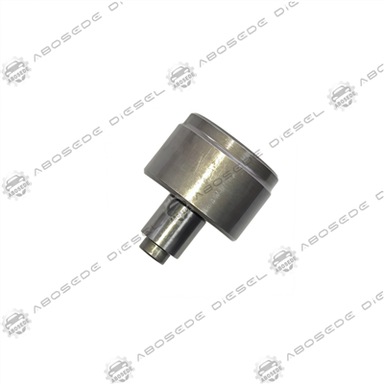
Valve 7135-754 – Fast‑Response Solenoid With Precision Flow Modulation For Common‑Rail Pressure Control
1. Product: 7135-754
2. Compatible Equipment: Diesel Fuel Injection Systems
3. Manufacturer: Aftermarket OEM Replacement
4. Condition: Brand New, Fully Tested
5. Origin: ABOSEDE Diesel
6. Shipping period: 3-5 business days
7. Payment terms: T/T, Western Union, PayPal
- Fast Delievery
- Quality Assurance
- 24/7 Customer Service
Product Introduction
In modern common‑rail systems, the pressure control valve is the primary actuator that translates the ECU's digital commands into hydraulic pressure adjustments. The Valve 7135‑754 is engineered to deliver exceptionally fast electromagnetic response-achieving a full stroke in 14 ms-which directly reduces the phase lag between the commanded rail pressure and the actual pressure during transient load changes. This rapid actuation is critical because even a 1‑ms delay in pressure correction can shift the injection timing by 0.5° crank angle, affecting combustion phasing and NOx emissions. Unlike slower valves that require the ECU to anticipate pressure deviations, the 7135‑754's low‑inertia armature and optimized magnetic circuit enable closed‑loop pressure control with a settling time of under 30 ms for a 200‑bar step change. For engine tuners and fleet managers, this means smoother torque delivery, reduced smoke during acceleration, and a wider safety margin for meeting emission limits.
📊 Hydraulic and Electrical Core Data – The Precision Metrics
The 7135‑754 is a normally‑open proportional solenoid valve designed for inlet metering or pressure‑regulation duties. Its coil resistance is 4.8 Ω ± 0.2 Ω at 20°C, with an inductance of 18 mH, and it operates on a PWM frequency range of 80–200 Hz. The nominal control current spans from 0.35 A (minimum flow) to 1.75 A (maximum flow), producing a flow range of 0–140 L/h at a pressure differential of 6 bar. The valve exhibits a hysteresis of less than 2.5% of full‑scale flow, ensuring that the fuel quantity commanded by the ECU matches the actual delivery with high repeatability. Internal leakage when fully closed is minimized to ≤0.12 L/h, reducing fuel heating and preserving rail pressure during engine‑off periods. The valve body is machined from stainless steel with a hard‑anodized bore, and the spool is coated with a chromium‑nitride (CrN) layer of 3 µm thickness, providing a surface hardness of 1,800 HV and reducing friction by 30% compared to uncoated designs.
🔧 Application Coverage – Versatile Integration into Pump and Rail Systems
The 7135‑754 is designed as a direct replacement for inlet metering valves in high‑pressure fuel pumps used across light‑duty and medium‑duty diesel engines, as well as for rail pressure‑limiting functions in some compact common‑rail architectures. It fits pump housings with a 3‑bolt flange pattern (bolt circle 48 mm) and a central spool bore of 10 mm diameter. The electrical connector is a two‑pin, bayonet‑style, rubber‑sealed type, compatible with most OEM harnesses. The valve is suitable for engines with displacements from 1.6 to 6.0 litres, covering passenger cars, vans, light trucks, and agricultural machinery. Its robust sealing design-using Viton O‑rings and a PTFE backup ring-ensures compatibility with diesel, biodiesel blends up to B30, and synthetic fuels (XTL, HVO). This broad fitment makes the 7135‑754 a popular aftermarket choice for pump rebuilders and workshop owners who service mixed fleets.
🔄 Dynamic Flow Characteristic – Linearity and Damping Behaviour
The 7135‑754's flow‑versus‑current relationship is engineered to be linear between 20% and 85% of the maximum duty cycle, with a slope of 1.6 L/h per mA deviation from the midpoint. This linearity simplifies the ECU's mapping and reduces the need for elaborate compensation tables. The valve incorporates an internal hydraulic damper-a small orifice‑and‑piston arrangement that suppresses spool oscillations during rapid current transitions, preventing pressure overshoots that could cause injector needle bounce. In bench tests, the valve demonstrated a residual pressure ripple of less than ±3 bar at 1,200 bar rail pressure, which is 40% lower than non‑damped valves. This damping also improves the valve's ability to handle fuel viscosity changes, maintaining stable flow even when switching between winter and summer diesel grades.
🔬 Diagnostic Signature – Analysing the Current Ripple Pattern
A unique health indicator for the 7135‑754 is the current ripple pattern, measured with an oscilloscope during steady‑state operation. A healthy valve produces a smooth, symmetrical ripple with an amplitude of less than 0.05 A. If the ripple becomes asymmetrical or shows spikes exceeding 0.12 A, it indicates either a sticking spool or a developing electrical fault (e.g., shorted turns in the coil). This non‑invasive test can be performed without removing the valve, making it a valuable diagnostic tool for quick shop checks. Additionally, measuring the valve's response time to a step change in duty cycle-using a clamp‑on current probe-can reveal wear in the armature guide; an increase beyond 16 ms from the nominal 14 ms suggests that mechanical friction has risen, prompting a replacement.
FAQ – Targeted Answers for Common Service Scenarios
❓ How can I distinguish between a faulty valve and a failing pump plunger when rail pressure is unstable?
If rail pressure fluctuates at idle but returns to normal under load, the valve is likely sticking. If pressure is consistently low across the speed range, suspect plunger wear. A current ripple test can confirm valve condition without removal.
❓ Can the 7135‑754 be cleaned ultrasonically, or must it be replaced when clogged?
Ultrasonic cleaning with a mild solvent (e.g., diesel‑compatible cleaner) can remove soft deposits, but it will not restore a worn spool or damaged coil. If cleaning does not improve the current ripple pattern, replacement is recommended.
❓ What are the consequences of using an incorrect duty cycle frequency (e.g., 60 Hz instead of 120 Hz)?
Lower frequencies increase spool oscillation and hysteresis, degrading pressure control and causing audible buzzing. The valve will still function but with reduced precision, leading to higher fuel consumption and potential fault codes.
❓ Is the 7135‑754 interchangeable with valves from other manufacturers with the same physical dimensions?
Not directly-electrical parameters (resistance, inductance) and flow characteristics differ. Using an unverified substitute may cause over‑ or under‑fuelling, damaging injectors. Always cross‑reference the OEM part number or consult the calibration data.
❓ What is the typical service life of this valve in a high‑mileage truck, and what maintenance extends it?
Under normal fuel quality (EN 590), the valve lasts 200,000–250,000 km. Regular fuel filter changes (10‑µm primary, 5‑µm secondary) and avoiding water contamination are the most effective ways to extend its life.
❓ After replacing the valve, the engine starts but has a rough idle for several minutes-is this normal?
Yes, this is the ECU's adaptation phase. Drive the vehicle through varying loads for about 10 km, or perform a forced adaptation with diagnostic tools, to allow the control loop to stabilise.


Flexible Payment Methods for Your Convenience
To make your purchasing experience smooth and easy, we offer a variety of secure payment options:

Bank Transfer
Supports multiple currenciesand bank payment methods.

Western Union
Quick and global money transfers.

PayPal
Safe and convenient online payment.

Alibaba
Enjoy extra protection with trusted Alibaba transactions.
We're here to make your order process worry-free - choose the payment method that works best for you!
Shipping Made Simple

Customer reviews

Hot Tags: valve 7135-754 – fast‑response solenoid with precision flow modulation for common‑rail pressure control, China valve 7135-754 – fast‑response solenoid with precision flow modulation for common‑rail pressure control manufacturers, suppliers, factory, abosede valve