


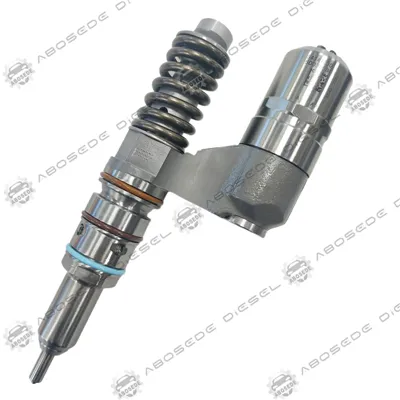
F0013L0J004 Piezo Common Rail Injector – Sub‑Millisecond Response For Ultra‑Precise Combustion Shaping
1. Product:F0013L0J004
2. Compatible Equipment: Diesel Fuel Injection Systems
3. Manufacturer: Aftermarket OEM Replacement
4. Condition: Brand New, Fully Tested
5. Origin: ABOSEDE Diesel
6. Shipping period: 3-5 business days
7. Payment terms: T/T, Western Union, PayPal
- Fast Delievery
- Quality Assurance
- 24/7 Customer Service
Product Introduction
In a common‑rail system, pressure is potential; the injector is the kinetic translator. The F0013L0J004 belongs to the second‑generation piezo‑actuated injector family, where a stack of piezoelectric crystals expands under voltage, directly opening the nozzle needle without the intermediary of a hydraulic amplifier. This eliminates the magnetic hysteresis and mechanical delay inherent to solenoid designs, enabling injection events that start and stop with near‑instantaneous precision - typically 0.25 ms from command to full lift, and 0.15 ms to close. For the engine control unit, this means the ability to schedule up to seven discrete injections per cycle, with dwell times as short as 0.3 ms, shaping the heat release rate to meet Euro VI and US EPA Tier 4 Final emissions while preserving fuel economy. The F0013L0J004 does not just meter fuel; it sculpts the combustion process in real time, adapting to load, altitude, and fuel quality with a responsiveness that solenoid injectors can only approximate.
▸ Hydraulic Circuit – The Leakage‑Reduced Architecture
Unlike solenoid injectors that use a two‑way or three‑way valve to control the control chamber, the F0013L0J004 employs a direct‑acting servo valve where the piezo pin directly modulates the outlet orifice of the control volume. This reduces the number of sealing faces, minimizing internal fuel leakage to 5–6% of injected volume, compared to 8–12% for conventional designs. The lower leakage translates into:
Reduced pump load (approximately 4% less crankshaft torque demand)
Lower fuel return temperatures (ΔT ≤ 8°C versus ≤ 14°C)
Less dilution of engine oil from unburned fuel during extended idle
The nozzle itself is a VCO (Valve Covered Orifice) type, with a needle guide that prevents sac volume retention - eliminating post‑injection dribble that contributes to hydrocarbon emissions.
▸ Application Compatibility – Engines and Pumps
The F0013L0J004 is dimensionally interchangeable with Bosch CRIN‑3 (Common Rail Injector, generation 3) bodies, using the standard M14×1.5 high‑pressure inlet and a two‑hole clamping flange (60 mm center distance). It is verified for:
Cummins X15 Efficiency / X12 (2017‑present, piezo‑equipped variants)
Volvo D13TC and D11 (Euro VI, Stage V)
Scania DC13 / DC16 (with EGR + SCR, piezo injectors)
Mercedes‑Benz OM471 / OM473 (Detroit DD15 Gen 5)
MAN D2676 / D2868 (common‑rail with piezo)
Iveco Cursor 13 / 16 (HI‑SCR systems)
Retrofit into older solenoid‑based engines is possible only if the ECU is re‑flashed with piezo‑compatible software (different current drivers and voltage boosters) - not a drop‑in swap without controller modification.
▸ Thermal and Mechanical Endurance – Real‑World Validation
The piezo stack is encapsulated in a hermetically sealed ceramic housing, backfilled with inert nitrogen to prevent oxidation of the internal electrodes. Thermal cycling tests from ‑35°C to +160°C (fuel temperature) over 1,000 cycles show a capacitance drift of less than 2%, ensuring consistent actuator displacement throughout the injector's service life.
The nozzle needle and seat are coated with a diamond‑like carbon (DLC) layer (2.5 µm thickness) on top of a chromium‑nitride base, achieving a surface hardness of 2,400 HV. This coating resists cavitation erosion (mass loss < 0.4 mg after 10⁷ cycles) and maintains its anti‑stick properties even when using biodiesel blends up to B30.
In accelerated endurance testing at 90% load and 2,200 bar, the F0013L0J004 maintained >96% of its original flow after 8,000 hours - exceeding the typical solenoid injector's 90–92% at the same interval.
▸ Installation and Calibration – The IQA Code is Mandatory
Each F0013L0J004 is supplied with a unique IQA (Injector Quality Adjustment) code, a 16‑character alphanumeric string that encodes its individual flow, timing, and voltage offset characteristics. This code must be entered into the engine ECU using diagnostic software (e.g., Cummins Insite, Volvo Tech Tool, Bosch EDC7/EDC17). Failure to do so will cause:
Cylinder‑to‑cylinder load imbalance (exhaust gas temperature spread > 60°C)
Increased engine noise and vibration (due to varying pilot injection quantities)
OBD diagnostic trouble codes (P1211–P1218 range)
Installation torque values:
High‑pressure line union nut: 40 ± 3 N·m (use new ferrule)
Retaining clamp bolts: 12 N·m + 90° (apply Loctite 243)
Leak‑off pipe connector: 25 N·m (do not overtighten)
Always lubricate the injector body O‑ring with clean fuel and ensure the cylinder head bore is free of carbon deposits - a common cause of poor seating and heat transfer.
FAQ – Practical Knowledge for Fleet Maintainers
Q1: Why does the F0013L0J004 require a higher voltage than standard 12V systems?
Piezo crystals need a high electric field to achieve the required strain. The injector driver in the ECU boosts battery voltage to 120‑200 V using a DC‑DC converter, and stores energy in a capacitor bank. This voltage is applied in a controlled waveform to charge and discharge the stack within microseconds. If your engine does not have a piezo‑compatible driver, the injector will not function - you cannot operate it with a simple relay.
Q2: How can I tell if a piezo injector is failing without specialized test equipment?
Field diagnosis relies on: (a) audible increase in combustion knock during pilot injection – a failing piezo often misses the pilot pulse, leading to a louder main event; (b) a sudden increase in fuel consumption (>5%) at constant load, indicating that the ECU is lengthening injection duration to compensate for reduced needle lift; (c) the leak‑off return flow – if it exceeds 80 ml/min per cylinder at idle (baseline ~50 ml/min), internal valve wear is likely.
Q3: Can I use the F0013L0J004 with biodiesel B100?
The injector's DLC coating and nitrile rubber seals are compatible with FAME up to B50 per EN 14214. For B100, the higher viscosity and lower compressibility (about 3% more than diesel) will retard the injection timing by approximately 1.2° crank angle at 1,500 rpm – the ECU can compensate via the fuel quality sensor up to B80. However, we recommend halving the service interval to 4,000 hours due to increased deposits on the nozzle.
Q4: What is the effect of altitude (above 3,000 m) on the piezo injector's performance?
The injector itself is unaffected by air pressure – its operation is purely hydraulic and electric. However, the lower intake air density reduces cylinder pressure, which decreases the backpressure on the nozzle, causing a slight increase in injected quantity (about 1.5% per 1,000 m). The ECU's altitude compensation map adjusts rail pressure and injection timing to correct this automatically, provided the barometric sensor is functioning.
Q5: Is it safe to clean a clogged F0013L0J004 using ultrasonic methods?
Ultrasonic cleaning in a suitable solvent (e.g., kerosene‑based) can remove soft carbon, but it does not restore worn needle‑seat geometry. Moreover, the piezo stack is sensitive to mechanical vibration – excessive ultrasonic power (>50 W/L) may loosen the internal wire bonds. We recommend professional flow‑bench testing after cleaning; if the flow deviates by more than 3% from the original IQA value, replacement is more cost‑effective.
Q6: How often should the injector's sealing washer be replaced?
The copper washer that seals the injector to the cylinder head is a single‑use item. Whenever you remove the injector, discard the old washer and install a new one – never re‑anneal or reuse it. The specified tightening torque for the clamp creates a deformation that ensures gas‑tight sealing; reusing a deformed washer will cause combustion gas leakage, overheating the injector body and damaging the piezo stack.


Flexible Payment Methods for Your Convenience
To make your purchasing experience smooth and easy, we offer a variety of secure payment options:

Bank Transfer
Supports multiple currenciesand bank payment methods.

Western Union
Quick and global money transfers.

PayPal
Safe and convenient online payment.

Alibaba
Enjoy extra protection with trusted Alibaba transactions.
We're here to make your order process worry-free - choose the payment method that works best for you!
Shipping Made Simple

Customer reviews

Hot Tags: f0013l0j004 piezo common rail injector – sub‑millisecond response for ultra‑precise combustion shaping, China f0013l0j004 piezo common rail injector – sub‑millisecond response for ultra‑precise combustion shaping manufacturers, suppliers, factory, 28320793 Diesel Injector for KIA Common Rail System, A6510700058 MERCEDES Common Rail Fuel Injector, Diesel Fuel Injector 28337917, DOOSAN Engine Injector, EJBR04401D Delphi diesel injector for SsangYong, R00002D High Pressure Injector MERCEDES BENZ
You Might Also Like
-
0414700006 | 504100287 Bosch Iveco Unit Injector: Th...
-

Cummins 3267978 K19/K38 High-Performance Diesel Fuel...
-

Toyota 23810-0E010 Fuel Rail Assembly | Genuine High...
-

384-0678 Hydraulic Unit Injector Pump – Built For St...
-

295050-0810 / 23670-09380 / 23670-0L110 Common Rail ...
-

295050-0320 Common Rail Injector Reducing Combustion...
