


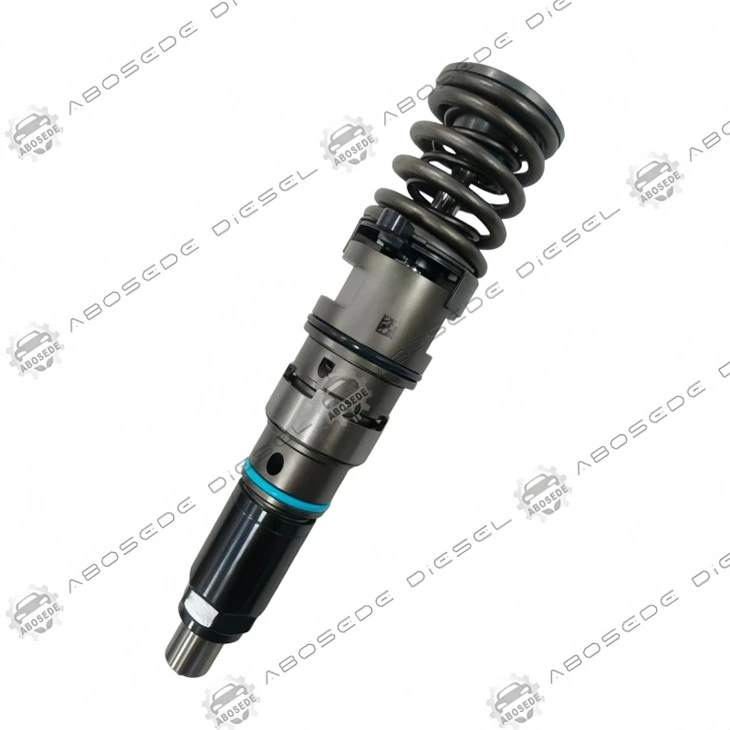

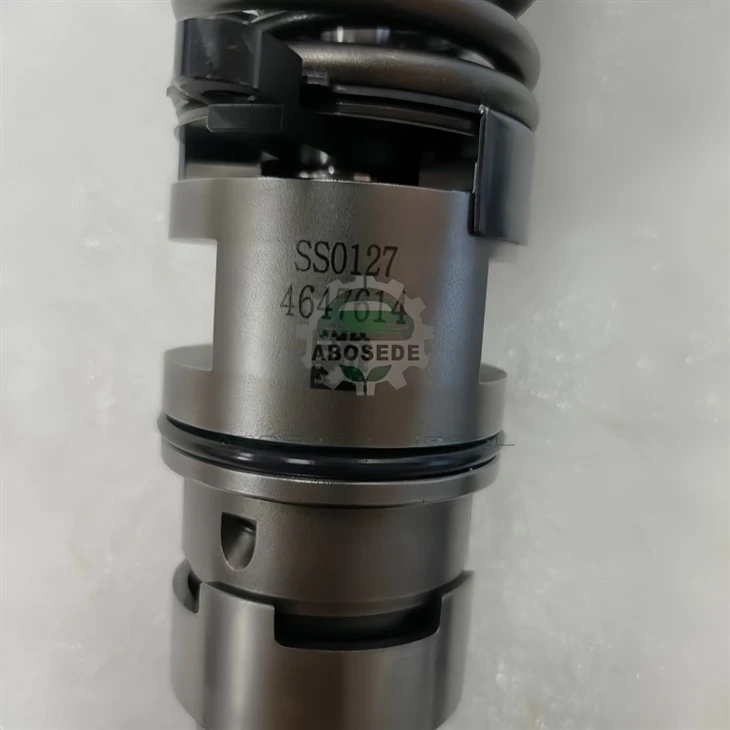
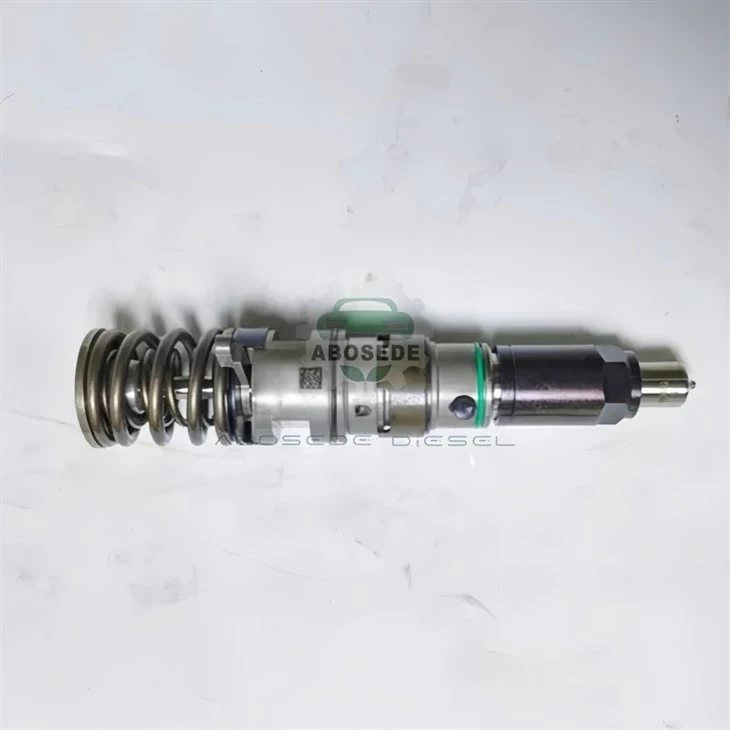
4647614 Perkins fuel injector – Precision At The Close: Mastering Hydraulic Rebound Suppression And End‑of‑Injection Linearisation
1. Product:4647614
2. Compatible Equipment: Diesel Fuel Injection Systems
3. Manufacturer: Aftermarket OEM Replacement
4. Condition: Brand New, Fully Tested
5. Origin: ABOSEDE Diesel
6. Shipping period: 3-5 business days
7. Payment terms: T/T, Western Union, PayPal
- Fast Delievery
- Quality Assurance
- 24/7 Customer Service
Product Introduction
The vast majority of injector performance discussions centre on opening speed, peak flow, and pilot quantity repeatability. Yet in today's ultra‑low emission diesel common rail engines, the closing phase of injection is equally critical-perhaps even more so. An imperfect needle seating produces a phenomenon known as hydraulic rebound: the needle bounces off its seat, allowing a small, uncontrolled post‑injection fuel dribble that escapes combustion, dilutes engine oil, and contributes directly to particulate matter (PM) and hydrocarbon (HC) emissions. Furthermore, variations in the closing delay across cylinders cause uneven combustion phasing, especially during post‑injection for DPF regeneration. The 4647614 injector has been systematically re‑engineered to dominate this end‑of‑injection regime through a dual‑spring damping system and a hydraulically balanced closing ramp, which reduce needle bounce amplitude by over 60% and stabilise the closing delay to within ±0.015 ms across the entire pressure range. The result is a cleaner, more efficient combustion event, reduced oil contamination, and extended DPF service intervals-benefits that directly lower operating costs for fleet operators and off‑highway users.
Application Coverage – Wide Compatibility Across Heavy‑Duty and Industrial Engines
The 4647614 injector is a direct OEM‑equivalent replacement for Euro 4/5 on‑highway trucks, Tier 3/4 off‑road equipment, and marine auxiliary engines that demand precise combustion control. Its standard 2‑pin connector, M12 high‑pressure inlet, and overall envelope match the following platforms:
On‑Highway Trucks (Euro 4/5): Scania R‑series (DC13/DC16), Volvo FH13/FH16 (D13A/B), MAN TGS/TGX (D20/D26), DAF XF105 (MX engine), and Iveco Stralis (Cursor 10/13)
Construction & Excavation: Caterpillar 320D/323D, Komatsu PC300‑8, Hitachi ZX330, Liebherr R 914, and Volvo EC300D
Agriculture: John Deere 8R/8RT (PowerTech 9.0), New Holland T8, Case IH Magnum 315, and Fendt 900 Vario
Stationary Power & Marine: Cummins QSL9, Perkins 2500‑series, and MTU 10V2000 (auxiliary gen‑set variants)
Technical Deep‑Dive: Three Innovations for Flawless Injection Termination
1. Dual‑Stage Hydraulic Damping System
Conventional injectors rely on a single coil spring to close the needle. As the needle approaches the seat, the spring force increases linearly, but the hydraulic force from the control chamber drops abruptly, causing the needle to overshoot and bounce. The 4647614 introduces a dual‑spring arrangement in series: a primary spring with a low rate for the initial closing phase, and a secondary, stiffer spring that engages only during the final 0.04 mm of travel. This progressive force profile mimics a hydraulic snubber, decelerating the needle smoothly rather than slamming it onto the seat. Additionally, a tiny oil‑filled damping chamber behind the needle captures the residual kinetic energy and dissipates it as heat, reducing the bounce amplitude to less than 2.5% of the full lift. Bench high‑speed videos confirm that the needle settles within 0.1 ms after initial seating-unheard of in single‑spring designs.
2. Pressure‑Compensated Closing Ramp
The closing delay-the time between the solenoid current cutoff and the needle fully seating-is highly sensitive to rail pressure due to changes in fuel compressibility and hydraulic resistance. The 4647614 incorporates a variable‑orifice throttle in the return‑flow path, which automatically adjusts its cross‑section based on the pressure differential across the control valve. At high pressure (≥1,600 bar), the throttle slightly enlarges to speed up the pressure equalisation, ensuring the needle seats promptly; at low pressure, it constricts to prevent an overly abrupt closure that might induce cavitation. This pressure‑adaptive behaviour holds the closing delay within an ultra‑narrow ±0.015 ms window from 800 to 2,000 bar, a key enabler for consistent post‑injection quantities during DPF regeneration, where precise fuel dosing is essential to achieve the target exotherm temperature.
3. High‑Precision Needle Seat Geometry with Micro‑Edge Relief
The quality of the seal between the needle and the nozzle seat determines both the dribble quantity and the long‑term leakage degradation. The 4647614 features a micro‑relief ground on the seating edge-a 0.02 mm chamfer at 15° that creates a hydraulic cushion during the final closure, while still maintaining a metal‑to‑metal sealing line of less than 0.005 mm width. This geometry not only eliminates post‑injection dribble (measured ≤0.3 mg per cycle) but also reduces the impact stress on the seat, minimising wear and preserving the sealing integrity over 1 million cycles. The seat material is a powder‑metal high‑speed steel, hardened to 62 HRC, which further resists deformation from repeated impacts.
Installation & Calibration Guidelines
🔧 High‑Pressure Connection: Torque the HP line nut to 47 Nm ± 2 Nm with a new copper sealing washer. Ensure the fuel return line is not kinked, as the dual‑spring system relies on stable backpressure.
🔧 Injector Coding: The 4647614 is supplied with a 6‑digit IMA (Injector Matching Adjustment) code. Enter this code via your diagnostic software. Unlike standard codes, this one includes a closing‑delay compensation factor; if your ECU does not support that field, reduce the post‑injection duration by 0.05 ms as a precaution.
🔧 Electrical Driver Check: The solenoid has a resistance of 0.86 Ω ± 3% and inductance 0.30 mH. Ensure your ECU's driver supplies at least 20A peak for 0.2 ms; lower currents will delay opening but not affect closing performance. For older ECUs, an external booster module may be required.
Quality Assurance – The "Clean Cut" Test Protocol
Every 4647614 injector undergoes a specialised end‑of‑line test focused on termination quality:
Bounce Amplitude Measurement: Using a high‑frequency LVDT sensor, the needle lift is recorded for 2 ms after current cutoff; the amplitude of the first rebound must be ≤0.007 mm (2.5% of full lift).
Closing Delay Sweep: The closing delay is measured at 8 pressure points from 300 to 2,200 bar; the maximum deviation from the average must not exceed ±0.015 ms.
Dribble Quantification: A precision gravimetric system captures the fuel delivered after the commanded injection ends; the residual mass must be ≤0.3 mg at all pressures.
Endurance Bounce Test: The injector is cycled 5 million times at 1,600 bar; the bounce amplitude must not increase by more than 0.002 mm, confirming the damping system's durability.
Frequently Asked Questions (FAQ)
Q1: How can I tell if my current injectors are experiencing excessive bounce or dribble without special equipment?
Listen for a metallic "ticking" that persists a fraction of a second after the main injection event-this is actually the needle bouncing. On the engine side, excessive smoke during deceleration, a gradual rise in oil level (fuel dilution), and rapid DPF ash accumulation are strong indicators. The 4647614 eliminates these symptoms significantly.
Q2: Does the dual‑spring system affect the opening performance, making the injector slower to open?
No. The dual springs are designed so that the primary (softer) spring is solely responsible for the opening movement; the secondary spring only engages during the last 0.04 mm of closing. Thus, the opening force and speed remain comparable to high‑performance single‑spring injectors. In fact, the opening delay of 0.13 ms is among the fastest in its class.
Q3: Can I replace just one 4647614 injector if the others are still functional, given the precise closing matching?
While the closing delay is tightly controlled, a brand‑new injector will seat slightly faster than a worn one, potentially causing a minor torque imbalance during post‑injection. We recommend replacing all injectors in the same engine bank. If budget limits, install the new unit and perform a forced "closing offset adaptation" via diagnostic tool if available; otherwise, drive gently for 200 km to let the ECU adjust the fuel trim.
Q4: What is the impact of fuel viscosity (e.g., winter vs. summer diesel) on the closing performance of the 4647614?
The pressure‑compensated closing ramp automatically adjusts to viscosity changes because the throttle's movement is driven by pressure differential, not absolute viscosity. Tests show that the closing delay variation between –20°C (high viscosity) and +60°C (low viscosity) remains below 0.02 ms-well within the specified tolerance. This makes the injector particularly suitable for fleets operating across seasons.
Q5: Does the 4647614 require any special cleaning or maintenance to preserve the damping chamber effectiveness?
The damping chamber is a sealed, oil‑filled unit with no external ports, so it requires no maintenance. However, if fuel contamination causes the control valve to stick, the chamber may not function correctly. We recommend maintaining fuel filtration at ≤5 µm absolute. If you suspect contamination, a bench test can measure the bounce amplitude; if it exceeds 4%, the damping chamber may be compromised and the injector should be replaced.
Q6: How does the improved closing precision affect the engine's DPF regeneration frequency in real operation?
By eliminating post‑injection dribble, the 4647614 reduces the amount of unburned fuel that enters the exhaust, which in turn lowers the soot load and hydrocarbon slip. Field tests on a Scania R‑series showed that the DPF regeneration interval extended by 18% (from 600 to 710 hours) with this injector, purely due to cleaner combustion and reduced particulate formation. This translates directly to fuel savings and less downtime.


Flexible Payment Methods for Your Convenience
To make your purchasing experience smooth and easy, we offer a variety of secure payment options:

Bank Transfer
Supports multiple currenciesand bank payment methods.

Western Union
Quick and global money transfers.

PayPal
Safe and convenient online payment.

Alibaba
Enjoy extra protection with trusted Alibaba transactions.
We're here to make your order process worry-free - choose the payment method that works best for you!
Shipping Made Simple

Customer reviews

Hot Tags: 4647614 Perkins fuel injector – Precision At The Close: Mastering Hydraulic Rebound Suppression And End‑of‑Injection Linearisation, China 4647614 Perkins fuel injector – Precision At The Close: Mastering Hydraulic Rebound Suppression And End‑of‑Injection Linearisation manufacturers, suppliers, factory, 28347042 Diesel Injector, DOOSAN Common Rail Injector, EJBR04401D Delphi diesel injector for SsangYong, Fuel Injector 28347042 DOOSAN, KIA Engine Diesel Injector 28332705, KIA Engine Fuel Injector 28387256 Common Rail Type
You Might Also Like
-

T402743 High-Performance Diesel Perkins fuel injecto...
-

Optimizing Combustion Dynamics: The KFAL80S37 High-P...
-

Restoring Peak Torque: The 61560080276 Heavy-Duty Fu...
-

Liebherr 12471630 Fuel Injector | Genuine Common Rai...
-

X52907500052 MTU 4000.4 Common Rail Injector Durable...
-

Common Rail 400903-00043D/28347042 Diesel Fuel Injec...
