


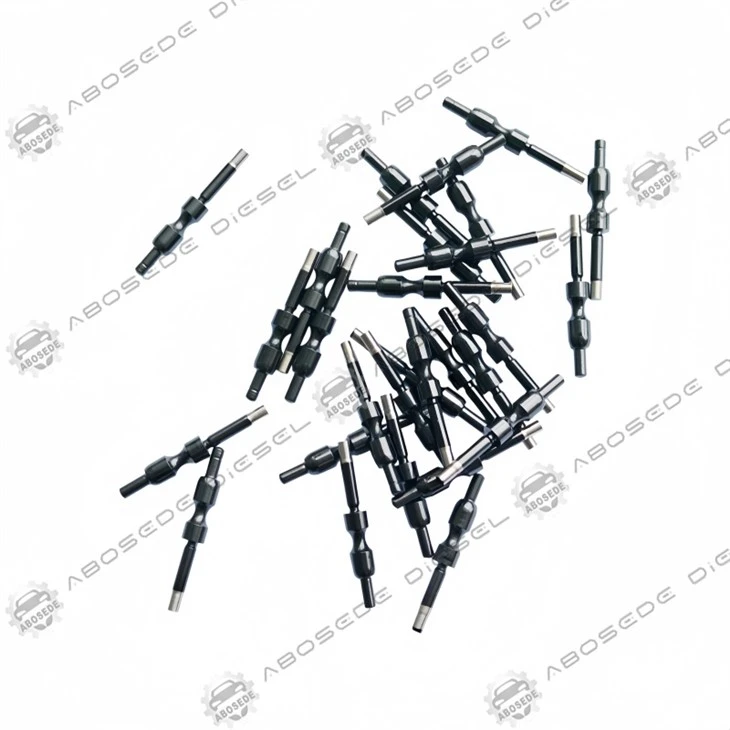

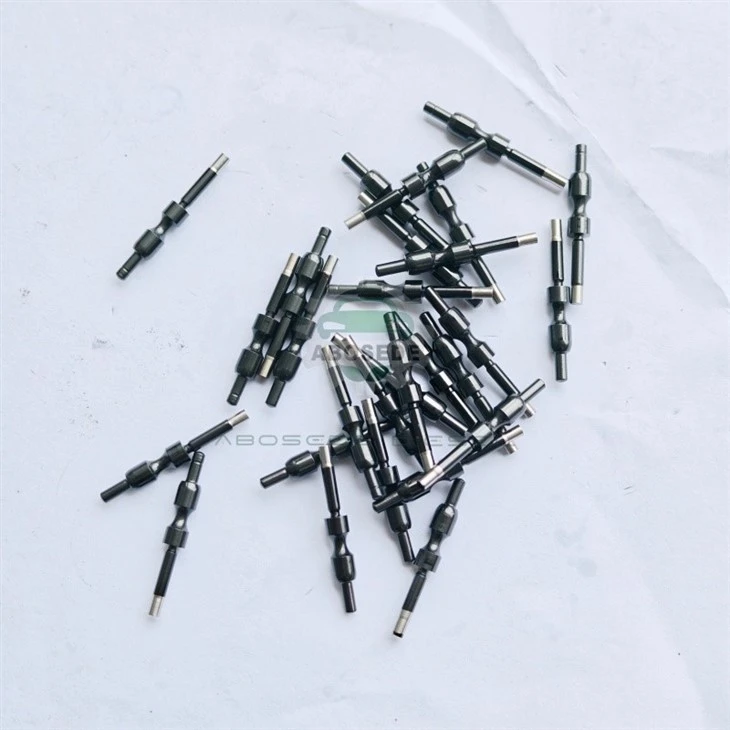
2057401 Armature Core — Magnetic Circuit Component For Diesel Common Rail Solenoid Injectors
1. Product:2057401 Armature Core
2. Compatible Equipment: Diesel Fuel Injection Systems
3. Manufacturer: Aftermarket OEM Replacement
4. Condition: Brand New, Fully Tested
5. Origin: ABOSEDE Diesel
6. Shipping period: 3-5 business days
7. Payment terms: T/T, Western Union, PayPal
- Fast Delievery
- Quality Assurance
- 24/7 Customer Service
Product Introduction
Every solenoid common rail injector contains a magnetic circuit: coil → stator → air gap → armature → back to stator. The 2057401 armature core is the moving element in that circuit. It is not a simple slug of steel. Its mass, hardness, and face geometry determine how fast the armature accelerates when the coil is energized, and how cleanly it releases when the current is cut.
Response time in a common rail injector is measured in tens of microseconds. The armature core is one of the few components that directly influences that number without being a wear part in the traditional sense.
📊 Specification Reference
| Attribute | Value |
|---|---|
| Model | 2057401 |
| Function | Moving magnetic element / armature |
| Material | Soft magnetic iron alloy, low carbon |
| Hardness | HRC 40–48 (surface), controlled core |
| Outer diameter | Injector-family specific, typically 5–7 mm class |
| Face flatness | ≤ 0.003 mm |
| Surface roughness (Ra) | ≤ 0.4 µm on magnetic faces |
| Residual magnetism | Low, controlled by alloy selection |
| Operating temperature | Up to 180 °C |
Unlike the ball seat or spring seat, the armature core is specified primarily by magnetic behavior - not by wear resistance. Hardness matters only insofar as it prevents deformation at the contact face, which would alter the air gap.
⚡ Air Gap: The Number That Defines Injection
The armature core does not touch the stator when the injector is at rest. There is a working air gap - usually in the range of 0.03 to 0.06 mm depending on the injector platform. The 2057401 core's face flatness and height tolerance exist to hold that gap within specification.
🔹 Gap too large → weaker magnetic force → slower opening → reduced pilot quantity
🔹 Gap too small → armature may contact stator → sticking, erratic actuation, or over-travel
This is why armature core replacement is never a "drop-in" operation. The gap must be verified after assembly, and the verification method depends on the injector family.
🔧 Mass, Inertia, and Actuation Speed
The armature core's mass is not arbitrary. Newton's second law applies inside the injector as much as anywhere else: for a given magnetic force, lower mass means faster acceleration. But lower mass also means less momentum to overcome hydraulic resistance from the control valve spring and fuel pressure.
The 2057401 core is balanced for its target injector family. Machining material off the core to "lighten it" is a modification that changes calibration without changing the part number - and it is one of the reasons rebuilt injectors sometimes fail to match OEM response curves.
🧪 Surface Finish and Magnetic Hysteresis
Magnetic hysteresis losses occur every time the coil energizes and de-energizes. These losses generate heat and slightly delay the release of the armature. Surface finish on the magnetic faces affects eddy current behavior - rougher surfaces create more localized current paths.
The 2057401 core is finished to Ra ≤ 0.4 µm on its magnetic faces. This is not a cosmetic requirement. It reduces eddy current losses and helps the armature release cleanly, which matters most at short pulse widths where injection quantity is measured in microliters.
❓ FAQ - Practical Questions from the Common Rail Aftermarket
1. Can the 2057401 armature core be reused if it looks clean?
Visual inspection is not enough. Face flatness and residual magnetism both affect performance. If the injector is being rebuilt to OEM response targets, replacement is the safer path.
2. How does armature core wear manifest?
It usually does not "wear" in the abrasive sense. It deforms at the contact face, which changes the air gap. Symptoms include slow response and pilot quantity drift.
3. Does fuel contamination affect the armature core?
Yes, indirectly. Contaminants that reach the control valve can cause the armature to stick or move irregularly, even if the core itself is undamaged.
4. Is there a difference between armature cores for different injector brands?
Absolutely. Bosch, Delphi, Denso, and Continental each use different magnetic circuit designs. The 2057401 core is specific to its injector family.
5. Can I measure air gap without disassembling the injector?
No. Air gap is an internal dimension. It must be checked during assembly with the correct gauge or shim set.
6. What happens if the armature core is installed backwards?
In most designs it will not seat correctly and the injector will not build control pressure. Always verify orientation against the injector's parts diagram.
Basic Information about the Company


Flexible Payment Methods for Your Convenience
To make your purchasing experience smooth and easy, we offer a variety of secure payment options:

Bank Transfer
Pay directly in 15 supported currencies.

Western Union
Quick and global money transfers.

PayPal
Safe and convenient online payment.

Alibaba
Enjoy extra protection with trusted Alibaba transactions.
We're here to make your order process worry-free - choose the payment method that works best for you!
Shipping Made Simple

Customer reviews

Hot Tags: 2057401 armature core — magnetic circuit component for diesel common rail solenoid injectors, China 2057401 armature core — magnetic circuit component for diesel common rail solenoid injectors manufacturers, suppliers, factory
You Might Also Like
-

F00041N022 Diesel Common Rail Injector Repair Kit — ...
-

F00041N040 Diesel Common Rail Injector Sealing & Cal...
-

Delivery Valve A20 – The Small Component That Preven...
-

Optimized For Performance: The 146403-9620 VE Pump Head
-

530 Plunger – Precision Pump Element for Inline & Di...
-

F00RJ02177 — Bosch Common-Rail Injector Repair / Sea...
