


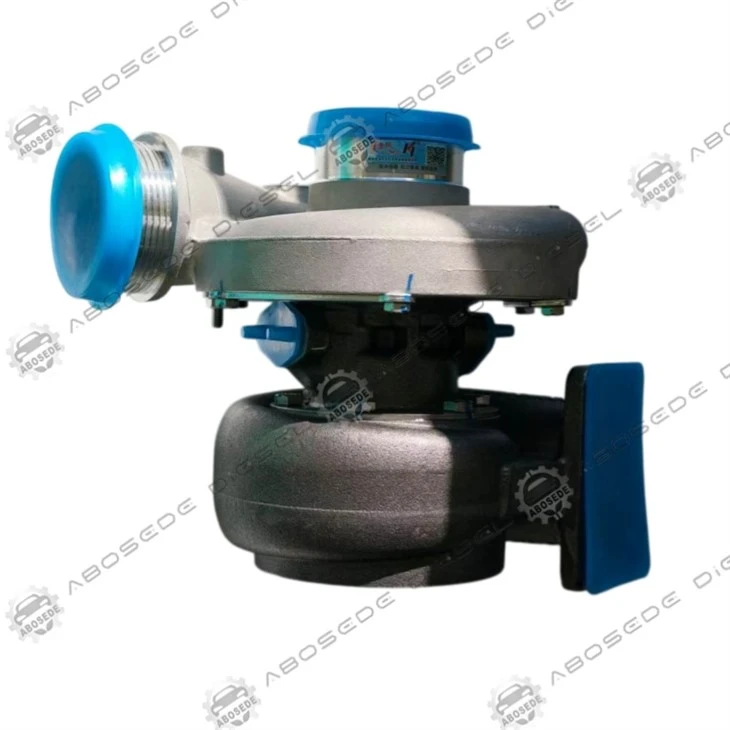

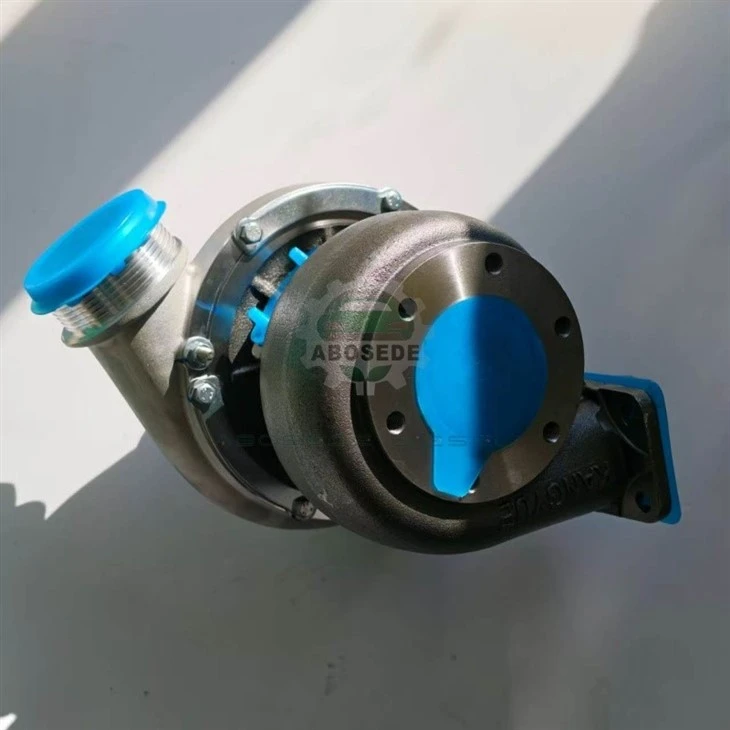
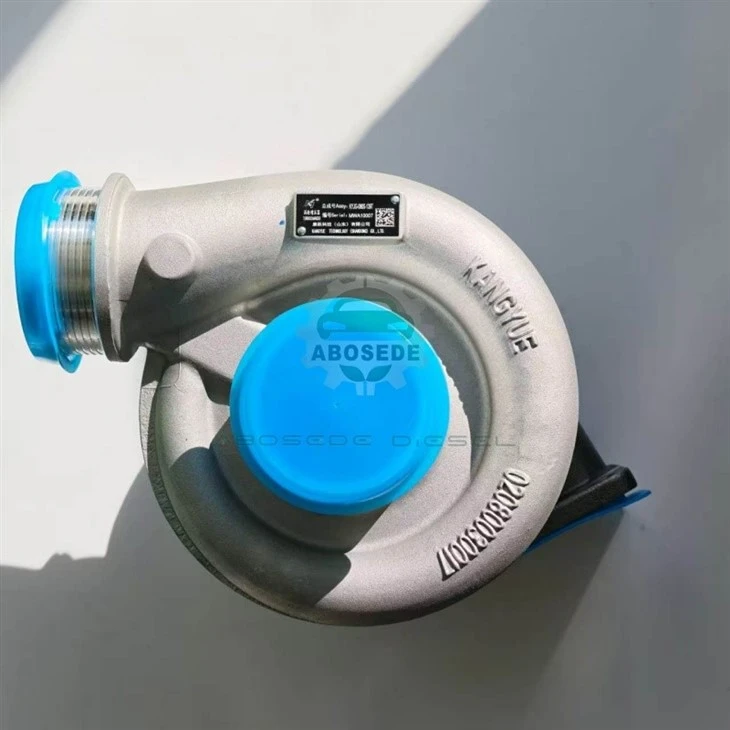
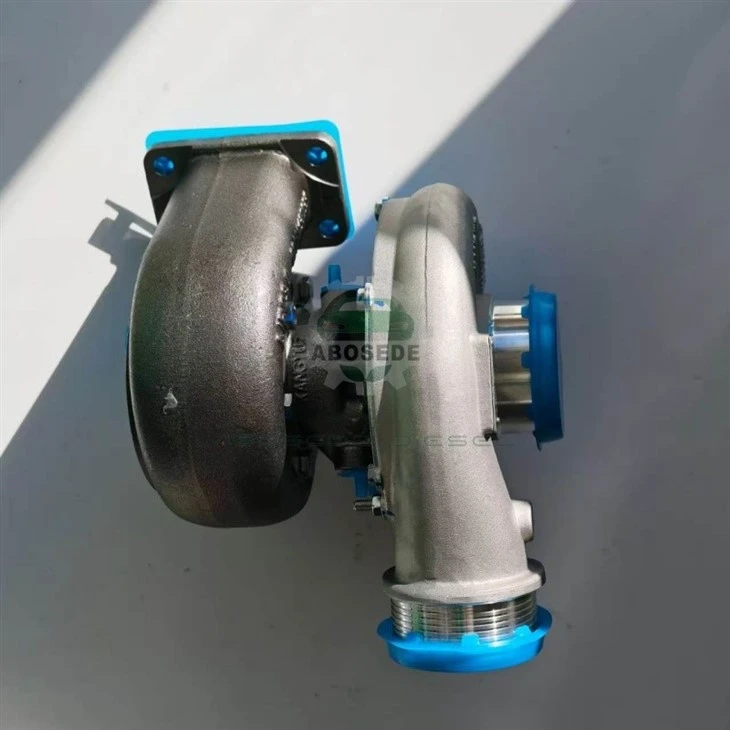
Genuine KYJG-080S-139T Turbocharger | High-Efficiency Compressor Assembly For Common-Rail Diesel Engines | Air-Fuel Synergy & Transient Response
1. Product: KYJG-080S-139T
2. Compatible Equipment: Diesel Fuel Injection Systems
3. Manufacturer: Aftermarket OEM Replacement
4. Condition: Brand New, Fully Tested
5. Origin: ABOSEDE Diesel
6. Shipping period: 3-5 business days
7. Payment terms: T/T, Western Union, PayPal
- Fast Delievery
- Quality Assurance
- 24/7 Customer Service
Product Introduction
In the architecture of modern diesel engines, the common-rail fuel system often takes the spotlight for its microsecond-precision injection control. However, fuel alone cannot optimize combustion without its critical counterpart: the correct mass of compressed air. The KYJG-080S-139T turbocharger acts as the dynamic air supplier. Its compressor and turbine geometries are calibrated to match the volumetric efficiency demands of high-pressure common-rail engines. When the ECU commands a precise fuel pulse, this turbocharger must already be delivering the corresponding boost pressure to prevent rich mixtures, excessive smoke, and thermal stress. It is the mechanical enabler of the air-fuel equivalence ratio (lambda) in real-time.
🌪️ Air-Fuel Synergy: The Invisible Handshake with Common-Rail
The relationship between a turbocharger and a common-rail system is a continuous, closed-loop negotiation. As the rail pressure increases to atomize fuel finer for better combustion, the required oxygen mass also increases. The KYJG-080S-139T is engineered to deliver a high pressure ratio with minimal inertia. This ensures that during a sudden throttle tip-in-when the common-rail injectors instantly dump more fuel-the turbocharger can spool rapidly to match the demand. If the turbo lag is too pronounced, the engine will experience a temporary over-fueling condition, leading to high exhaust gas temperatures (EGT) and carbon accumulation on the injector tips and variable geometry mechanisms.
📏 Decoding the Nomenclature & Technical Data
The designation KYJG-080S-139T reflects a specific aerodynamic and dimensional profile. The "080" typically correlates to the compressor inducer diameter or a specific flow class, while "139T" indicates the turbine housing A/R ratio or specific trim geometry.
▸ Type: High-efficiency mixed-flow or radial-flow turbocharger.
▸ Core Material: Heat-resistant cast steel turbine wheel and aluminum alloy compressor wheel.
▸ Lubrication: High-pressure engine oil feed (critical for bearing longevity).
▸ Boost Threshold: Tuned for mid-to-high RPM ranges typical of commercial diesel duty cycles.
▸ Fitment Note: This unit is application-specific. OE cross-referencing against the engine serial and turbo ID plate is mandatory. It is not a "universal" upgrade.
🔥 Thermodynamics & Material Boundaries
The turbine side of the KYJG-080S-139T operates in the harshest environment of the engine bay, handling exhaust gases that can exceed 750°C. The material science here is paramount. The turbine wheel is manufactured using specialized nickel-based alloys via investment casting to resist thermal creep and oxidation. Meanwhile, the compressor housing is precision-machined to maintain tight tolerances, preventing compressor surge-a condition where the airflow reverses, causing a fluttering noise and severe thrust bearing damage. In a common-rail system, a surge event can disrupt the Mass Air Flow (MAF) sensor readings, forcing the ECU to limit fuel injection and triggering a derate.
⚙️ Transient Response and VGT/VNT Dynamics
Many modern common-rail engines rely on variable geometry (VNT/VGT) mechanisms to optimize the turbine inlet area. While the KYJG-080S-139T may utilize a wastegate or fixed geometry, the principle remains: optimizing the exhaust gas pulse. A fixed geometry turbo relies heavily on the exhaust manifold design to maintain pulse energy. When replacing this unit, the condition of the exhaust system and the intake tract must be inspected. A clogged EGR cooler or a leaking charge air cooler will nullify the turbo's performance, causing the common-rail system to over-compensate with injection timing, leading to poor fuel economy and elevated soot levels.
🧪 Comprehensive Quality Control & Test Documentation
We don't just sell parts; we validate them. Every component we supply undergoes rigorous testing on our in-house calibration benches. We provide full test documentation for our products, ensuring you receive verifiable data rather than generic claims.

READY STOCK & GLOBAL SUPPLY
Well-stocked diesel fuel injection components, professionally packed and ready for shipment to customers worldwide.


❓ FAQ - Turbo & Common-Rail System Integration
Q1: How can I tell if a boost leak is causing a common-rail fault?
A boost leak often triggers a P0299 (underboost) code or a P0101 (MAF) code. The ECU limits fuel due to the lack of oxygen. You may also hear a hissing sound during acceleration or notice excessive black smoke.
Q2: What happens to the common-rail system if the turbo fails and leaks oil?
If the turbo seal fails, oil can enter the intake or exhaust. In the intake, it causes runaway engine conditions (dangerous); in the exhaust, it fouls the sensors and DOC/DPF, causing backpressure that severely impacts the engine's breathing and combustion efficiency.
Q3: Why is the turbocharger ID plate so important for fitment?
A single engine model can have multiple turbo variations (e.g., different A/R ratios or wastegate settings) depending on the emission standard or power rating. The ID plate guarantees the aerodynamic match to the ECU's fuel maps.
Q4: Can I clean the turbocharger instead of replacing it?
If the failure is limited to external carbon buildup on the turbine side (causing vanes to stick on VNT models), cleaning may work. However, if the compressor wheel has contacted the housing or the bearings have play, replacement is the only safe option.
Q5: How does a clogged air filter affect the turbo and the fuel system?
A clogged filter creates a vacuum at the compressor inlet. The turbo must work harder to achieve the boost target, spinning at excessive RPMs, which can lead to shaft failure. The common-rail ECU may then over-fuel, causing soot buildup on the injectors.
Q6: Is it necessary to perform an ECU relearn after turbo replacement?
If the turbo actuator is electronically controlled or the VNT mechanism requires calibration, an OEM-level diagnostic tool is necessary to run a relearn procedure to prevent overboost or underboost conditions.
Basic Information about the Company


Flexible Payment Methods for Your Convenience
To make your purchasing experience smooth and easy, we offer a variety of secure payment options:

Bank Transfer
Pay directly in 15 supported currencies.

Western Union
Quick and global money transfers.

PayPal
Safe and convenient online payment.

Alibaba
Enjoy extra protection with trusted Alibaba transactions.
We're here to make your order process worry-free - choose the payment method that works best for you!
Shipping Made Simple

Customer reviews

Hot Tags: Genuine KYJG-080S-139T Turbocharger | High-Efficiency Compressor Assembly For Common-Rail Diesel Engines | Air-Fuel Synergy & Transient Response, China Genuine KYJG-080S-139T Turbocharger | High-Efficiency Compressor Assembly For Common-Rail Diesel Engines | Air-Fuel Synergy & Transient Response manufacturers, suppliers, factory
You Might Also Like
-

DTZ-TURBOCHARGER T04264490 – High-Performance Diesel...
-

T04E66 Turbocharger – Gradient‑Matched For OM366 Com...
-

GT25 Turbocharger – Fast-Response Trim For Isuzu 4HE...
-

TD04LR6-04HR (49477-02003) – High-Bandwidth EWG Turb...
-

BV39 (54399700118) – Cross-Platform Inertia-Matched ...
-

RHF5 (06H145701Q) – Surge-Adaptive Turbo For Audi 2....
