


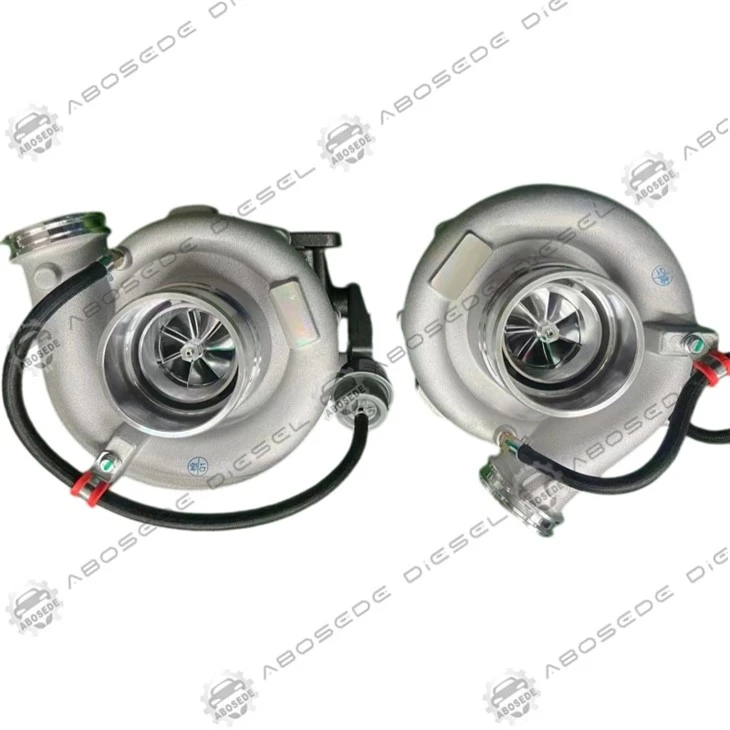


807501-0016 Variable-Geometry Turbocharger: Three Ratios And One Temperature That Define Its Health
1. Product:807501-0016
2. Compatible Equipment: Diesel Fuel Injection Systems
3. Manufacturer: Aftermarket OEM Replacement
4. Condition: Brand New, Fully Tested
5. Origin: ABOSEDE Diesel
6. Shipping period: 3-5 business days
7. Payment terms: T/T, Western Union, PayPal
- Fast Delievery
- Quality Assurance
- 24/7 Customer Service
Product Introduction
Boost pressure is the number most workshops quote and the least informative one they can quote. The 807501-0016 variable-geometry turbocharger is an energy-conversion device, and its condition is described by the balance between the energy it extracts from exhaust gas and the energy it delivers to intake air. That balance is readable through three ratios and one temperature, all of which can be derived from sensors already fitted to a common-rail engine. Reading those four values together identifies whether the turbo has lost flow capacity, lost efficiency, or lost actuator authority - three different faults that produce the same boost deviation code and three different repair decisions.
🌬️ Ratio One: Compressor Pressure Ratio
Divide absolute boost pressure by absolute ambient pressure at a defined speed and load point. This ratio states how much the compressor is multiplying pressure. A ratio that falls short at high mass flow while remaining correct at low mass flow points to compressor-side restriction or wheel damage; a ratio that is correct everywhere but slow to build indicates actuator or vane response rather than a flow problem. Recording the ratio at three mass-flow points separates a capacity fault from a response fault, which no single boost reading can do.
🔥 Ratio Two: Turbine Expansion Ratio
Divide absolute turbine inlet pressure by absolute turbine outlet pressure at the same operating point. This ratio states how much energy the turbine is being offered. An expansion ratio that is abnormally high while the compressor ratio is low means the turbine is receiving energy but not converting it - typically a choked or damaged turbine wheel, or a vane mechanism stuck in the closed position. An expansion ratio that is low in both directions points upstream, to exhaust restriction or a leaking manifold, and replacing the turbo would not correct it.
⚖️ Ratio Three: The Power Balance Between the Two Sides
Multiply mass flow by temperature rise across the compressor to estimate the work absorbed; compare it with mass flow times temperature drop across the turbine, which estimates the work available. The ratio of the two is a practical efficiency indicator. A turbo passing both individual ratios but showing a poor balance is losing energy at the shaft, the bearings or the seals. This is the check that explains a turbo that meets boost targets while consuming oil or producing excessive shaft play.
🌡️ The One Temperature: Compressor Outlet
Compressor outlet temperature is the most useful single thermal measurement on this assembly, because it responds immediately to efficiency loss. An outlet temperature above the expected value for the measured pressure ratio means the compressor is doing the same work with more heat, which is the earliest measurable sign of wheel erosion or fouling. Log it at a fixed operating point so the next service has a baseline to compare against; without a baseline the number has no meaning.
❓ FAQ
Q1: Is a boost deviation code enough to condemn the 807501-0016?
No. Calculate the compressor ratio, turbine ratio, power balance and outlet temperature at a fixed point first. The code states a deviation, not a cause.
Q2: The turbo reaches target boost but uses oil. What does that suggest?
A power-balance or seal problem rather than a flow problem. Check shaft play and the balance ratio before replacing the assembly.
Q3: Can a stuck vane mechanism show normal boost at steady state?
Yes. Steady-state boost can be correct while transient response is slow. An actuator sweep exposes it.
Q4: Why does the fault appear suddenly after months of normal operation?
The controller compensates with fuel and EGR until the compensation limit is reached. The turbo degrades gradually and the symptom appears when correction saturates.
Q5: Does the actuator need calibration after replacement?
Usually yes, through a learn or adaptation procedure. An uncalibrated actuator holds the vanes at the wrong angle and mimics a mechanical fault.
Q6: How should a spare 807501-0016 be stored?
Capped, upright, dry and at moderate temperature, with the manufacturing date recorded. Open ports and moisture are the main storage risks.
Basic Information about the Company


Flexible Payment Methods for Your Convenience
To make your purchasing experience smooth and easy, we offer a variety of secure payment options:

Bank Transfer
Pay directly in 15 supported currencies.

Western Union
Quick and global money transfers.

PayPal
Safe and convenient online payment.

Alibaba
Enjoy extra protection with trusted Alibaba transactions.
We're here to make your order process worry-free - choose the payment method that works best for you!
Shipping Made Simple

Customer reviews

Hot Tags: 807501-0016 variable-geometry turbocharger: three ratios and one temperature that define its health, China 807501-0016 variable-geometry turbocharger: three ratios and one temperature that define its health manufacturers, suppliers, factory
You Might Also Like
-
3785384 Turbocharger: How Boost Pressure Governs The...
-

1118300ANAC Turbocharger For JMC Ruimai 2.5 China V:...
-

XL 1150900004-1 Turbocharger For JMC Ruimai 2.5 Chin...
-

T04B91 Turbocharger – Heavy-Duty Boost Solution For ...
-
GT2256MS Turbocharger – Precision-Matched For Isuzu ...
-

TD04L·14T (49377-06204) – 5-Cylinder Pulse-Aligned T...
