


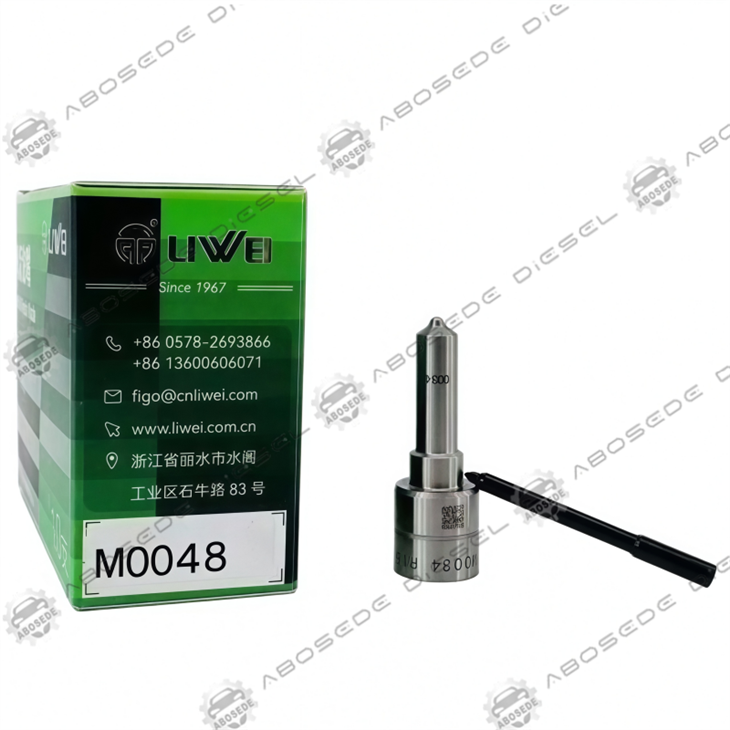

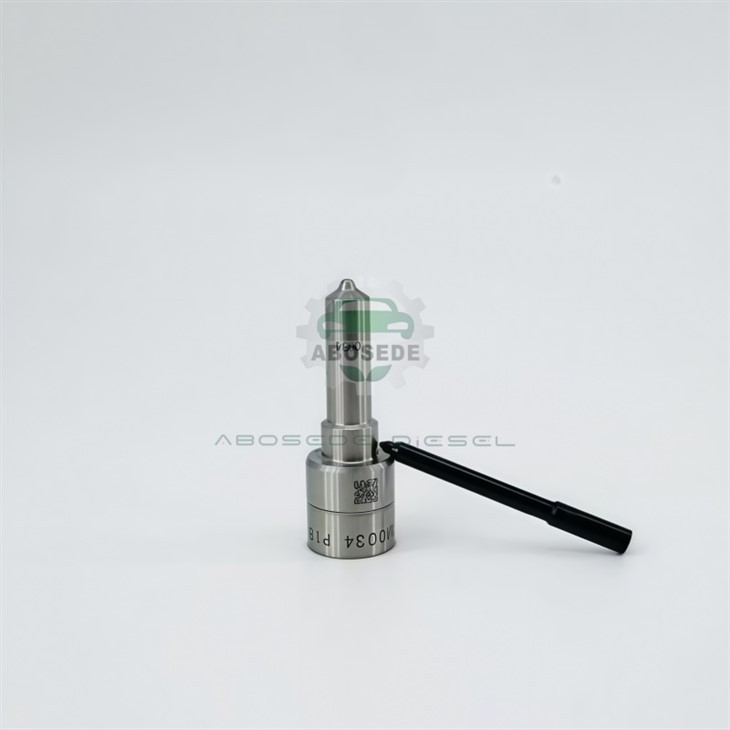
Liwei M0048 Diesel Injector Nozzle: High-Flow Seat Impact, Low-Load Metering Resolution & Thermal Flow Drift in Common-Rail Systems
1. Product:M0048
2. Compatible Equipment: Diesel Fuel Injection Systems
3. Manufacturer: Aftermarket OEM Replacement
4. Condition: Brand New, Fully Tested
5. Origin: ABOSEDE Diesel
6. Shipping period: 3-5 business days
7. Payment terms: T/T, Western Union, PayPal
- Fast Delievery
- Quality Assurance
- 24/7 Customer Service
Product Introduction
High flow is not automatically better flow. The Liwei M0048 is an eight-hole, 148° diesel injector nozzle referenced for 3.0L common-rail systems with high fuel demand. Its 0.210 mm orifices and 1,100 cc/min static flow make it a high-flow component. But larger holes change more than peak delivery. They increase needle seat impact energy, reduce low-load metering resolution and make flow more sensitive to thermal drift. The ECM can correct total fuel mass with IQA/trim and cylinder balance. It cannot correct seat erosion, partial-lift nonlinearity or hot-flow drift. This guide focuses on seat impact, low-load resolution, thermal flow drift, lapping and installation verification.
📌 Fitment & Nozzle Identification
The M0048 is a bare nozzle, not a complete injector. It must be matched to the correct injector body, needle, control valve, seat angle and opening pressure. It is commonly referenced for Bosch CRI and Denso G2/G3 injector families with an 8 × 0.210 mm geometry. Confirm injector part number, nozzle number, needle diameter, seat angle, opening pressure, needle lift and lapping requirement before ordering. Do not install a bare nozzle without checking injector body wear. Also confirm the piston bowl and fuel demand. A high-flow nozzle in a low-output engine can cause rough idle, smoke and poor low-load stability. Fitment must match both the injector body and the combustion target.
📊 High-Flow Geometry & Flow Data
| Parameter | Service target | Diagnostic meaning |
|---|---|---|
| Nozzle type | Inward-opening, differential pressure | Common-rail nozzle family |
| Number of holes | 8 | Flow area and plume count |
| Orifice diameter | ≈ 0.210 mm | High flow and lower low-load resolution |
| Spray angle | 148° | Deep-bowl matching |
| Static flow @ 100 bar | ≈ 1,100 cc/min | High-load hydraulic baseline |
| Hole-to-hole flow variation | ≤ 1.5% | Spray symmetry and soot control |
| Flow deviation over 5,000 h | ≤ ±2.0% | Long-term thermal stability |
| Opening pressure | ≈ 235 ± 10 bar | Start of injection |
| Needle guide diameter | ≈ 4.6 mm | Concentricity and friction |
| Needle-to-nozzle clearance | ≈ 4–6 µm | Leakage and seizure risk |
| Seat angle | ≈ 60° conical | Sealing and after-dribble control |
| Seat diameter | ≈ 4.2 mm | Seat impact and sealing area |
| Needle lift | ≈ 0.25 mm | Partial-lift and full-load flow |
| Material | M42 high-speed steel | Hot hardness and wear resistance |
| DLC coating | ≈ 1.5 µm on guide | Friction and soot resistance |
| Max rail pressure | ≈ 1,800 bar | Pressure compatibility |
⚙️ High-Flow Seat Impact & Erosion
Larger orifices deliver more fuel, but they also require higher needle lift and larger seat diameter. The M0048 uses a 4.2 mm seat diameter and 0.25 mm needle lift. When the needle closes, it lands with more energy than a small-flow nozzle. Over millions of cycles, that impact energy can erode the seat, especially if fuel lubricity is poor or contamination is present. Seat erosion opens a leakage path. The nozzle may after-dribble, return flow may rise and smoke may increase. The ECM can extend pulse width to compensate for lost fuel mass, but it cannot seal an eroded seat. This is why high-flow nozzles should be inspected for seat contact pattern, not only static flow.