


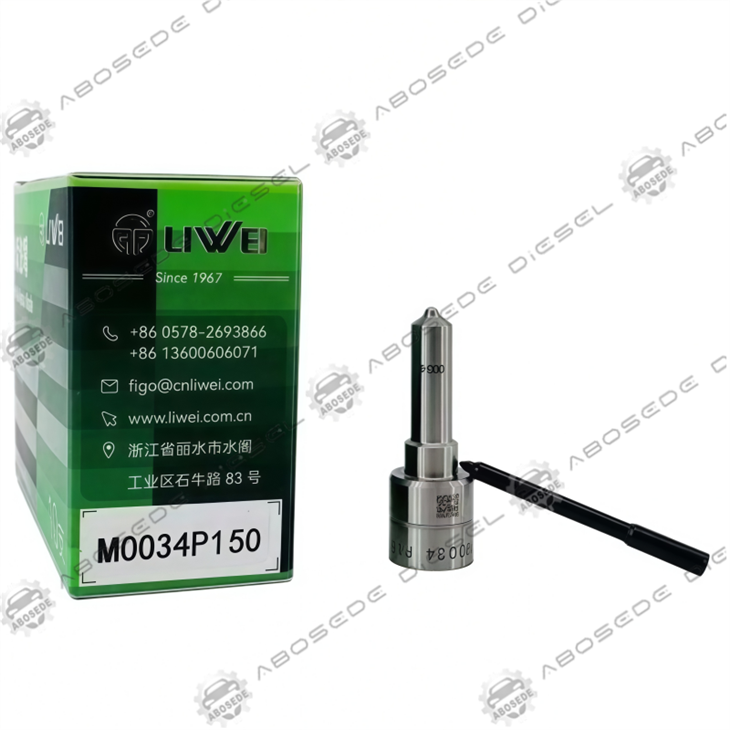

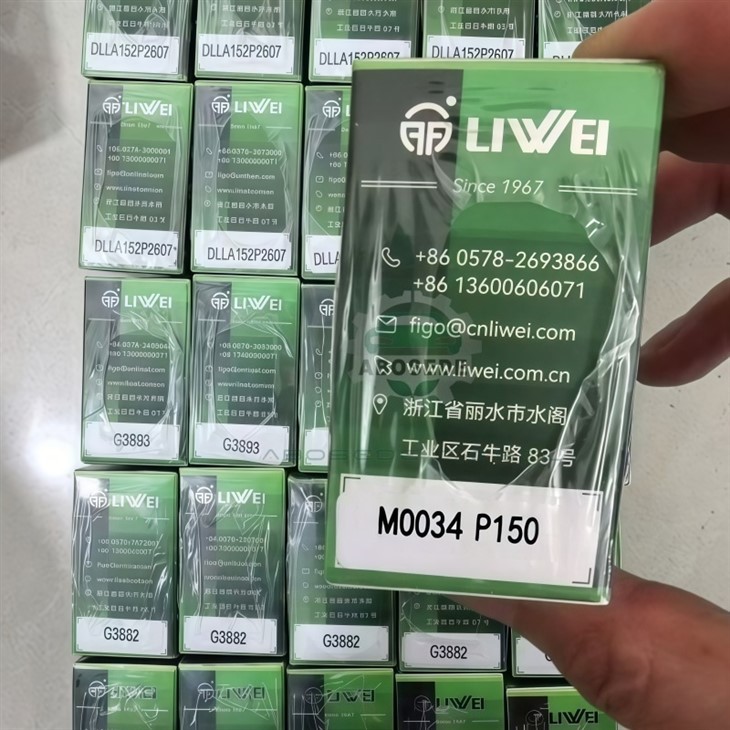
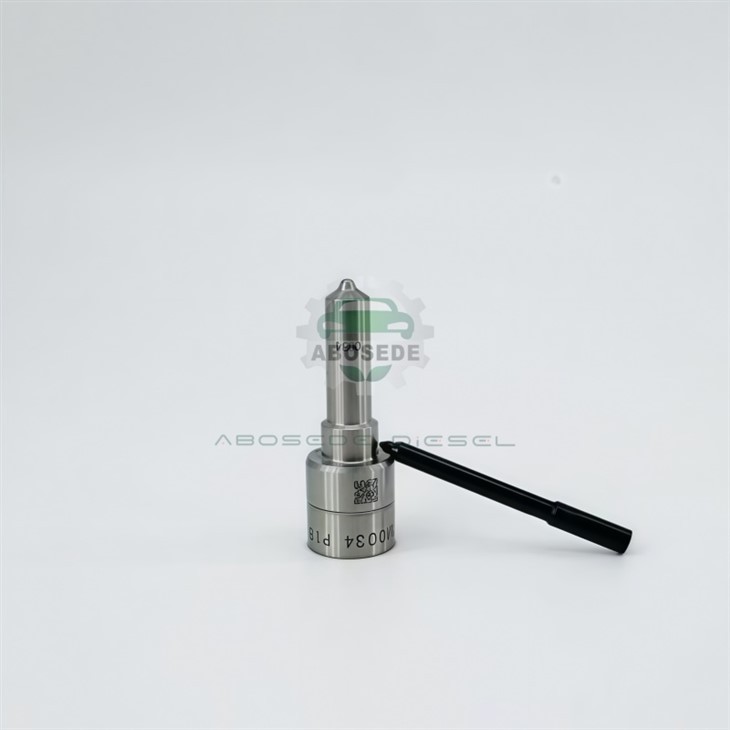
Liwei M0034P150 Diesel Injector Nozzle: OEM-Equivalent Hydraulic Signature, IQA Mapping & ECM Adaptive Learning Boundary
1. Product:M0034P150
2. Compatible Equipment: Diesel Fuel Injection Systems
3. Manufacturer: Aftermarket OEM Replacement
4. Condition: Brand New, Fully Tested
5. Origin: ABOSEDE Diesel
6. Shipping period: 3-5 business days
7. Payment terms: T/T, Western Union, PayPal
- Fast Delievery
- Quality Assurance
- 24/7 Customer Service
Product Introduction
OEM-equivalent is not a part-number claim. It is a hydraulic signature match. The Liwei M0034P150 is an eight-hole, 150° diesel injector nozzle referenced for 3.0L V6 common-rail engines, including Mercedes OM642, BMW M57/N57 and JLR 3.0 TDV6. It is a bare nozzle, not a complete injector. Two nozzles can share the same hole count, spray angle and static flow, yet produce different opening delay, closing delay and return-flow curves once installed in the injector body. Those differences change the injector's hydraulic signature. If the signature does not match the ECM's IQA/trim code, long-term fuel trim drifts toward its learning boundary. This guide focuses on hydraulic signature verification, IQA mapping and ECM adaptive learning limits.
📌 Fitment & Nozzle Identity
The M0034P150 must be matched to the correct injector body, needle, control valve, seat angle, opening pressure and needle lift. Confirm injector part number, nozzle number, needle diameter, seat angle, lapping requirement and copper washer specification before ordering. Do not install a bare nozzle without checking injector body wear and sleeve condition. Also confirm the combustion system. A 150° cone is a standard angle for many 3.0L V6 bowls, but bowl depth and swirl ratio still affect spray targeting. A nozzle that fits mechanically can still deliver the wrong hydraulic signature.
📊 Hydraulic Signature & Flow Data
| Parameter | Service target | Diagnostic meaning |
|---|---|---|
| Nozzle type | Inward-opening, differential pressure | Common-rail nozzle family |
| Number of holes | 8 | Flow area and plume count |
| Orifice diameter | ≈ 0.195 mm | Atomization and flow rate |
| Spray angle | 150° | V6 bowl matching |
| Static flow @ 100 bar | ≈ 950 cc/min | Hydraulic baseline |
| Flow accuracy | ≤ ±2.0% of OEM nominal | IQA mapping validity |
| Hole-to-hole flow variation | ≤ 1.5% | Spray symmetry and soot control |
| Opening pressure | ≈ 225 ± 10 bar | Start of injection |
| Needle guide diameter | ≈ 4.3 mm | Concentricity and friction |
| Needle-to-nozzle clearance | ≈ 4–6 µm | Leakage and seizure risk |
| Seat angle | ≈ 60° conical | Sealing and after-dribble control |
| Seat diameter | ≈ 3.9 mm | Seat contact and flow transition |
| Needle lift | ≈ 0.23 mm | Partial-lift and pilot stability |
| DLC coating | ≈ 1.5 µm on guide | Friction and soot resistance |
| Max rail pressure | ≈ 1,800 bar | Pressure compatibility |
⚙️ Hydraulic Signature: More Than Static Flow
A nozzle controls only part of the injection event. The injector body contains the control valve, control chamber, spring and solenoid. These parts determine when the needle lifts, how long it stays open and how quickly it closes. A replacement nozzle that matches static flow but differs in inlet radius, seat diameter or guide clearance changes the hydraulic signature. That signature includes opening delay, closing delay, control-chamber fill and discharge rate, and return-flow curve. The ECM uses the IQA/trim code to predict fuel mass from rail pressure and pulse width. If the hydraulic signature does not match the code, the ECM must learn a correction. The learning range is limited. When it is exhausted, the engine may idle rough, smoke, derate or set a cylinder balance fault.