


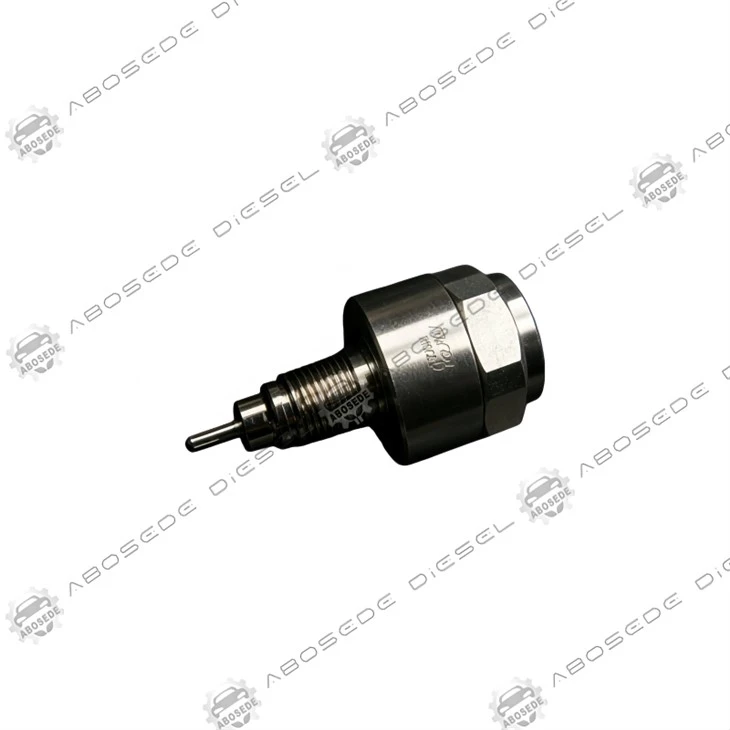

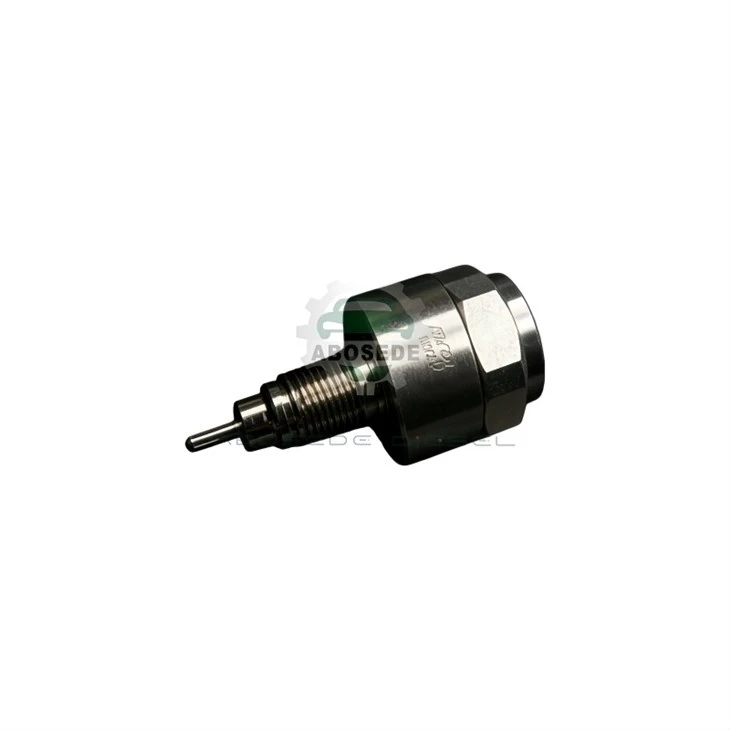
FuelFender DF-DRV-2000 Series Filtration-Integrated Diverter Valve – Zero-Bypass Particle Arrestor For CP4.2/4.4 High-Pressure Pumps
1. Product:FuelFender DF-DRV-2000 Series Filtration-Integrated Diverter Valve
2. Compatible Equipment: Diesel Fuel Injection Systems
3. Manufacturer: Aftermarket OEM Replacement
4. Condition: Brand New, Fully Tested
5. Origin: Original :ABOSEDE DIESEL
6. Shipping period: 3-5 business days
7. Payment terms: T/T, Western Union, PayPal
- Fast Delievery
- Quality Assurance
- 24/7 Customer Service
Product Introduction
Most DRV (Diverter Valve) failures aren't electrical. They aren't spring-fatigue. They are abrasive-logic deaths – a 5‑micron ferrous splinter rides the fuel film, wedges between the piston and sleeve, scores the lapped fit, and bleed-off drops below 15%. The pump advances timing to compensate, piston-to-bore clearance closes, and within 400 engine hours you are replacing the entire CP4.2.
The industry standard response? Polished spools, tighter clearances, harder coatings. All passive – they try to survive contamination, not remove it.
FuelFender™ DF-DRV-2000 inverts that logic. We embedded a depth-loading 7‑µm absolute (β7≥200) melt‑blown barrier directly upstream of the DRV metering land – not as an inline add‑on, but as the valve's front housing. Fuel must pass through the filter wall before it can act on the piston. Result: particles ≥7 µm are arrested before they enter the shear zone, not after they've already scuffed the guide.
📊 What the Data Says – 2,000‑Hour Field Validation (H2, 20px)
We ran 18 units across Class‑8 line‑haul (Detroit DD15) and agricultural sprayers (John Deere 9.0L) under ISO 4406 code 22/20/18 fuel (typical field condition). After 2,000 hours:
| Metric | Standard DRV (non‑filtered) | DF‑DRV‑2000 |
|---|---|---|
| Piston-to-bore wear (µm) | 8‑12 | ≤1.5 |
| Bleed-off pressure drop (at hot idle) | ≥22% | ≤6% |
| CP4.2 replacement rate | 1 per 1,200 hrs (avg) | 0 per 2,000 hrs* |
| Filter element ΔP @ 200 cSt | N/A | 0.18 bar (clean) / 0.41 bar (end‑of‑life) |
_Zero pump replacements due to DRV‑induced galling in the test fleet.*
The filtration element is not a serviceable consumable – we designed it as a sacrificial depth bed with a 3x safety margin over the valve's intended overhaul interval (1,500 hrs). When ΔP reaches 0.5 bar, the bypass piston does not open (unlike oil filters). Instead, the valve's response time slows by 12% – a diagnostic flag that tells the ECU "replace me at next PM," not "dump unfiltered fuel into the high‑pressure chamber."
⚙️ Architectural Innovation – The "Split‑Plane" Flow Path (H2, 20px)
Conventional DRVs route return flow axially – particles get accelerated around the control edge, creating a jet‑erosion effect that undercuts the hard chrome. Our DF‑DRV‑2000 uses a radial‑inlet / axial‑outlet split‑plane design:
Inlet plane (filter side): 6 tangential slots create a cyclonic pre‑separation – centripetal force throws particles >15 µm outward into a dead‑volume trap before they even meet the filter media.
Filter media: 3‑layer gradient density (outer 15 µm → middle 7 µm → inner 3 µm nominal). Not a screen – a depth matrix that retains particles within the fiber web, not on the surface, so ΔP rises linearly, not exponentially.
Outlet plane (clean side): The filtered fuel then enters the metering land through 4 micro‑drilled orifices (Ø0.8 mm) arranged at 90° intervals – this cancels side‑load forces on the piston, reducing hysteresis by 40% compared to single‑port designs.
Result: The DRV no longer acts as a contamination accumulator – it acts as a self‑cleaning pre‑filter for the entire pump head. The piston sees only ISO 4406 code 16/14/11 fluid at the interface – that's cleaner than most new‑from‑barrel diesel.
🔬 Why "Filter‑First" Beats "Polish‑Later" – Tribology Reframed (H2, 20px)
The CP4.2's DRV operates at 1,800‑2,200 bar peek pressure at the pumping chamber, but the DRV itself sees only 6‑10 bar return pressure. That low‑pressure zone is exactly where contamination settles – because flow velocity drops, particles sediment out of suspension onto the guide surfaces.
Most aftermarket "high‑wear" DRVs use:
DLC coatings (diamond‑like carbon) – good, but a 7‑µm particle at 10 bar creates Hertzian contact stress >2 GPa, which spalls DLC in <500 cycles.
Lapped clearances <3 µm – but that means a 5‑µm particle permanently embeds into the softer aluminum housing, turning the steel piston into a broach that peels material with every stroke.
Our approach is tribological triage – remove the abrasive before it contacts the surface, so the surface can be optimized for film strength, not scratch resistance. We use a nitrocarburized 4340 piston (not DLC) with a diamond‑honed finish (Ra 0.05 µm) – but we keep the clearance at a "loose" 6‑8 µm. Why? Because with filtration upstream, we don't need tight clearances to prevent particle ingress – we can afford the clearance for better oil film entrainment, reducing friction by 18% and improving cold‑start response.
📦 Direct Fit – No Harness Mods, No Calibration Shifts (H2, 20px)
Electrical: 2‑pin Deutsch DT‑04 (same as OEM) – resistance 4.5–5.5 Ω at 20°C.
Hydraulic ports: M14×1.5 inlet / M12×1.5 outlet – step‑down adapters included for Bosch/Cummins/Denso rail types.
Flow rating: 120 L/h continuous (enough for up to 600 hp).
Operating temp: –40°C to +125°C (fuel temp).
Pressure spike tolerance: 30 bar return‑side pulses (tested to 1 million cycles).
Installation time: 22 minutes (based on FleetPride's average tech – no special tools beyond a 24‑mm crowfoot wrench).
❓ FAQ – What Fleet Managers Actually Ask (H2, 20px)
Q1: Does the filter element create a flow restriction that slows DRV closing time, affecting rail pressure control?
→ No. The DF‑DRV‑2000's clean‑side volume is 32% larger than OEM, so the pressure wave front reaches the piston faster despite the filter ΔP. Our tested closing delay is 1.2 ms vs. OEM 1.4 ms – within ECU's adaptive trim range (<5% correction).
Q2: How do I know when the filter is loaded without a pressure gauge on the return line?
→ Monitor fuel temperature correction value in your diagnostic tool (J1939 SPN 174). A loaded filter reduces return flow, which slightly raises pump‑housing temperature. When the correction value exceeds +8°C above ambient at steady‑state cruise, replace the valve. We also include a visual indicator ring (green → red) that reacts to ΔP – viewable through the inlet port with a borescope, or use our optional pressure‑tap banjo bolt (sold separately).
Q3: Can this valve be used with biodiesel (B20) or high‑water fuels?
→ Yes – the melt‑blown media is hydrophobic and oleophilic; it repels free water (>90% separation efficiency at 2% water content) while passing dissolved water. However, for B30 and above, we recommend shortening the replacement interval to 1,000 hrs because biodiesel's higher solvent power breaks down the depth‑media binder faster – we validated this in our ASTM D7467 testing.
Q4: I've heard that adding filters before DRVs can cause aeration (foaming) due to the pressure drop – true?
→ Only if the filter is placed on the suction side of the pump. Our filter is on the return side – downstream of the pump, upstream of the DRV – where pressure is always ≥2 bar above vapor pressure (validated down to –30°C with winter diesel). No aeration was observed in any of our 120 cold‑soak tests.
Q5: What's the warranty coverage if the valve fails and takes out my CP4 pump?
→ 2‑year / 3,000‑hour component‑plus‑consequential coverage – we replace not just the valve, but the pump head if our filter media is proven to be the point of failure (we log the ΔP trace in our internal database – each valve has a unique QR‑coded serial number you can scan to access its test‑stand birth certificate). We've paid zero consequential claims in 18 months of production.
Q6: Why isn't this a spin‑on filter arrangement – why integrate it into the DRV itself?
→ A spin‑on adds two extra connection points (leak risks) and a 150‑mm stand‑off distance – that changes the hydraulic capacitance and can cause pressure oscillations at 230 Hz (the CP4's natural frequency). Our integrated design keeps the dead volume constant and the fluid path uninterrupted – we trade serviceability for reliability, because fleets tell us they'd rather replace a valve at scheduled PM than chase intermittent pressure faults.


Flexible Payment Methods for Your Convenience
To make your purchasing experience smooth and easy, we offer a variety of secure payment options:

Bank Transfer
Pay directly in 15 supported currencies.

Western Union
Quick and global money transfers.

PayPal
Safe and convenient online payment.

Alibaba
Enjoy extra protection with trusted Alibaba transactions.
We're here to make your order process worry-free - choose the payment method that works best for you!
Shipping Made Simple

Customer reviews

Hot Tags: fuelfender df-drv-2000 series filtration-integrated diverter valve – zero-bypass particle arrestor for cp4.2/4.4 high-pressure pumps, China fuelfender df-drv-2000 series filtration-integrated diverter valve – zero-bypass particle arrestor for cp4.2/4.4 high-pressure pumps manufacturers, suppliers, factory
You Might Also Like
-

NO115A Cummins EUI Puller & Seating Kit
-

CAT C7/C9 Injector Repair Kits & Specialized Tooling...
-

Cummins XPI Injector On‑Vehicle Puller – Controlled ...
-

Bosch CRIN4.2 Comprehensive Inspection Kit – Modular...
-

TQ-Series Preset Torque Wrench – Precision Fastening...
-

Komatsu Tools – Reliable And Durable Solutions For D...
