


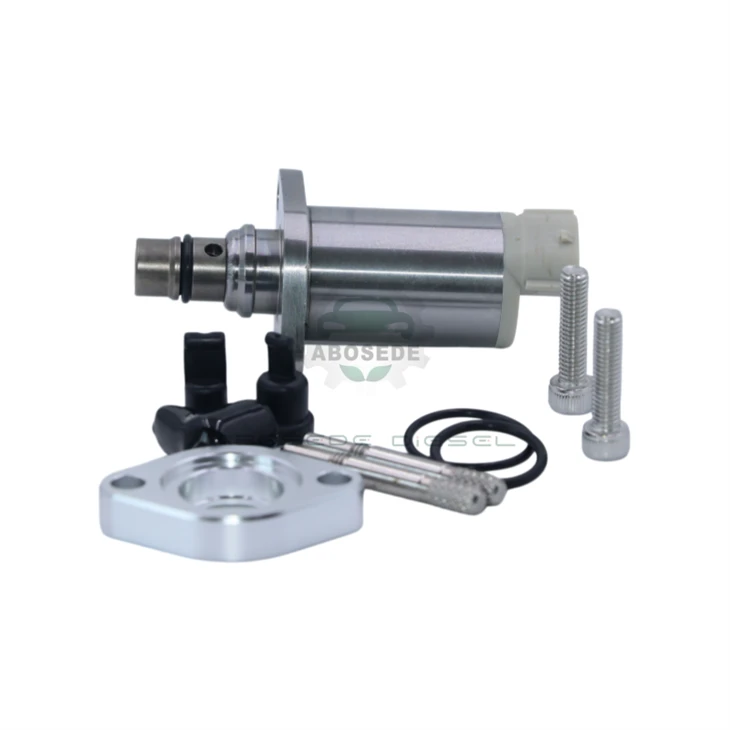

04226-OL010 Denso Suction Control Valve – Return Flow Heat Rejection & Pump Thermal Equilibrium For HP3 Common Rail Pumps On Toyota 1KD-FTV & 2KD-FTV Commercial Diesel Platforms
1. Product:04226-OL010
2. Compatible Equipment: Diesel Fuel Injection Systems
3. Manufacturer: Aftermarket OEM Replacement
4. Condition: Brand New, Fully Tested
5. Origin: ABOSEDE Diesel
6. Shipping period: 3-5 business days
7. Payment terms: T/T, Western Union, PayPal
- Fast Delievery
- Quality Assurance
- 24/7 Customer Service
Product Introduction
The 04226-OL010 operates as the thermal equilibrium guardian within the Denso HP3 compact common rail pump ecosystem - a precision-calibrated Suction Control Valve whose internal bypass flow architecture serves a dual function that extends far beyond simple inlet metering: it simultaneously regulates the pump's waste heat rejection rate. Within the HP3 pump, every compression stroke that does not result in fuel delivery to the rail converts its mechanical input energy into heat that must be exported from the pump housing to prevent thermal saturation. This waste heat exits the pump through two paths - conducted heat through the pump mounting flange into the engine block, and convected heat carried away by the SCV's internal bypass fuel flow returning to the fuel tank. The bypass flow is not a design inefficiency; it is an actively managed cooling circuit. When this bypass flow is compromised - through a restricted return passage, a spool that cannot open its bypass land fully due to bore varnish, or a return spring that has lost preload and altered the bypass-to-inlet flow ratio - the pump's thermal equilibrium shifts. The pump housing temperature rises, the fuel within the plunger chambers heats beyond its design point, and the resulting reduction in fuel density produces a progressive, insidious loss of volumetric efficiency that the ECM compensates for by commanding higher SCV duty cycles, which generates still more heat in a self-amplifying thermal spiral. The 04226-OL010 restores the designed bypass flow characteristic that maintains the HP3 pump's thermal equilibrium, re-establishing the stable operating temperature, consistent fuel density, and predictable volumetric efficiency that Toyota 1KD-FTV (Hilux Vigo, Fortuner, Prado) and 2KD-FTV (Hiace, Hiace Commuter) engines require for sustained fuel economy during high-ambient-temperature operation and extended high-load highway cruising.
Bypass Flow Architecture & Pump Waste Heat Export
The HP3 pump's total inlet fuel flow - delivered by the electric lift pump at 4–6 bar - divides into two paths within the SCV body: the metered forward flow that enters the plunger chambers for compression, and the bypass flow that returns directly to the fuel tank through the return gallery. At light engine load, the bypass fraction can represent 70–80% of total inlet flow, while at maximum load it may drop to 20–30%. This continuously varying bypass flow carries away the heat generated by the pump's internal leakage, mechanical friction, and the compression heating of fuel that is not delivered to the rail. The 04226-OL010's internal flow galleries are sized and profiled to maintain the designed bypass-to-forward flow ratio across the entire duty cycle range, ensuring that the pump's waste heat export rate tracks its heat generation rate regardless of engine operating condition. A restricted bypass - whether from internal deposit accumulation or spool bore wear altering the bypass land clearance - traps heat within the pump, raising the temperature of the fuel that does enter the plunger chambers and initiating the thermal spiral that degrades volumetric efficiency.
Fuel Density Decline & Volumetric Efficiency Thermal Roll-Off
Diesel fuel's density decreases approximately 0.7–0.8% for every 10°C temperature increase. When the HP3 pump's internal temperature rises from its designed 60–80°C operating range to 100–120°C due to compromised bypass cooling, the fuel entering the plunger chambers is 2–3% less dense than the ECM's fuel delivery calculations assume. The ECM, lacking a fuel temperature sensor at the pump inlet, continues to command SCV duty cycles based on the assumption of normal fuel density. The pump delivers the commanded volume but not the commanded mass - a volumetric efficiency shortfall that the rail pressure sensor eventually detects as a pressure deficit, causing the ECM to increase SCV duty cycle to compensate. This compensation demands more pump work, generating more heat, further reducing fuel density, creating the self-amplifying thermal spiral that can push the pump toward thermal saturation during sustained high-load operation in hot ambient conditions. The 04226-OL010's maintained bypass flow prevents this spiral by keeping the pump's internal temperature within the design range where fuel density remains consistent with ECM calibration assumptions.
Return Gallery Flow Continuity & Varnish Precursor Flushing
The SCV's bypass flow serves an additional maintenance function beyond heat rejection: it continuously flushes the pump's low-pressure internal galleries with fresh fuel, preventing the accumulation of the oxidized hydrocarbon varnish precursors that form when fuel is repeatedly heated and cooled within the pump's internal passages. When bypass flow is restricted, fuel residence time within the pump increases, exposing the same fuel volume to multiple heating cycles and accelerating the polymerization reactions that form varnish deposits on precision surfaces - including the SCV's own spool bore. This creates a second self-amplifying cycle: restricted bypass causes varnish formation, which further restricts bypass, which accelerates varnish formation. The 04226-OL010's optimized return gallery geometry ensures continuous, unrestricted bypass flow that minimizes fuel residence time within the pump, reducing varnish precursor formation and extending the interval before spool bore deposits affect metering precision.
Diagnostic Thermal Assessment via Return Line Temperature Measurement
The 04226-OL010's bypass flow health can be assessed non-invasively by measuring the temperature of the fuel return line at the pump outlet during a standardized operating condition. Procedure: (1) bring the engine to full operating temperature by driving under moderate load for 20 minutes, (2) park the vehicle and maintain a steady 2,000 RPM no-load condition for 5 minutes to establish thermal equilibrium, (3) using an infrared thermometer or contact thermocouple, measure the temperature of the metal return line fitting at the HP3 pump outlet. A healthy 04226-OL010 with intact bypass flow will maintain this temperature between 55°C and 75°C. A return line temperature exceeding 85°C indicates compromised bypass flow, with the pump operating in the early stages of thermal saturation. This simple, non-invasive measurement can be performed during routine preventive maintenance and trended across service intervals to detect bypass degradation before it manifests as a drivability complaint or fault code.
Diesel Common Rail FAQ for Fleet Maintenance & Parts Procurement
Q1: Why does my Toyota Hiace van lose noticeable power when climbing long highway grades in hot weather, but performs normally during cooler morning operation, and how does the 04226-OL010 resolve this?
This hot-grade power loss is a classic symptom of HP3 pump thermal saturation caused by compromised SCV bypass flow. As the pump overheats, fuel density decreases and the ECM cannot compensate fully for the resulting volumetric efficiency loss. The 04226-OL010's restored bypass flow maintains pump temperature within the design range, preserving fuel density and volumetric efficiency regardless of ambient temperature or sustained load.
Q2: Can a restricted SCV bypass flow be cleaned or restored, or must the SCV be replaced with the 04226-OL010?
Once the internal bypass passages within an SCV have become restricted by varnish deposits or spool bore wear has altered the bypass land clearance, the damage is permanent and cannot be reversed by cleaning. The precision-honed bypass clearances are manufactured to micron-level tolerances; any wear that has altered these clearances cannot be restored in the field. Replacement with the 04226-OL010 is the only effective repair.
Q3: How does the 04226-OL010's bypass flow affect the service life of the electric lift pump?
A restricted SCV bypass increases the hydraulic resistance of the entire low-pressure fuel circuit, forcing the electric lift pump to work against higher back-pressure. This increased workload accelerates lift pump motor brush wear and can reduce lift pump service life by 30–50%. The 04226-OL010's unrestricted bypass maintains normal low-pressure circuit hydraulic resistance, preserving the designed lift pump operating conditions and service life.
Q4: Is there a relationship between SCV bypass flow degradation and increased frequency of fuel filter blockage?
Indirectly, yes. A restricted SCV bypass reduces the total fuel circulation rate through the chassis fuel system, decreasing the volume of fuel that passes through the fuel filter per hour of operation. This reduced flow allows particulates to accumulate on the filter media surface rather than being distributed across the filter element's full surface area, causing localized filter blockage that triggers premature fuel filter restriction warnings. The 04226-OL010's normal bypass flow maintains design fuel circulation rates through the filtration system.
Q5: What is the correct diagnostic procedure to distinguish SCV bypass restriction from a failing lift pump when both conditions can cause similar symptoms?
Measure lift pump delivery pressure at the fuel filter outlet with a mechanical gauge during the 2,000 RPM no-load test described above. If the lift pump delivers 4–6 bar but the return line temperature at the HP3 pump exceeds 85°C, the SCV bypass is restricted and the lift pump is functioning correctly. If the lift pump delivers less than 3.5 bar, the lift pump is the primary fault, though the SCV may have also degraded due to prolonged operation with inadequate inlet pressure. This two-point diagnosis prevents unnecessary replacement of either component.
Q6: How does biodiesel B20 usage affect the 04226-OL010's bypass flow and thermal management function over extended service intervals?
Biodiesel B20 has a slightly higher boiling point and lower thermal conductivity than standard ULSD, which can marginally reduce the bypass flow's heat rejection efficiency. However, B20 also has higher lubricity, which benefits the SCV's spool bore boundary lubrication. The net effect on SCV thermal performance is minimal provided that the fuel system is properly maintained. Fleet operators using B20 should monitor return line temperature at each preventive maintenance interval and consider shortening SCV replacement intervals by 10–15% if sustained high-ambient-temperature operation is combined with B20 fuel use.


Flexible Payment Methods for Your Convenience
To make your purchasing experience smooth and easy, we offer a variety of secure payment options:

Bank Transfer
Supports multiple currenciesand bank payment methods.

Western Union
Quick and global money transfers.

PayPal
Safe and convenient online payment.

Alibaba
Enjoy extra protection with trusted Alibaba transactions.
We're here to make your order process worry-free - choose the payment method that works best for you!
Shipping Made Simple

Customer reviews

Hot Tags: 04226-ol010 denso suction control valve – return flow heat rejection & pump thermal equilibrium for hp3 common rail pumps on toyota 1kd-ftv & 2kd-ftv commercial diesel platforms, China 04226-ol010 denso suction control valve – return flow heat rejection & pump thermal equilibrium for hp3 common rail pumps on toyota 1kd-ftv & 2kd-ftv commercial diesel platforms manufacturers, suppliers, factory, denso valve
You Might Also Like
-

294200-2760 Denso Suction Control Valve – Cold-Start...
-

294200-0650 Denso Suction Control Valve – Zero-Flow ...
-

294200-0360 Suction Control Valve – Phased Inlet Met...
-

23810-0L030 Fuel Rail Pressure Sensor – The Nervous ...
-

SCV Valve 294200‑0660 – Precision Fuel Metering with...
-

0928400746 0928400739 0928400743 Common Rail SCV Suc...
