


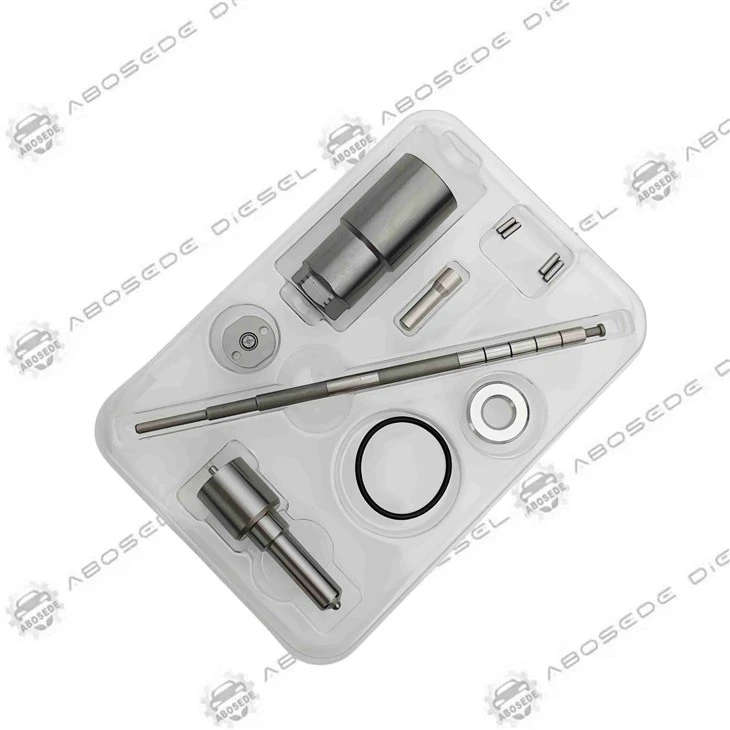

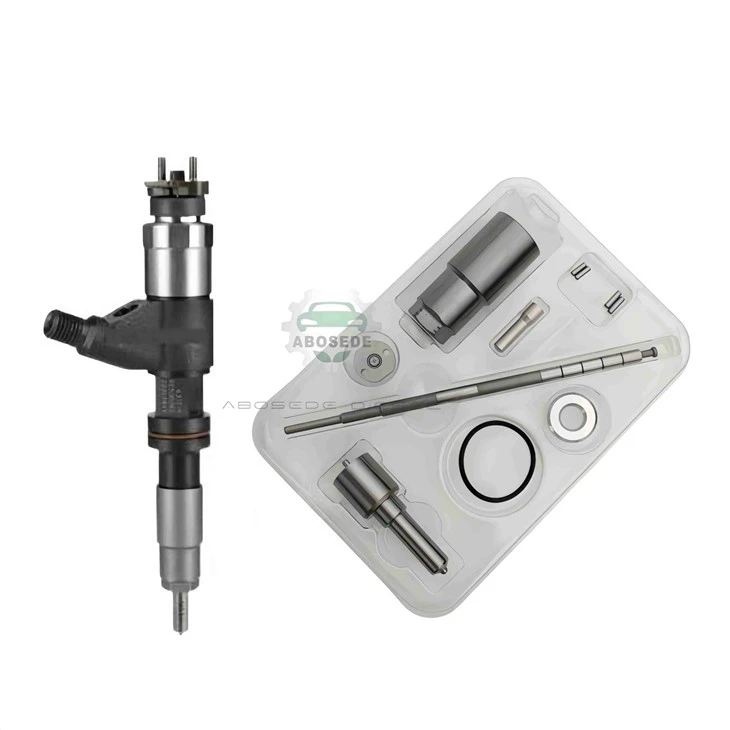
Denso Repair Kit 095000-5420 / 23670-09030 – Downtime-Driven Injector Rebuild Package
1. Product:095000-5420 / 23670-09030
2. Compatible Equipment: Diesel Fuel Injection Systems
3. Manufacturer: Aftermarket OEM Replacement
4. Condition: Brand New, Fully Tested
5. Origin: ABOSEDE Diesel
6. Shipping period: 3-5 business days
7. Payment terms: T/T, Western Union, PayPal
- Fast Delievery
- Quality Assurance
- 24/7 Customer Service
Product Introduction
For a diesel repair shop, every hour an injector bay sits idle burns cash far more aggressively than the parts markup on a service ticket. This Denso repair kit, carrying OE identifiers 095000-5420 and 23670-09030, exists not to impress with flashy packaging but to get G2 series solenoid injectors back into circulation with the least number of return visits. Engineered for the Toyota 1CD-FTV family and its derivatives, this set tackles the three silent profit killers in Common Rail servicing: bay occupancy per rebuild, the gamble of partial parts replacement, and the compounding labour cost when a reconditioned unit fails within the warranty window. Workshops running high-volume diesel workloads recognise that the real metric isn't parts cost – it's the rebuild cycle time and the first-time fix rate that determine whether the injector bench contributes to overhead or devours it.
⚙️Service Bay Economics & Component Rationalisation
The financial logic of this overhaul bundle starts with what it eliminates from the workshop's parts crib. Instead of stocking separate calibration shim packs, needle springs, pressure spindles, and command piston assemblies across five different suppliers – each with its own backorder lead time – this consolidation reduces shelf clutter and cuts the risk of grabbing the wrong valve seat height during a rush job. The kit supplies high-pressure O-rings rated for 160MPa plus, copper washers for the nozzle seat, retaining nuts, and locating dowels; all bagged individually to prevent cross-contamination. That last point carries weight in a production environment where a single stray particle bridging the servo-valve clearance can turn a 90-minute rebuild into a 4-hour diagnosis-and-rework loop. More critically, the shim assortment spans the full factory tolerance band, meaning the tech doesn't need to wait for a separate order to correct pilot injection deviation – that variation in fuel delivery linearity that causes post-repair drivability complaints on the road test.
🚛Vehicle Applications That Move Through the Shop
This set sees repeated action across the Toyota Avensis diesel variants from 2003 through 2008, the Avensis Verso people-movers, and the Corolla D-4D models that still populate urban delivery fleets across Europe and Asia. The underlying 1CD-FTV powerplant, producing between 66kW and 85kW depending on the ECU strategy, represents a high-turnover workstream for independent diesel specialists – these vehicles arrive with cold-start roughness, intermittent power loss, and excessive crankcase dilution from failed injector seals. Some cross-reference data also points to compatible industrial engines and marine auxiliary units, though the primary revenue stream flows from passenger vehicles where the owner's tolerance for downtime runs short. For the service manager, knowing that this single SKU covers multiple model years and regional variants reduces the mental overhead of identifying injector body revisions – early G2 units use a different valve seat profile than later production, and this kit includes the necessary components to handle both without a second parts pull.
🔩Rebuild Process Risks & Workflow Planning
The actual bench hours matter more than the catalogue price, and this kit's layout reflects field learnings from high-mileage cores. Extraction of the solenoid requires a 27mm crow's foot wrench, and the half-ball valve – that 2mm sphere governing control chamber pressure bleed-off – is notoriously easy to lose during disassembly; the kit's individual packaging provides visual confirmation that the replacement ball is present before the old one disappears into workshop floor debris. Valve seat removal demands the proprietary three-pronged socket, with localized heating not exceeding 150°C to break the factory thread-lock compound without softening the body metallurgy – a step often skipped in a hurry, leading to galled threads and a scrap core. Torque sequencing: nozzle retaining nuts at 30Nm initial pre-load, then a 45-degree angle-tightening stage; solenoid retaining nuts to 35Nm using a crows-foot adapter to avoid stressing the electrical connector pins. The single greatest workflow interruption, however, comes from skipping QR code reprogramming after assembly. Diagnostic tools must re-enter the correction factors; otherwise the ECU's fuel trim learning offsets the mechanical rebuild, resulting in return fuel rates outside the 32.9mg/stroke band and a customer comeback for rough idle within 200km.
📊Long-Term Wear Patterns That Drive Repeat Business
From the shop owner's vantage point, the value of this Common Rail rebuild set emerges six months after the service, when the vehicle hasn't returned. The components address the degradation modes that actually kill G2 injectors in fleet use: needle valve bore ovalisation from high-mileage cycling, spindle wear that alters injection duration mapping, and seal hardening that permits combustion gas ingress into the return line. The hardened steel valve seat inserts reduce the risk of cavitation scoring at high pump pressures – a condition that changes the actuation delay unpredictably as the injector warms up. For the service manager tracking cost-per-mile data across fleet accounts, the shim adjustability allows compensation for nozzle sac volume variations that accumulate over multiple rebuild cycles, meaning a core can be reconditioned two or three times before the housing itself reaches end-of-life. That directly addresses the parts inventory pressure – fewer new injectors to order, fewer cores to send out for exchange, and better control over the return-on-labour calculation for the diesel bay.
❓FAQ – Practical Considerations for Shop Owners & Parts Procurement
Q1: What batch quantities do you recommend for a shop rebuilding 8–12 injectors weekly?
A: Order in multiples of four kits per vehicle set, plus two spare kits per 20 rebuilds to cover lost half-ball valves or damaged retaining nuts during extraction. The spares pay for themselves when a single delayed shipment ties up your injector test bench for half a day – that lost throughput typically exceeds the kit cost.
Q2: Have these components been validated on injectors with over 250,000km original mileage?
A: Yes. Field returns from European workshops show that command pistons and valve seats in this set accommodate the wear patterns found in high-mileage cores – specifically the spindle length reduction that develops over prolonged needle lift cycling. The shim range compensates down to the minimum factory tolerance without requiring housing machining.
Q3: What's the actual failure rate you observe in the first 10,000km after rebuild using this kit?
A: Independent shop data indicates a sub-1.5% early failure rate, almost entirely traceable to either QR code omission or contaminated assembly environment. Kits themselves contribute to fewer than 0.3% of comebacks – usually O-ring extrusion from improper lubrication during fitting, not component defect.
Q4: Does the pricing structure favour higher-volume standing orders versus spot purchases?
A: We offer tiered discounts starting at 20 kits per quarter, with additional freight consolidation for European warehouses. The larger concern for most shops is stock rotation – we date-code each batch and guarantee 24-month shelf stability for seals and O-rings, so you can hold safety stock without degradation.
Q5: How do your production batches compare against DENSO original production tolerances?
A: All shim thicknesses, spring free lengths, and spindle diameters are verified against DENSO's published master specs using air-gauging to ±1.5 microns. The difference is packaging logistics, not metallurgy – you're getting factory-equivalent hardness ratings on valve seats and surface finish on command pistons, with batch-level traceability back to the raw material heat number.
Q6: What's the realistic service window before a rebuilt injector needs another overhaul?
A: With 2-micron absolute filtration and regular fuel-water separator maintenance, expect 150,000–180,000km before nozzle sac erosion dictates service. High-water-content fuels reduce that to 100,000km – but that's a fuel quality issue, not kit performance. We recommend ultrasonic cleaning of the ball valve and seat at 50,000km intervals to reach the upper end of that range.


Flexible Payment Methods for Your Convenience
To make your purchasing experience smooth and easy, we offer a variety of secure payment options:

Bank Transfer
Supports multiple currenciesand bank payment methods.

Western Union
Quick and global money transfers.

PayPal
Safe and convenient online payment.

Alibaba
Enjoy extra protection with trusted Alibaba transactions.
We're here to make your order process worry-free - choose the payment method that works best for you!
Shipping Made Simple

Customer reviews

Hot Tags: denso repair kit 095000-5420 / 23670-09030 – downtime-driven injector rebuild package, China denso repair kit 095000-5420 / 23670-09030 – downtime-driven injector rebuild package manufacturers, suppliers, factory
You Might Also Like
-

DENSO Repair Kit 095000-7680 / 23670-0R180 – Common ...
-

Workshop Economics & Injector Restoration – Denso 09...
-

Denso 295050-0530 (23670-0L100) – Factory-Spec Commo...
-

Denso 095000-7780 / 23670-30280 Repair Kit – Cutting...
-

Denso Repair Kit 295050-0540 / 295050-0810 | 23670-0...
-

DENSO 095000-6601 / 23670-E0040 Overhaul Set – Hydra...
