


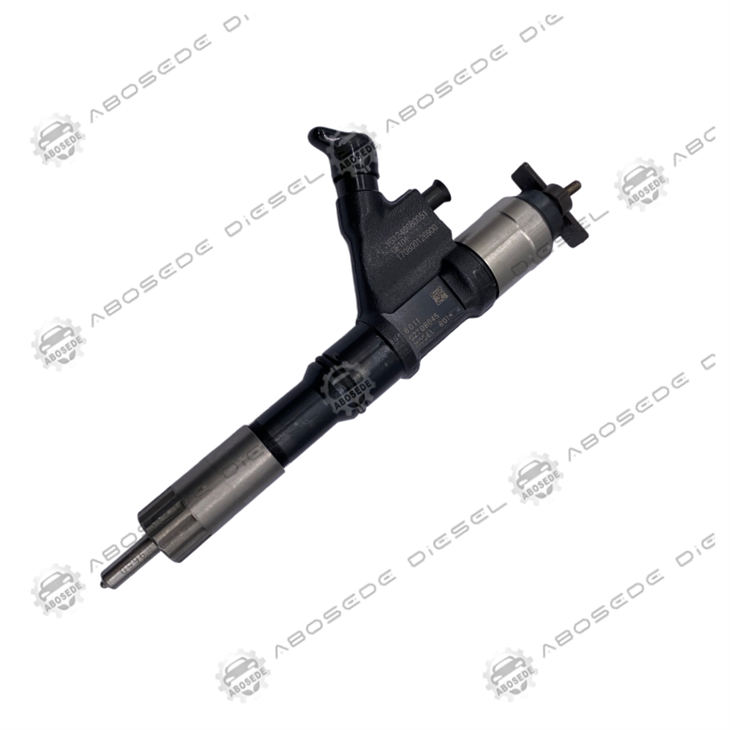

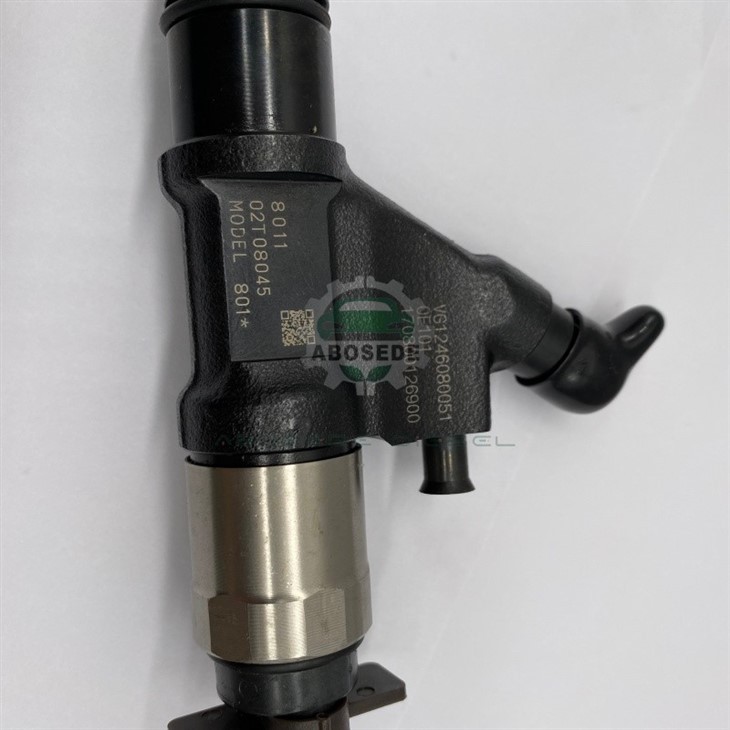

095000-8011 Denso Common Rail Injector for SINOTRUK HOWO A7 WD615: High-Sulphur Fuel Is a Different Chemical Environment, Not a Lower Grade of Diesel
1. Product:095000-8011
2. Compatible Equipment: Diesel Fuel Injection Systems
3. Manufacturer: Aftermarket OEM Replacement
4. Condition: Brand New, Fully Tested
5. Origin: ABOSEDE Diesel
6. Shipping period: 3-5 business days
7. Payment terms: T/T, Western Union, PayPal
- Fast Delievery
- Quality Assurance
- 24/7 Customer Service
Product Introduction
The 095000-8011 is listed for HOWO A7 trucks running the WD615 and D12 platforms, with OEM reference VG1246080051, the DLLA145P1049 nozzle, and a Euro II/III calibration. Those three facts together describe a specific operating environment: markets in Africa, Southeast Asia and the Middle East where high-sulphur diesel is still in circulation. Most listings treat that environment as a footnote. It is the variable that decides which failure mode appears first.
🧪 Sulphur cuts both ways: more lubricity, more corrosion
High-sulphur diesel carries sulphur compounds that provide boundary lubrication, which is why older mechanical pumps survived on it. Those same compounds form sulphur oxides during combustion, and when the exhaust meets moisture, sulphuric acid forms. In a common rail injector, that acid attacks the nozzle tip and the control valve seat, both of which sit in the hot end of the fuel path. The result is a wear pattern that a low-sulphur market never sees: corrosion pitting alongside mechanical erosion. A leak-off test shows the flow increase, but it does not tell you the cause was chemical rather than abrasive.
🌡️ Cold-end corrosion: the failure mode that appears in winter
The acid formation depends on temperature. In a hot climate, the exhaust stays above the dew point and the acid leaves with the gas. In a cold climate, or during repeated short-trip operation, the exhaust cools below the dew point inside the tip region and the acid condenses on the metal. That is why a high-sulphur vehicle in a cold market can show nozzle corrosion at a lower hour count than the same vehicle in a hot market. The practical consequence is that the acceptance standard has to be tied to the climate as well as the fuel.
🧾 The three checks that move to the front in a high-sulphur environment
In a low-sulphur market, the first checks are return flow and correction code. In a high-sulphur market, three checks move ahead of those. First, a visual inspection of the nozzle tip for pitting and for a greenish or grey deposit that indicates sulphate attack. Second, a coolant and exhaust-side check for acid condensation evidence, because a leaking EGR cooler accelerates the same path. Third, a fuel sample for sulphur content and water content, because the two together determine how fast the acid forms. A unit that passes flow testing but shows tip pitting is already in the wear path.
⚙️ Euro II/III calibration and high-sulphur fuel are a matched pair
The Euro II and Euro III calibrations were written for markets where high-sulphur fuel was the norm. That is why this injector is specified for those markets rather than for a Euro IV platform. The pilot quantity, the post-injection schedule and the soot model are all built around the fuel that was expected at the time. Fitting a Euro IV or Euro V calibration into a high-sulphur market, or the reverse, produces a mismatch that no amount of coding can correct. Buyers should confirm the emissions tier the unit is calibrated for before ordering, not just the engine code.
❓ FAQ: High-Sulphur Market Injector Questions Buyers Actually Raise
Q1: The listing mentions high-sulphur fuel but does not explain it. Why does it matter?
A: Sulphur provides lubricity but forms sulphuric acid in the exhaust. In a common rail injector, that acid attacks the nozzle tip and the control valve seat, producing a corrosion pattern that low-sulphur markets do not see.
Q2: Why does the same engine show tip corrosion faster in a cold market?
A: Acid formation depends on temperature. When the exhaust cools below the dew point in the tip region, the acid condenses on the metal. A cold climate or repeated short-trip operation accelerates that path.
Q3: What should I check first on a high-sulphur unit?
A: Inspect the nozzle tip for pitting and sulphate deposits, check for acid condensation evidence on the exhaust side, and test the fuel for sulphur and water content before running a flow test.
Q4: Can a Euro IV calibration be used in a high-sulphur market?
A: No. The Euro II/III calibration was written around the fuel expected in those markets. A mismatch between calibration and fuel produces a fault that coding cannot correct.
Q5: The listing quotes a nozzle retaining nut torque. Should I apply it directly?
A: Confirm it against the service data for the specific WD615 or D12 variant and model year. A single figure across the family should be verified before use.
Q6: For distributors, how should this part be grouped on the shelf?
A: By fuel environment rather than by country. A high-sulphur market unit and a low-sulphur market unit are not the same product even when the part number matches.
Basic Information about the Company


Flexible Payment Methods for Your Convenience
To make your purchasing experience smooth and easy, we offer a variety of secure payment options:

Bank Transfer
Pay directly in 15 supported currencies.

Western Union
Quick and global money transfers.

PayPal
Safe and convenient online payment.

Alibaba
Enjoy extra protection with trusted Alibaba transactions.
We're here to make your order process worry-free - choose the payment method that works best for you!
Shipping Made Simple

Customer reviews

Hot Tags: 095000-8011 Denso Common Rail Injector for SINOTRUK HOWO A7 WD615: High-Sulphur Fuel Is a Different Chemical Environment, Not a Lower Grade of Diesel, China 095000-8011 Denso Common Rail Injector for SINOTRUK HOWO A7 WD615: High-Sulphur Fuel Is a Different Chemical Environment, Not a Lower Grade of Diesel manufacturers, suppliers, factory, denso injector
You Might Also Like
-

095000‑8310 Diesel Common Rail Fuel Injector — Preci...
-

295050-0810 / 23670-09380 / 23670-0L110 Common Rail ...
-

Diesel Injector 095000-6990 / 8-98011605-1 for Isuzu...
-

Denso 295050-1590 Injector for Hino P11C & Isuzu 6WG...
-

Denso 095000-9750 Injector: What Isuzu Shops Ask Bef...
-

Premium Denso Common Rail Injectors 095000-6040 OEM ...
