


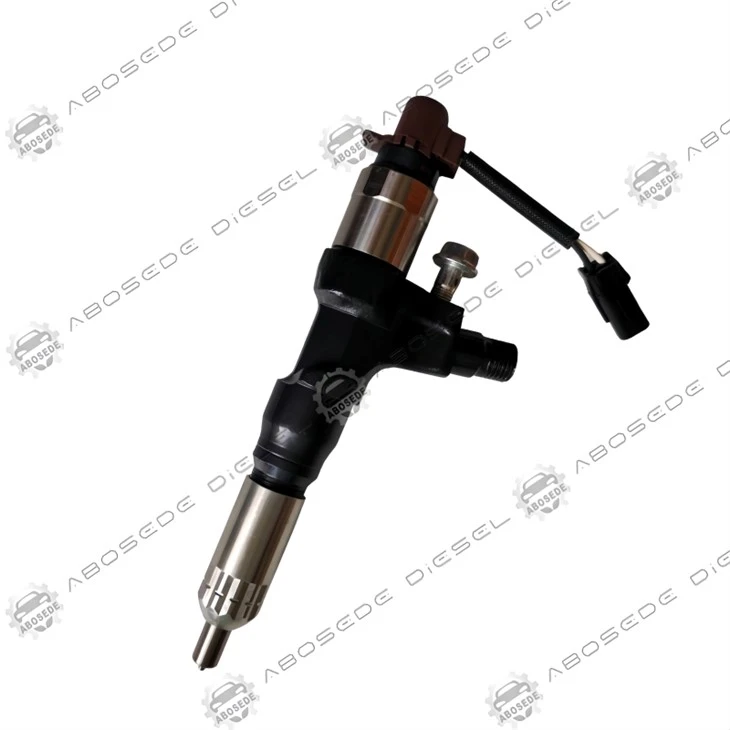

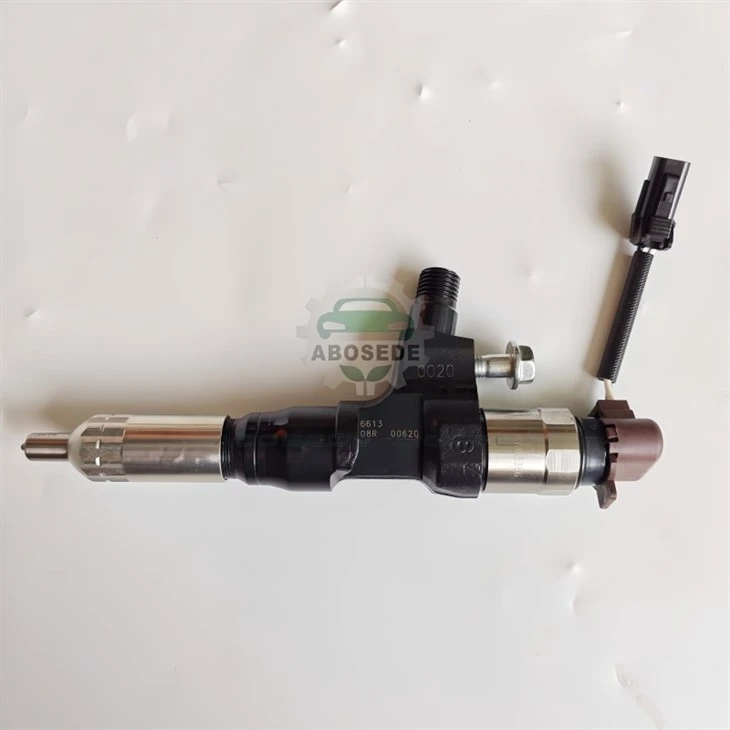
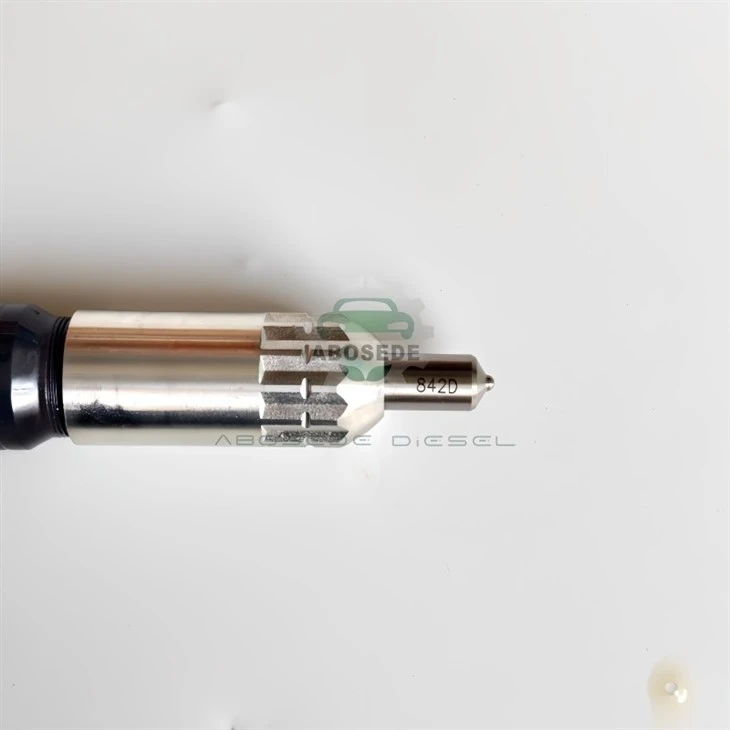
095000-6613 Injector – Dynamic Flow Drift Control & Batch Consistency For DENSO Common-Rail Systems
1. Product:095000-6613
2. Compatible Equipment: Diesel Fuel Injection Systems
3. Manufacturer: Aftermarket OEM Replacement
4. Condition: Brand New, Fully Tested
5. Origin: ABOSEDE Diesel
6. Shipping period: 3-5 business days
7. Payment terms: T/T, Western Union, PayPal
- Fast Delievery
- Quality Assurance
- 24/7 Customer Service
Product Introduction
Unlike traditional wear components that gradually degrade, the DENSO 095000-6613 injector addresses a more subtle and often overlooked performance issue: dynamic flow drift-the tendency for injector flow characteristics to shift over time due to thermal expansion, pressure cycling, and mechanical settlement. In common-rail systems, even a 1.5% drift in flow can cause the ECU's fuel trim corrections to exceed their ±5% adaptation window, leading to a persistent "Fuel Balance" fault code and an eventual derate. The 095000-6613 injector is manufactured to a batch consistency tolerance of ±0.8% for the static flow rate, and it is subjected to a dynamic drift test that simulates 50 million injection cycles, ensuring that the flow drift remains within ±1.2% over the injector's service life. This level of consistency eliminates the need for frequent cylinder-to-cylinder calibration adjustments, reducing both maintenance downtime and the risk of misdiagnosis.
⚙️ Flow Stability Mechanism – Controlling Thermal & Pressure-Induced Drift
The primary source of flow drift in injectors is the elastic deformation of the needle and the nozzle under high pressure. At 2,000 bar, the needle deflects by approximately 0.002 mm, altering the effective flow area. This deflection changes with temperature, and over time, the needle's seating surface undergoes micro-wear that shifts the flow characteristic.
The 095000-6613 combats this by integrating a two-stage needle guide-a short, hardened bushing at the nozzle end and a longer, honed guide at the solenoid end. This design constrains the needle's lateral movement to within 0.003 mm, reducing the drift caused by needle tilt. Additionally, the nozzle's orifice plate is laser-drilled (instead of electro-discharge machined), producing a sharper inlet edge that resists the rounding effect caused by fuel cavitation-a major contributor to long-term flow increase.
The injector's control piston features a tapered land that compensates for pressure-induced deformation. As rail pressure rises, the piston's land increases the hydraulic force on the needle, counteracting the tendency of high pressure to lift the needle prematurely. This hydraulic compensation maintains a stable injection rate (within ±1.5% of nominal) from 800 bar to 2,200 bar, eliminating the need for pressure-dependent correction maps.
🔬 Critical Performance Data – Flow, Timing, and Spray Quality
Static flow rate: 320 cc/min at 100 bar, with a batch tolerance of ±0.8% .
Dynamic flow at 1,800 bar: 185 mm³/stroke (measured at 1.0 ms energising time).
Spray cone angle: 152° (included angle), with a penetration length of 68 mm at 2,000 bar (injected into atmospheric pressure).
Needle lift: 0.28 mm (nominal), with a lift tolerance of ±0.005 mm across all six injectors in a set.
Actuation delay: 0.38 ms from signal start to needle opening, with a pilot injection capability of four events per cycle (down to 0.4 ms dwell).
The nozzle tip has eight holes, each with a diameter of 0.120 mm, and is hydraulically balanced to ensure that the needle closes within 0.25 ms after the solenoid current drops-reducing post-injection dribble and improving particulate emissions by up to 15% compared to older designs.
🛠️ Installation – Critical Steps for Correct Mounting
Step 1 – Seat cleaning: Use a nozzle seat reamer (specific to the injector type) to clean the combustion chamber seat. Even a 0.01 mm carbon deposit on the seat can reduce the clamping force by 15%, leading to combustion gas leakage past the injector.
Step 2 – Clamp torque: Tighten the injector clamp bolt to 28 N·m (for single-clamp designs) or 40 N·m (for two-bolt clamps). Under-torquing allows the injector to "rock," altering the spray angle; over-torquing can distort the injector body, affecting the needle movement.
Step 3 – Fuel line torque: The high-pressure fuel line connection uses a M14×1.5 fitting, torqued to 30 N·m. Use a torque wrench with a crows-foot adapter to avoid cross-threading.
Step 4 – ECU coding: After installation, the injector's IQA (Injector Quantity Adjustment) code-a six-digit alphanumeric code laser-etched on the injector body-must be entered into the ECU using diagnostic software. This code adjusts the injection duration for each cylinder, compensating for the injector's individual flow deviation. Entering the wrong code will cause a persistent "Fuel Trim" fault.
📊 Diagnostic Signs – Identifying a Drifting Injector
The 095000-6613's flow drift can be identified by:
Cylinder-specific fuel trim values that consistently trend in one direction (e.g., cylinder #3 always requires +3% correction while cylinder #5 requires -2%), indicating a spread in flow performance.
Rail pressure oscillation at steady state, with a ripple amplitude exceeding 15 bar-often caused by an injector that is opening too early (high flow) or too late (low flow) relative to the others.
Increased particulate emissions (visible smoke) due to uneven cylinder combustion.
A periodic injector flow test (at 1,800 bar) is recommended every 3,000 hours; if any injector deviates by more than ±3% from the set average, replace the entire set.
❓ Frequently Asked Questions
Q1: What is the difference between the 095000-6613 and the 095000-6614, and can I use one in place of the other?
The 6613 and 6614 are very similar, but the 6614 has a 0.5% higher static flow rate and is calibrated for a slightly different injection map. While they are mechanically interchangeable, swapping them will cause a "Fuel Quantity" fault unless the ECU calibration is adjusted. Always use the exact part number specified for your engine.
Q2: I replaced one injector, but now the engine has a rough idle – what could be the cause?
If you replaced only one injector in a set, the new injector may have a different flow drift characteristic (even if the IQA code is correct). The ECU's learned fuel trims are based on the old set; a rough idle often indicates that the ECU's adaptive values need to be reset. Perform a fuel trim reset through the diagnostic tool.
Q3: Can I re-use the O-rings and copper washers when reinstalling an injector?
No. The O-rings (FKM, 2.2 mm cross-section) and the copper sealing washer undergo permanent deformation after clamping. Reusing them will lead to external leakage (fuel seepage) or internal leakage (combustion gas entering the fuel return), which reduces injector life. Always replace them with new ones.
Q4: What is the recommended injector replacement interval for high-hour applications?
In on-highway trucking (average 10,000 hours/year), the injector typically lasts 8,000–10,000 hours before the flow drift exceeds 3% and affects emissions. In severe duty (mining, heavy construction), replacement is recommended at 6,000 hours. Regular fuel filter changes (10-micron absolute) extend this interval.
Q5: Does the injector's spray angle change with altitude?
The spray cone angle is a function of the nozzle geometry, not ambient pressure. However, at high altitude, lower ambient air density may cause the fuel spray to penetrate further (less air resistance), potentially causing wall wetting. The injector's spray angle is designed for sea level; if you operate consistently above 3,000 m, consult the engine manufacturer for ECU map adjustments.
Q6: Can I clean the injector if it shows reduced flow due to internal deposits?
Internal deposits (from fuel degradation or water contamination) can sometimes be removed by running a dedicated injector cleaner through the fuel system. However, if the flow drift is due to mechanical wear (needle seat erosion, orifice rounding), cleaning will not restore performance. A flow test is the only way to determine if cleaning is effective.


Flexible Payment Methods for Your Convenience
To make your purchasing experience smooth and easy, we offer a variety of secure payment options:

Bank Transfer
Supports multiple currenciesand bank payment methods.

Western Union
Quick and global money transfers.

PayPal
Safe and convenient online payment.

Alibaba
Enjoy extra protection with trusted Alibaba transactions.
We're here to make your order process worry-free - choose the payment method that works best for you!
Shipping Made Simple

Customer reviews

Hot Tags: 095000-6613 injector – dynamic flow drift control & batch consistency for denso common-rail systems, China 095000-6613 injector – dynamic flow drift control & batch consistency for denso common-rail systems manufacturers, suppliers, factory
You Might Also Like
-

095000-6490 DENSO Common Rail Injector — Advanced Di...
-

23670‑0E090 — Next‑Level Diesel Common Rail Fuel Inj...
-

095000-7660 (23670-0R190) Common Rail Injector Contr...
-

295050-1060 Common Rail Injector Engineering Combust...
-

High-Performance Denso Diesel Fuel Injectors – Model...
-

High-Performance Denso Fuel Injectors 095000-8970 Fo...
