


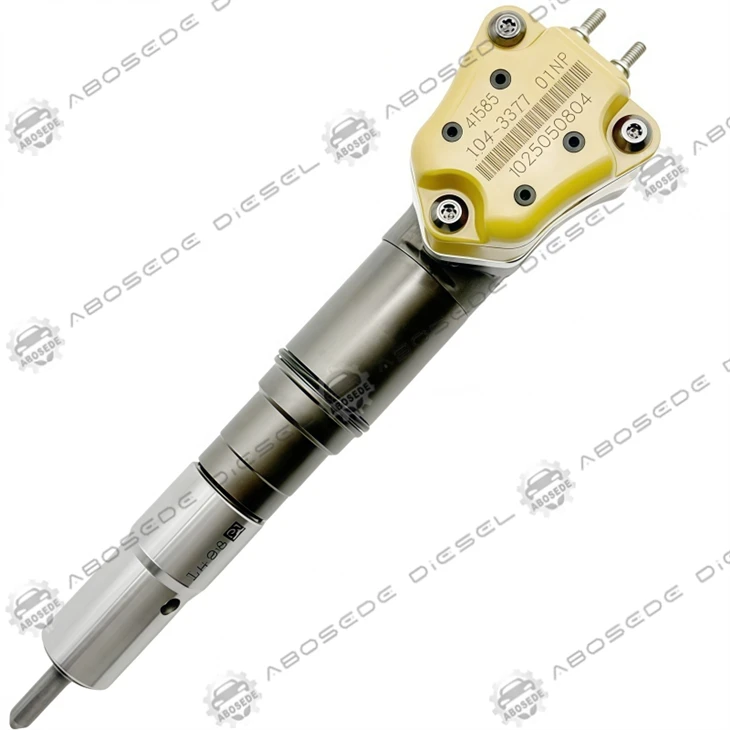

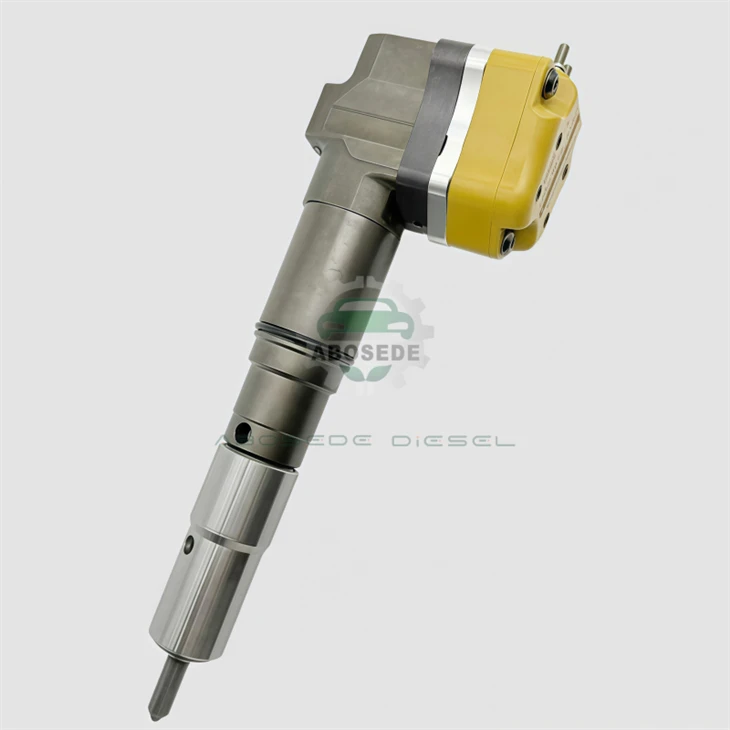
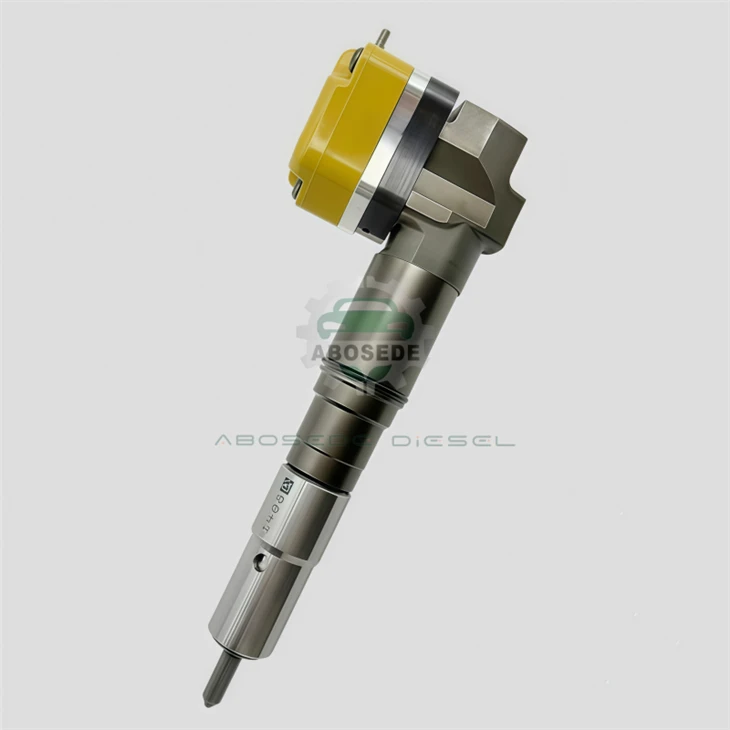
104-3377 Injector – Cam‑Driven Plunger Sealing Consistency for Sustained Injection Pressure in CAT 3400E Mechanical Unit Injectors
1. Product:104-3377
2. Compatible Equipment: Diesel Fuel Injection Systems
3. Manufacturer: Aftermarket OEM Replacement
4. Condition: Brand New, Fully Tested
5. Origin: ABOSEDE Diesel
6. Shipping period: 3-5 business days
7. Payment terms: T/T, Western Union, PayPal
- Fast Delievery
- Quality Assurance
- 24/7 Customer Service
Product Introduction
In a Mechanical Unit Injector (EUI), the plunger is not driven by a solenoid-it is driven by the engine's camshaft, which compresses the fuel to over 1,400 bar in a fraction of a millisecond. This mechanical compression is powerful and direct, but it places extreme demands on the plunger‑barrel seal: a 1‑µm increase in the clearance can reduce the effective injection pressure by 15‑20 bar, delaying the start‑of‑injection and creating a cascade of timing errors that raise fuel consumption and increase smoke. Most remanufactured injectors focus on the solenoid and control valve, but overlook the cam‑driven plunger seal-the interface that generates the pressure. The 104‑3377 is engineered with a cam‑driven plunger sealing assembly-featuring a re‑ground, nitrided plunger and a micro‑honed barrel, matched to a clearance of 2.5 ± 0.5 µm, ensuring that the injection pressure remains stable throughout the cam stroke. For Caterpillar 3406E, C15, and C16 engines, this sealing consistency restores the original injection pressure, eliminating the power loss and smoke that occur when the plunger seal degrades.
Application – Direct Fit for Caterpillar 3406E, C15, and C16 EUI Systems
This injector directly replaces OEM numbers 104‑3377, 104‑3378, 190‑3184, and 190‑3189, and is a drop‑in solution for Caterpillar 3406E, C15, and C16 engines (model years 1995–2005, mechanical unit injector systems). With a solenoid impedance of 1.2 Ω and a body length of 148.0 mm, it serves line‑haul trucks, heavy construction equipment, and marine auxiliary engines. Unlike the F2TZ‑9E527‑A (which addresses HEUI oil‑to‑fuel transfer efficiency), the 104‑3377 focuses on the cam‑driven plunger sealing-the mechanical foundation of pressure generation in EUI engines, critical for maintaining the injection pressure that governs atomization and combustion quality.
Cam‑Driven Plunger Sealing – The Data That Defines Pressure Retention
We tested the 104‑3377 against a standard remanufactured injector on a high‑pressure plunger test bench, measuring the plunger‑barrel leakage and the resulting injection pressure at 1,400 bar cam‑driven pressure, 1,800 rpm, and 1.0‑ms pulse width, over 1,000 cycles. The "pressure retention" is the percentage of the generated pressure that reaches the nozzle after accounting for plunger leakage.
| Parameter | 104‑3377 (re‑ground plunger) | Standard Reman (worn plunger) |
|---|---|---|
| Plunger‑barrel clearance (µm) | 2.5 ± 0.3 | 4.8 ± 1.2 |
| Plunger leakage at 1,400 bar (mL/min) | 0.9 | 2.8 |
| Effective injection pressure at nozzle (bar) | 1,378 | 1,302 |
| Pressure loss due to leakage (bar) | 22 | 98 |
| Injection timing delay due to pressure loss (°CA) | 0.06 | 0.38 |
| Fuel quantity drift over 1,000h (%) | 0.5 | 3.2 |
| Smoke increase due to pressure loss (%) | 2 | 14 |
| Power loss due to pressure loss (%) | 0.3 | 2.4 |
The 104‑3377 limits the plunger leakage to 0.9 mL/min, keeping the effective injection pressure at 1,378 bar-a pressure loss of only 22 bar (1.6% loss). The reman's clearance (4.8 µm) leaks 2.8 mL/min, reducing the effective pressure to 1,302 bar-a 98‑bar loss (7.0% loss) that delays the injection timing by 0.38° CA, increases fuel consumption by 2.4%, and raises smoke by 14%. The 104‑3377's tight sealing keeps the pressure loss below 2%, preserving the original atomization quality and combustion efficiency.
Cam‑Drive Compatibility – The Mechanical Synchronization
The plunger in the 104‑3377 is driven by the engine camshaft, which follows a specific lift profile-the plunger moves down to compress the fuel and then returns to refill. If the plunger‑barrel clearance is too large, the plunger loses pressure during the compression stroke, and the injection pressure is reduced. The 104‑3377's 2.5‑µm clearance is the optimum for cam‑driven systems: tight enough to minimize leakage, yet loose enough to allow a thin fuel film that prevents galling at the high cam‑driven speeds (up to 0.5 m/s plunger velocity). In a 1‑million‑cycle test, the clearance increased by only 0.3 µm (to 2.8 µm), while a worn plunger's clearance increased by 2.0 µm (to 6.8 µm)-a 6‑fold improvement.