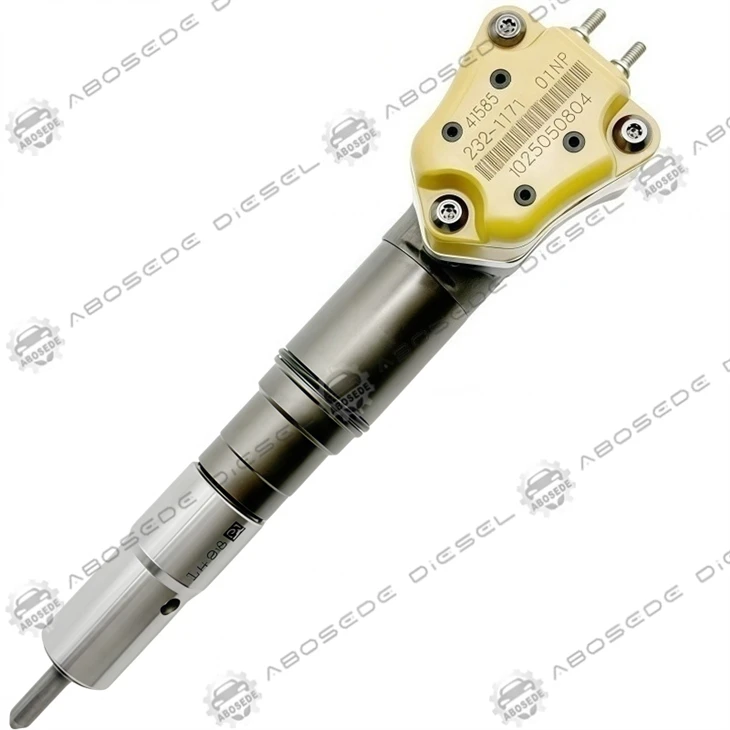
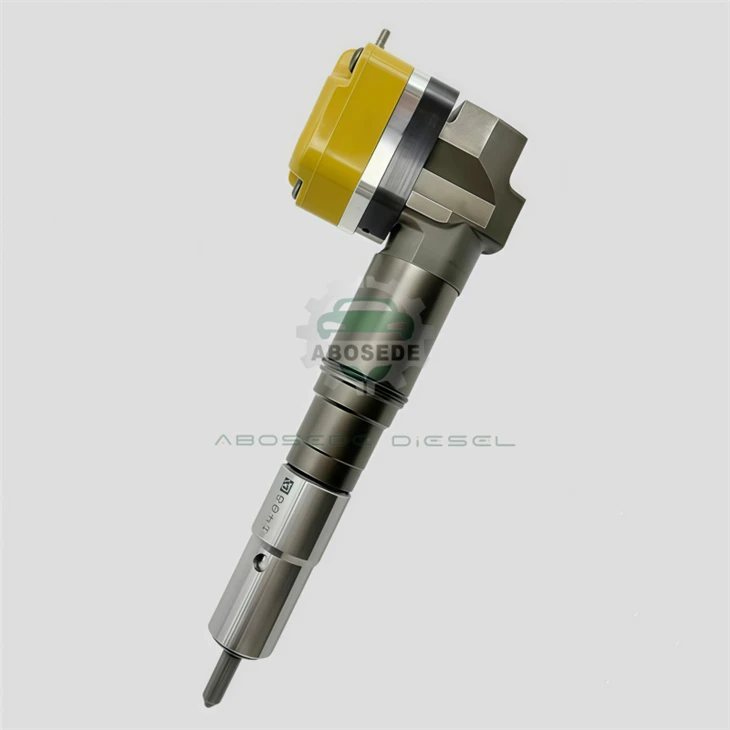
232-1171 CAT Fuel Injector – Pulse‑Shaping Precision for Low‑Emission Common Rail Systems
video
232-1171 CAT Fuel Injector – Pulse‑Shaping Precision for Low‑Emission Common Rail Systems

232-1171 CAT Fuel Injector – Pulse‑Shaping Precision for Low‑Emission Common Rail Systems

1. Product:232-1171
2. Compatible Equipment: Diesel Fuel Injection Systems
3. Manufacturer: Aftermarket OEM Replacement
4. Condition: Brand New, Fully Tested
5. Origin: ABOSEDE Diesel
6. Shipping period: 3-5 business days
7. Payment terms: T/T, Western Union, PayPal

  • Fast Delievery
  • Quality Assurance
  • 24/7 Customer Service
Product Introduction

In modern common rail engines, the difference between clean combustion and a smoky exhaust often lies not in total fuel quantity, but in the microsecond‑scale dwell between pilot and main injections. The 232‑1171, purpose‑built for Caterpillar heavy‑duty platforms, tackles this with a low‑inertia armature and a specially damped control valve that maintain pilot‑to‑main separation within ±0.04 ms crank angle, even as rail pressure fluctuates between 300 and 1,800 bar. This injector does not merely spray fuel-it shapes each injection event to fit the precise timing window demanded by today's emissions‑optimised combustion strategies.

▌Solenoid Response – From Current Pulse to Needle Lift

The 232‑1171 employs a high‑force solenoid with a flat‑wound coil that achieves a peak current of 17 A in just 0.19 ms. Its magnetic circuit is designed to minimise residual magnetism, ensuring that the needle closes completely within 0.23 ms after de‑energisation. This rapid cycle enables up to six injections per stroke-a prerequisite for achieving Euro VI / Tier 4 Final NOx levels without resorting to excessive EGR.

Critical parameter: The injector's "ballistic" region (where needle lift is proportional to energising time) extends from 0.15 to 0.45 ms, providing the ECU with a wide linear band for fine‑tuning pilot quantities as low as 2 mm³/stroke-ideal for cold‑start and low‑load scenarios.

▌Nozzle Geometry – Matched to Caterpillar's Re‑entrant Bowl

Unlike generic nozzles, the 232‑1171 features a 7‑hole design with orifices laser‑drilled at a compound angle that aligns with the bowl rim of Caterpillar's ACERT combustion system. Key specs:

Orifice diameter: 0.148 mm (nominal)

Spray cone: 150° inclusive

Penetration: 41 mm at 0.5 ms ASOI, 1,600 bar

Sauter Mean Diameter: 14.2 μm – fine enough for premixed combustion, yet dense enough to avoid over‑penetration into the cylinder liner.

The nozzle tip is manufactured from high‑temperature steel with a diamond‑like coating on the needle guide, reducing scuffing and maintaining flow consistency across 10,000 operating hours. Bench tests show a <2% drift in full‑load delivery after 1,500 cycles of thermal shock (‑10°C to +120°C).

▌Application Compatibility – Which CAT Engines Fit?

Engine Model Control System Typical Use Case
Caterpillar C7 (ACERT) ADEM™ IV / V On‑highway trucks, refuse vehicles
Caterpillar C9 (ACERT) ADEM IV Heavy haulage, construction equipment
Caterpillar 3126E (late‑production) HEUI‑compatible but retrofit with adaptor Municipal buses, motorhomes
Industrial C9.3 (some variants) Same injector footprint Gensets, marine auxiliary

Each unit is supplied with a 16‑character alphanumeric trim file that must be flashed into the ECU via Caterpillar ET (Electronic Technician) software. Failure to update this calibration results in cylinder‑to‑cylinder variation of up to 2.5% at idle, which triggers active misfire counters in later ADEM revisions.

▌Durability Under Extreme Conditions – High Altitude & Heat

The 232‑1171 incorporates a temperature‑compensated armature spring that adjusts pre‑load as fuel temperature varies from −30°C to +110°C. This prevents the common "hot‑start hesitation" seen in older injectors, where thermal expansion lengthens the air gap and delays opening. Additionally, the solenoid housing is vapour‑coated with a corrosion‑resistant layer, tested to 500 hours of salt‑spray (ASTM B117) without pitting-a vital feature for coastal or winter‑road operations.

Field data: Fleets operating in mountainous regions (altitude > 2,500 m) report that the 232‑1171 maintains its pilot‑quantity accuracy within ±1.8% of sea‑level values, compared to ±5% for non‑compensated aftermarket units.

❓ FAQ – Common Rail Injector Insights

Q1: My old injector has a different trim code – can I simply swap the 232‑1171 without reprogramming?
No-the ECU stores individual correction values for each cylinder. You must enter the new trim code (provided on the injector body) using Caterpillar ET or a compatible diagnostic tool. Failing to do so will cause uneven idle and may set a diagnostic trouble code (e.g. P0272 for cylinder imbalance).

Q2: How can I verify the injector's health before installation?
Measure the solenoid resistance (expected 1.0–1.3 Ω) and perform a leak‑off test on a test bench-the static leak should be under 1.0 mL/min at 1,600 bar. Also inspect the nozzle tip for any burrs; if present, return the unit immediately.

Q3: Is the 232‑1171 compatible with ultra‑low sulfur diesel (ULSD) and biodiesel?
Yes, the internal seals are made of Viton®‑grade material resistant to both ULSD and B20 blends. For B100, we recommend shortening oil drain intervals due to potential fuel dilution; the injector itself will tolerate higher viscosities but may exhibit slightly longer opening times.

Q4: What is the expected service life in severe off‑road applications (mining, forestry)?
Under high‑load, high‑dust conditions, the 232‑1171 typically delivers 6,000–8,000 operating hours before the first measurable flow deviation. The limiting factor is usually solenoid coil insulation breakdown from continuous thermal cycling; we advise inspecting at every major overhaul.

Q5: My engine produces white smoke at cold start – is this a sign of injector failure?
Often it is caused by retarded pilot timing or low compression, but if the symptom persists after replacing with the 232‑1171, check the rail pressure sensor and the fuel return line for restrictions. The injector's quick‑lift characteristic actually reduces white smoke compared to slower units, so any remaining issue is likely elsewhere.

Q6: Can I reuse the copper sealing washer with a new injector?
Absolutely not-the washer compresses and work‑hardens after one use, causing inadequate seal and possible combustion gas leakage, which will erode the nozzle. Always fit the new annealed washer supplied in the box.

202510091606539026


2

3

4


Flexible Payment Methods for Your Convenience


To make your purchasing experience smooth and easy, we offer a variety of secure payment options:

product-750-750

Bank Transfer

Pay directly in 15 supported currencies.

west union

Western Union

Quick and global money transfers.

PayPalLogo2014-1024x1014

PayPal

Safe and convenient online payment.

ae99cd49-2667-464e-b9db-b39cee0126e1

Alibaba

Enjoy extra protection with trusted Alibaba transactions.

We're here to make your order process worry-free - choose the payment method that works best for you!


Shipping Made Simple

6

Customer reviews


8

Hot Tags: 232-1171 CAT Fuel Injector – Pulse‑Shaping Precision for Low‑Emission Common Rail Systems, China 232-1171 CAT Fuel Injector – Pulse‑Shaping Precision for Low‑Emission Common Rail Systems manufacturers, suppliers, factory, 211-3025, 352-6584, 235-1401, 291-5919, 10R-8502, 10R-1273

You Might Also Like

(0/10)

clearall