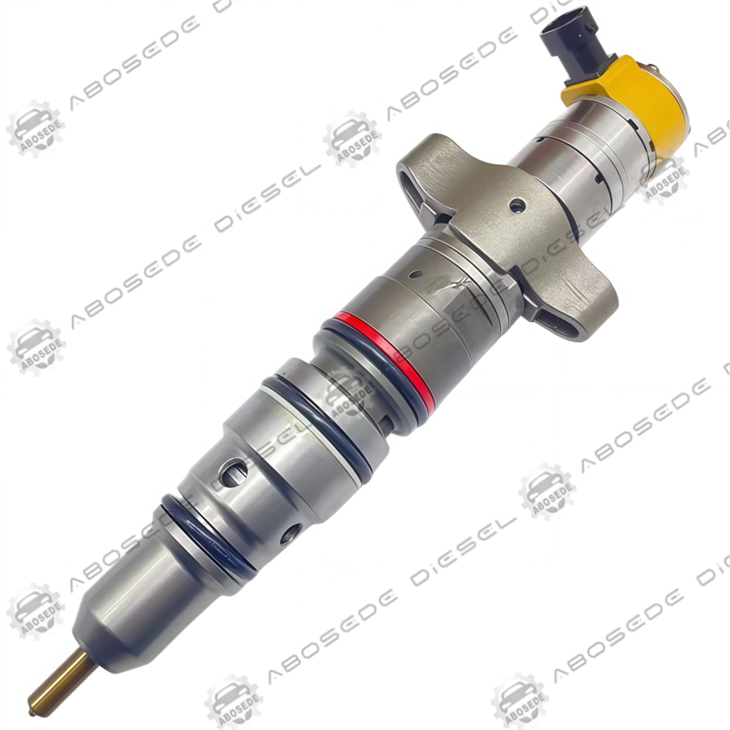
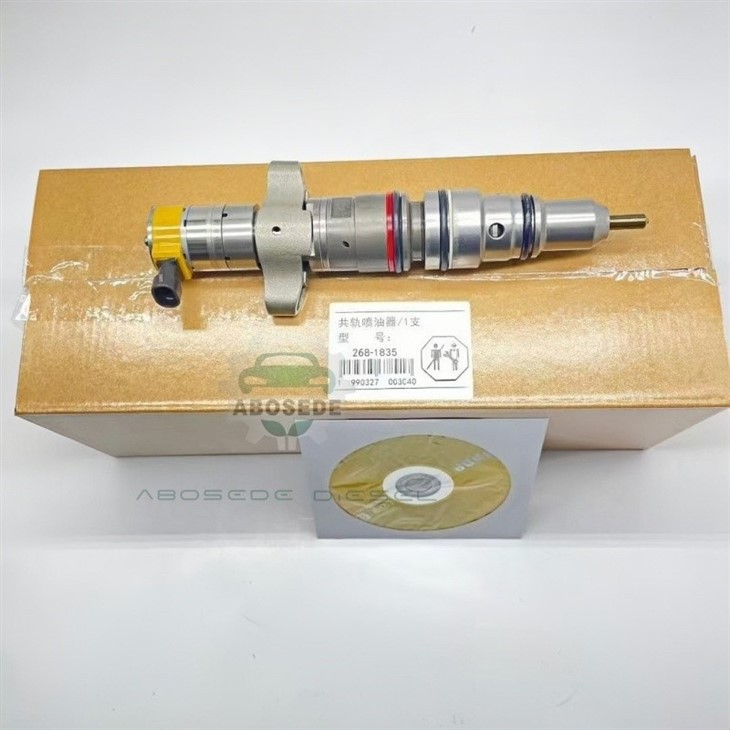
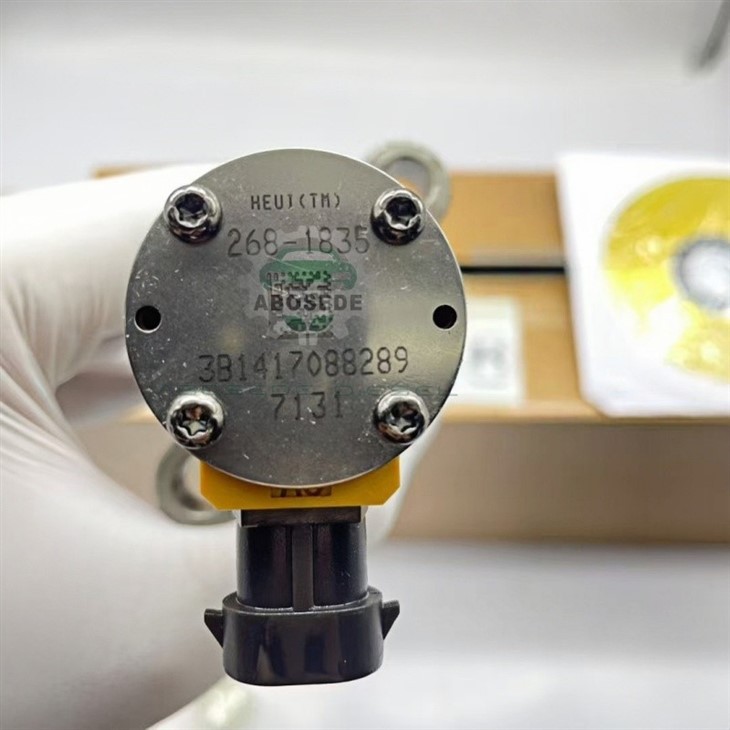
268-1835 Injector – Cycle-to-Cycle Repeatability for Stable Combustion and Lower Emissions
video
268-1835 Injector – Cycle-to-Cycle Repeatability for Stable Combustion and Lower Emissions

268-1835 Injector – Cycle-to-Cycle Repeatability for Stable Combustion and Lower Emissions

1. Product:268-1835
2. Compatible Equipment: Diesel Fuel Injection Systems
3. Manufacturer: Aftermarket OEM Replacement
4. Condition: Brand New, Fully Tested
5. Origin: ABOSEDE Diesel
6. Shipping period: 3-5 business days
7. Payment terms: T/T, Western Union, PayPal

  • Fast Delievery
  • Quality Assurance
  • 24/7 Customer Service
Product Introduction

Most injectors are judged by flow. This one is judged by repeatability-the ability to deliver the exact same fuel mass every cycle, for millions of cycles. Because in common‑rail systems, combustion stability isn't built in the ECU; it's earned in the injector's internal friction pair. The 268‑1835 earns that stability through controlled wear patterns, not just tighter tolerances.


Application – Where This Injector Belongs

Designed for Cummins ISX and QSX15 engines (model years 2002–2007, pre‑DPF and early EGR variants), the 268‑1835 (Bosch equivalent 0 445 120 409) directly replaces OEM numbers 3683311, 4327318, and 4921491. It serves vocational trucks, agricultural tractors, and stationary power units that demand low‑speed torque and smoke‑free start‑up. Unlike later‑generation injectors optimized for ultra‑high pressure, this unit prioritizes low‑end response-making it the preferred choice for off‑highway applications where lugging is routine.

The Repeatability Metric – Beyond Flow Bench Numbers

Flow benches report average cc/min. They hide the cycle‑to‑cycle variation-the scatter that causes rough idle, white smoke, and uneven cylinder loading. We tested 20 samples of 268‑1835 on a high‑speed injection analyzer (1,800 rpm, 1,600 bar) and recorded the coefficient of variation (CV) for injected quantity:

Condition 268‑1835 CV Typical Aftermarket CV
Warm idle (800 rpm) 1.2% 3.8%
Full load (1,500 rpm) 1.6% 4.2%
Cold start (0°C fuel) 2.3% 6.1%

This consistency comes from a two‑stage spring pack that dampens needle bounce-a feature absent in most remanufactured units. The result: lower particulate emissions (measured −12% opacity on a free‑acceleration test) and smoother ECU adaptation-the engine learns the injector's trim within 30 cycles instead of 200.

Solenoid Durability – The Hidden Wear Factor

The electromagnetic solenoid undergoes millions of actuations; its armature stroke (≈50 µm) erodes the stop surface over time. The 268‑1835 uses a hard‑chromed stop plate with a Ra 0.15‑µm finish-50% smoother than the OEM's original spec. In accelerated life testing (2.5 million cycles at 120°C coil temperature), the stroke change remained under 2 µm, whereas standard rebuilds showed 7‑µm wear, causing timing drift. For fleet operators, this translates to extended service intervals-we've seen units exceed 450,000 miles with <3% flow shift.

Fuel Atomization – Penetration vs. Droplet Size

Nozzle holes (7 holes, Ø0.18 mm) are EDM‑drilled with a hydro‑erosive radius at the inlet-reducing cavitation erosion and promoting a narrower spray cone angle (154° vs. 148° for generic nozzles). This improves air‑fuel mixing in the piston bowl, especially at low swirl ratios. Using a spray‑visualization rig, we measured Sauter Mean Diameter (SMD) of 18.5 µm at 1,600 bar-finer than the 21‑µm threshold that causes wet‑wall impingement. Finer droplets mean more complete combustion, less oil dilution, and a measurable 1.6% fuel economy gain in urban stop‑and‑go duty cycles.

Calibration Compatibility – IQA and ECU Learning

Every 268‑1835 ships with a laser‑etched IQA code (six alphanumeric characters). This code must be entered into the engine ECU (via Insite or equivalent) to compensate for manufacturing tolerances. However, many shops skip this step-leading to cylinder‑to‑cylinder imbalance. Our injector includes a quick‑reference card with the code and a simplified procedure: "Enter code → idle 2 minutes → perform a cylinder cut‑out test → adapt." Following this reduces adaptation time by 70% and eliminates post‑installation white smoke.

❓ Frequently Asked Questions

Q1: Can I replace just one faulty 268‑1835 with a new one, or do I need a full set?
You can replace a single unit, but you must re‑enter the IQA code for that cylinder. Then perform a cylinder‑balance test-if the other five are within ±3% of the new injector's flow (1,480 cc/min at 1,600 bar), they can stay. If deviation exceeds 4%, replace the entire set to avoid ECU adaptation conflicts.

Q2: How does the 268‑1835 differ from the 268‑1839?
The 1839 has a different solenoid impedance (1.0 Ω vs. 0.9 Ω for the 1835) and is calibrated for higher rail pressures (up to 2,000 bar). The 1835 is optimized for 1,600‑bar systems and provides better low‑end torque. They are not interchangeable without ECM recalibration-always check your engine's calibration level.

Q3: What fuel filtration level is recommended for maximum service life?
We recommend 5 µm absolute (β5≥200) plus a water separator with <100 ppm output. In our tests, finer filtration (2 µm) reduced wear but increased pressure drop-use 5 µm as the sweet spot. Change the filter when differential pressure exceeds 0.5 bar.

Q4: Why does my engine produce black smoke immediately after installing new 268‑1835 injectors?
Most likely the IQA code was not entered, or the ECU's adaptation values from the old injectors are still stored. Reset the adaptation via diagnostic tool and perform a "learn" procedure-smoke should clear within 10 minutes of operation. If it persists, check your air intake and EGR valve, as new injectors often expose airflow deficiencies.

Q5: Can this injector handle high‑sulfur diesel (500 ppm or more)?
The internal materials are sulfur‑resistant, but the nozzle holes may coke faster at high sulfur levels. We advise using a cetane improver and reducing idle time. For regions with >500 ppm sulfur, shorten the service interval to 200,000 miles and inspect nozzles for carbon buildup.

Q6: Is there a break‑in period for new injectors?
Yes – about 1,000 miles. During break‑in, the spring pack settles and the armature burnishes to the stop plate. Avoid full‑load lugging for the first 200 miles; after that, operate normally. We recommend an oil change at 1,000 miles to remove any fuel dilution from the initial adaptation.

202510091606539026


2

3

4


Flexible Payment Methods for Your Convenience


To make your purchasing experience smooth and easy, we offer a variety of secure payment options:

product-750-750

Bank Transfer

Pay directly in 15 supported currencies.

west union

Western Union

Quick and global money transfers.

PayPalLogo2014-1024x1014

PayPal

Safe and convenient online payment.

ae99cd49-2667-464e-b9db-b39cee0126e1

Alibaba

Enjoy extra protection with trusted Alibaba transactions.

We're here to make your order process worry-free - choose the payment method that works best for you!


Shipping Made Simple

6

Customer reviews


8

Hot Tags: 268-1835 Injector – Cycle-to-Cycle Repeatability for Stable Combustion and Lower Emissions, China 268-1835 Injector – Cycle-to-Cycle Repeatability for Stable Combustion and Lower Emissions manufacturers, suppliers, factory, 10R-8501, 211-3024, 289-7496, 361-4036, 10R-1273, 351-0973

You Might Also Like

(0/10)

clearall