


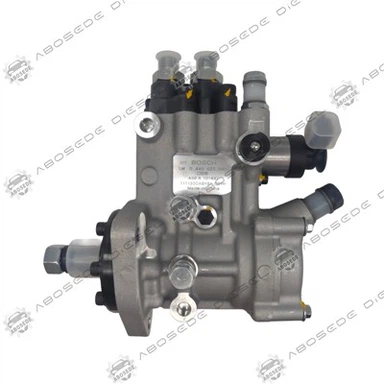
109342-1007 VP44-6 Distributor Pump – Low‑Pressure Circuit Hydraulic Balance For Superior Idle Stability And Hot‑Restart Reliability in Light‑Commercial Vehicles
1. Product:109342-1007
2. Compatible Equipment: Diesel Fuel Injection Systems
3. Manufacturer: Aftermarket OEM Replacement
4. Condition: Brand New, Fully Tested
5. Origin: ABOSEDE Diesel
6. Shipping period: 3-5 business days
7. Payment terms: T/T, Western Union, PayPal
- Fast Delievery
- Quality Assurance
- 24/7 Customer Service
Product Introduction
For light‑commercial vehicles and vans, the engine spends a disproportionate amount of time at idle-waiting at loading bays, queuing in traffic, or powering auxiliary systems like air conditioning and power steering. Under these conditions, the VP44 distributor pump must deliver consistent fuel quantity despite fluctuating engine speeds and varying fuel temperatures, all while the electrical system experiences voltage sags from auxiliary loads. The 109342-1007 VP44‑6 pump is engineered with a low‑pressure circuit hydraulic balance that ensures the vane‑type transfer pump maintains a stable feed pressure to the high‑pressure section regardless of idle speed variations. This hydraulic stability, combined with a refined governor response curve, prevents the "hunting" idle that plagues many aging distributor pumps when the air‑conditioning compressor engages. As the mechanical fuel source for commercial vehicles paired with the 0414720 PD injector family, the 109342‑1007 delivers the smooth, predictable idle that fleet operators demand, while also improving hot‑restart performance by retaining prime pressure more effectively during short stop‑start cycles.
◈ Hydraulic Balance – How 109342-1007 Smooths Idle Behaviour
|
▪ Vane‑pump pressure stability ▪ Relief valve hysteresis reduction ▪ Governor load‑compensation |
🔄 Parallel with Common‑Rail Idle Control
In common‑rail systems, idle stability is achieved through rapid rail pressure correction and injector pulse‑width modulation. The 109342‑1007 achieves the same outcome through hydraulic and mechanical means-the stabilised transfer pressure and the responsive governor work together to eliminate idle droop. While the common‑rail approach offers more flexibility, the VP44's mechanical‑hydraulic solution is inherently robust and does not depend on high‑speed computational cycles, making it more reliable in commercial vehicles where electrical noise and vibration are common.
🧰 Installation – Ensuring Idle Stability
Idle speed adjustment – The 109342‑1007 is calibrated for an idle speed of 780 rpm (hot). If your engine has a different idle setting (e.g., 800 rpm for automatic transmissions), the transfer pump pressure and governor response will still function, but the hydraulic balance may be slightly off. Adjust the idle speed to the pump's calibration using a diagnostic tool.
Return line restriction – The low‑pressure circuit relies on a free return flow to maintain the relief valve's stability. A restricted return line raises the back pressure, effectively increasing the transfer pressure and shifting the relief valve's operating point, which reduces the stability benefit. Inspect the return line for kinks or blockages.
Battery voltage – The spill solenoid's response time depends on stable voltage. A weak battery (below 11V) delays the governor's correction, reducing the idle stability under load. Load‑test the battery before installation.
Fuel filter condition – A clogged fuel filter reduces the transfer pump inlet pressure, causing cavitation at the vane pump. This is one of the most common causes of idle hunting. Replace the fuel filter as part of the pump installation.
🆕 New vs. Remanufactured – The Hydraulic Balance Factor
Remanufactured VP44 pumps often replace the vane pump and relief valve but do not calibrate the relief valve's hysteresis. The result is a transfer pressure that oscillates by 0.5–0.7 bar, sufficient to cause a noticeable idle hunting. Additionally, reman units may use a standard relief valve spring (which has a different rate) instead of the damped spring used in the 109342‑1007. New units come with the correctly calibrated, damped relief valve and the modified vane geometry, delivering the stable feed pressure that ensures smooth idle from the first start.
❓ FAQ – Practical Questions from Commercial Fleet Technicians
Q1: The engine idles smoothly when cold but hunts when hot-could the pump be at fault?
Yes-this is a classic symptom of a worn transfer pump or a malfunctioning relief valve. Hot fuel is less viscous, increasing internal leakage and reducing the transfer pump's efficiency. The 109342‑1007's higher transfer pressure and low‑hysteresis relief valve are designed to compensate for this; if you experience hunting, check the relief valve by measuring the transfer pressure at the pump inlet-it should stay within 8.0–8.8 bar when hot.
Q2: How does the 109342-1007 compare to the standard VP44 in terms of idle fuel consumption?
The improved idle stability does not significantly affect fuel consumption-the pump simply delivers the required quantity more consistently. However, a stable idle reduces the likelihood of the ECU's over‑correction cycles, which can consume an extra 1‑2% fuel. In practice, the benefit is more about drivability than economy.
Q3: Can I retrofit this pump to a passenger car (Audi A4) for better idle quality?
Physically it will fit, but the higher transfer pump pressure (8.5 bar) may cause a slightly firmer pedal feel due to increased internal pressure in the high‑pressure circuit. The engine will idle smoothly, but you may notice a marginal increase in fuel return temperature. It is a viable upgrade for those who prioritise idle quality, but the ECU may require adaptation to the new pressure.
Q4: The engine stalls when the air‑conditioning engages-could this be a pump issue?
Yes-if the governor's load‑compensation is too slow, the engine speed will drop before the pump can increase delivery. Test by engaging the A/C at idle; if the rpm drops below 650 rpm, the governor response may be insufficient. On the 109342‑1007, the 40‑ms response time should prevent this-if it doesn't, check the spill solenoid resistance and the fuel filter.
Q5: What is the recommended idle speed for this pump?
The pump is calibrated for 780 rpm (hot). If your vehicle's ECU is set to 750 rpm or 800 rpm, the pump will still function, but the transfer pump's performance may be slightly off its optimal range. We recommend adjusting the idle speed to 780 rpm using a diagnostic tool for best results.
Q6: How does fuel quality affect the idle stability of the 109342-1007?
Low‑quality fuel with poor lubricity accelerates wear on the vane pump, reducing the transfer pressure over time. As the pressure drops, the idle stability degrades. Using a lubricity additive or maintaining a strict fuel filter replacement schedule will prolong the hydraulic balance performance.


Flexible Payment Methods for Your Convenience
To make your purchasing experience smooth and easy, we offer a variety of secure payment options:

Bank Transfer
Supports multiple currenciesand bank payment methods.

Western Union
Quick and global money transfers.

PayPal
Safe and convenient online payment.

Alibaba
Enjoy extra protection with trusted Alibaba transactions.
We're here to make your order process worry-free - choose the payment method that works best for you!
Shipping Made Simple

Customer reviews

Hot Tags: 109342-1007 vp44-6 distributor pump – low‑pressure circuit hydraulic balance for superior idle stability and hot‑restart reliability in light‑commercial vehicles, China 109342-1007 vp44-6 distributor pump – low‑pressure circuit hydraulic balance for superior idle stability and hot‑restart reliability in light‑commercial vehicles manufacturers, suppliers, factory, 1042300FE010, Bosch for Mercedes, Diesel Fuel Injection Pump 0445020050 ME225083, Euro 6 Tier 4 Final, for Iveco Euro Cargo, High pressure fuel pump
You Might Also Like
-
Bosch CB18 Common Rail High-Pressure Fuel Pump 04450...
-

332X1021 Electric Controlled Unit Pump – Product Page
-

04290102 Diesel Common Rail Supply Pump – Product Page
-

02113694 | High-Pressure Fuel Supply Pump For Common...
-

Bosch 0445750003 – The Unit Pump With Controlled Val...
-

Bosch VP44 Diesel Injection Pump 047050048 / 0 470 5...
