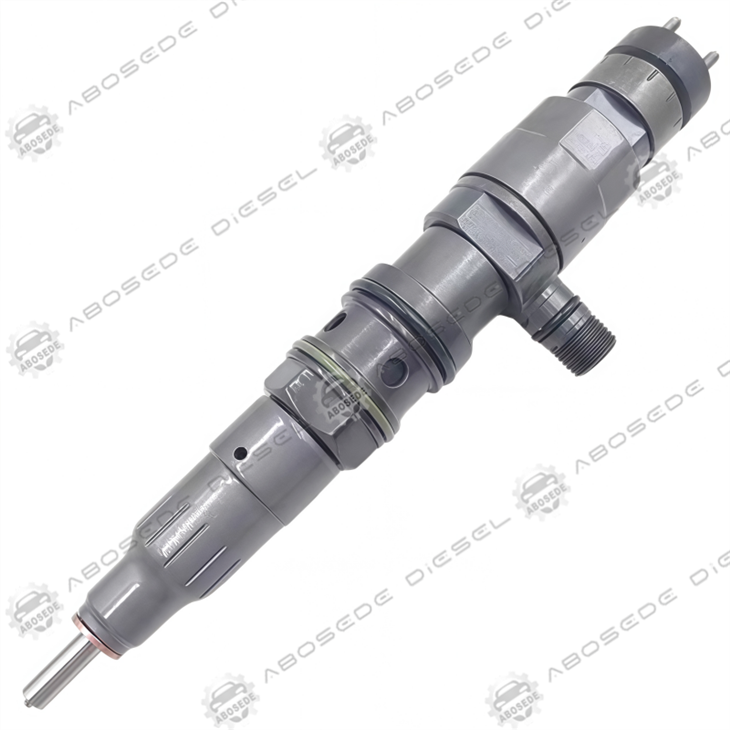
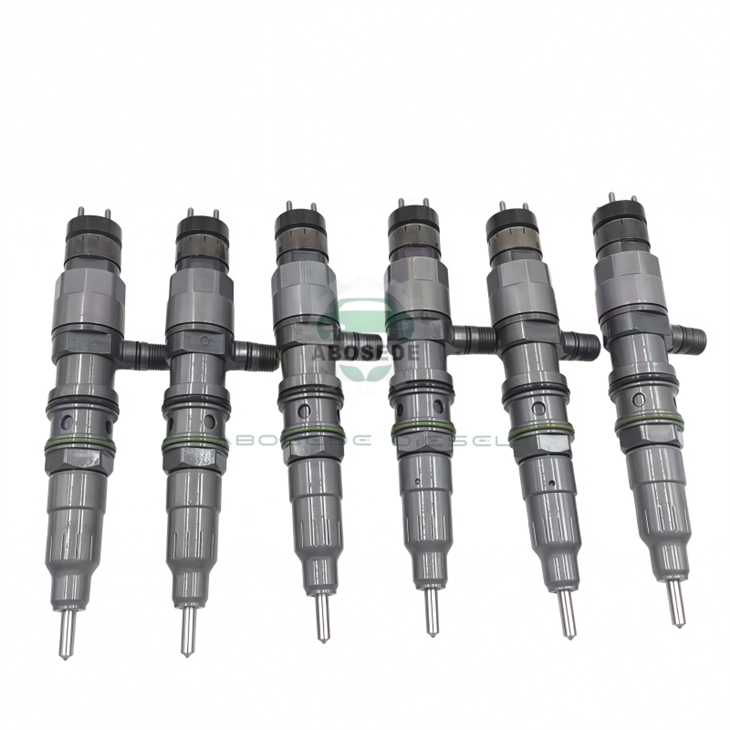
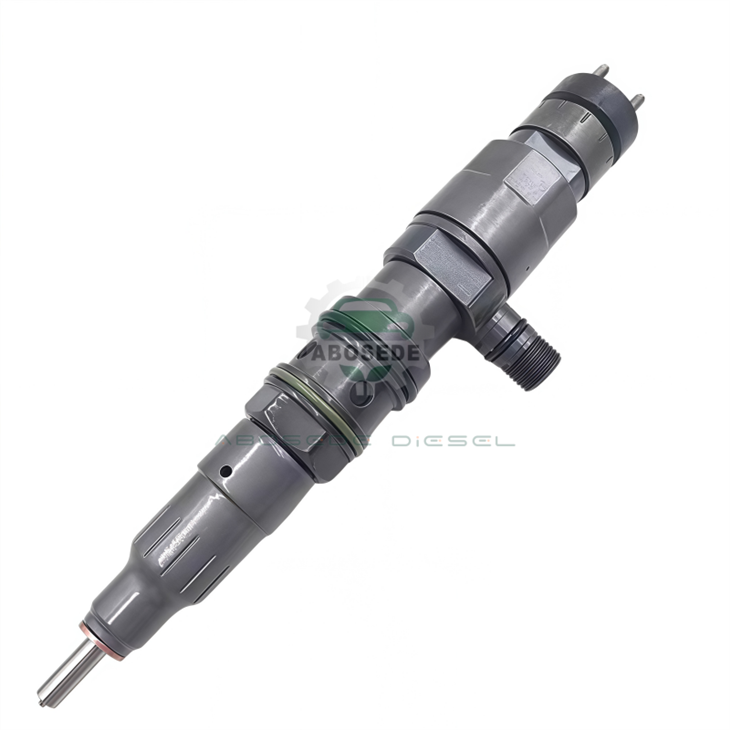
Bosch 0445120287 / 0445120288 Common Rail Injector – High-Flow Variants for Performance Diesel & Large-Bore Applications
video
Bosch 0445120287 / 0445120288 Common Rail Injector – High-Flow Variants for Performance Diesel & Large-Bore Applications

Bosch 0445120287 / 0445120288 Common Rail Injector – High-Flow Variants for Performance Diesel & Large-Bore Applications

1. Product: 0445120287 0445120288
2. Compatible Equipment: Diesel Fuel Injection Systems
3. Manufacturer: Aftermarket OEM Replacement
4. Condition: Brand New, Fully Tested
5. Origin: ABOSEDE Diesel
6. Shipping period: 3-5 business days
7. Payment terms: T/T, Western Union, PayPal

  • Fast Delievery
  • Quality Assurance
  • 24/7 Customer Service
Product Introduction

While the 0445120270/0271 injectors serve the mid-range passenger vehicle segment, the 0445120287 and 0445120288 represent the higher-flow tier within Bosch's common rail solenoid injector family, calibrated for engines with larger displacement or performance-oriented power outputs. These injectors operate at rail pressures of up to 1,800 bar (26,100 psi) for the 0287 and 2,000 bar (29,000 psi) for the 0288 variant, delivering substantially higher fuel volumes per stroke. However, the fundamental distinction between these two part numbers lies in their nozzle flow coefficient – the 0288 is characterized by a larger orifice area and increased needle lift, enabling approximately 8% greater fuel delivery at the same energizing time compared to the 0287. In common rail systems, where rail pressure is maintained by the high-pressure pump, this flow characteristic is precisely matched to the engine's air intake capacity and turbocharger boost curve. This ensures that the air-fuel ratio remains within the target window for complete combustion, minimizing smoke and particulate emissions while maximizing power density – a critical requirement for the 3.0L V6 and 4.2L V8 engines where these injectors are predominantly deployed.

█ Application Coverage – Engine Families and Vehicle Fitment

The 0445120287 is the OEM-specified injector for Mercedes-Benz OM642 (3.0L V6 CDI) and OM651 (2.1L 4-cyl) engines in higher-output configurations, including the Sprinter 519/319 and some E-Class variants with 170 kW+ ratings. The 0445120288 is primarily used in Audi/VW 3.0L V6 TDI (engine codes CATA, CRCA, CNHA) and BMW M57/N57 3.0L straight-six engines, particularly in models requiring the higher flow characteristic of the 0288. Both injectors also serve as replacements in:

Jeep Grand Cherokee / Chrysler 300C – 3.0L CRD with Bosch common rail

Porsche Cayenne Diesel – 3.0L V6 TDI

Mercedes GL/ML/R-Class – OM642 with 190 kW output

Despite the different nominal part numbers, the physical dimensions, connector type (Bosch 2-pin EV6), and sealing interfaces are identical, allowing interchangeability provided the ECU is reprogrammed with the correct injector flow calibration.

📊 Technical Specification – Performance and Electrical Parameters

Parameter 0445120287 0445120288
Maximum Rail Pressure 1,800 bar (26,100 psi) 2,000 bar (29,000 psi)
Actuator Type Solenoid Solenoid
Coil Resistance (20°C) 0.68 – 0.78 Ω 0.65 – 0.75 Ω
Peak Current (pull-in) 19 A 20 A
Holding Current (PWM) 6.2 A 6.5 A
Static Flow @ 100 bar 1,050 ± 35 cc/min 1,140 ± 35 cc/min
Nozzle Holes / Diameter 7 × 0.190 mm 7 × 0.195 mm
Spray Angle 150° 150°
Needle Lift 0.24 mm 0.26 mm
Leak-off Rate (new, idle) ≤ 22 ml/min ≤ 25 ml/min
Opening Pressure (hydraulic) 230 bar 240 bar
Max. Engine Speed 5,000 rpm 5,200 rpm

The 0288's higher rail pressure capability (2,000 bar) is enabled by a reinforced solenoid armature and a thicker nozzle needle guide, designed to withstand the increased hydraulic forces. However, this higher pressure demands a more robust high-pressure pump – using the 0288 with a pump rated for 1,800 bar will cause cavitation and premature pump failure within 1,000 hours.

▀ Construction Details – The Flow-Matched Nozzle Pair

Both injectors use Bosch's CRI (Common Rail Injector) 2.3 architecture, characterized by a balanced hydraulic servo system that controls the nozzle needle movement via a control valve. This design decouples the solenoid force from the high-pressure fuel acting on the needle, allowing the solenoid to be smaller and faster-reacting than earlier designs.

→ Sintered-Metal Inlet Filter: A 20 µm nominal pore size filter is permanently integrated into the fuel entry port, protecting the precision-matched needle–nozzle pair (clearance: 2–3 µm). The filter is non-serviceable – a 5 µm absolute filter upstream is mandatory to prevent clogging.

→ Hard-Chrome Plated Needle: The nozzle needle receives a 15 µm hard-chrome plating, reducing friction and wear in the guide bore. This plating is thicker than on the 0270/0271 series, reflecting the higher pressures and frequencies encountered in these applications.

→ Solenoid with Magnetic Flux Concentrator: The solenoid incorporates a flux ring that channels magnetic fields directly to the armature, increasing the pull-in force by 12% without increasing current draw – a key feature for the 0288 variant which requires faster actuation at 2,000 bar.

🔺 Failure Signatures – Specific to High-Flow High-Pressure Operation

The higher pressures and flows of the 0287/0288 injectors introduce failure modes that are less common in lower-pressure variants:

→ Flow Drift Due to Needle Seat Wear (3,000–4,500 hrs): At 2,000 bar, the impact of the needle on the seat creates mechanical stress that gradually deforms the seat, increasing the effective flow area. Static flow increases by 5–8% from the nominal value, causing over-fuelling that the ECU cannot fully compensate for. The symptom is a persistent black smoke haze at full load, even after a regeneration cycle.

→ Solenoid Overheating in Continuous High-Load Operation: The 20 A pull-in current generates significant heat, which is dissipated through the injector body. If the engine operates at 90%+ load for extended periods (e.g., towing or track use), the coil temperature can exceed 140°C, degrading the insulation and leading to intermittent electrical opens. Monitoring the injector's case temperature with an infrared thermometer – healthy units register below 110°C – can predict this failure.

→ Pilot Injection Inaccuracy (5,000+ hrs): The CRI 2.3 design relies on a precise pilot volume to reduce combustion noise. With wear, the control valve stroke changes, altering the pilot fuel quantity. This manifests as a rattle at 1,800–2,200 rpm that cannot be corrected by idle adaptation.

Diagnostic: measure the injector's "correction value" via diagnostic software – values exceeding ±1.5 mg/stroke suggest that the injector is beyond the ECU's adaptation range and requires replacement.

❓ FAQ – Practical Questions from High-Performance and Fleet Users

Q1: Can the 0445120288 replace the 0287 to gain more power without ECU changes?
No – the 0288 delivers 8% more fuel at the same pulse width, which will cause the engine to run rich, increasing soot and potentially damaging the DPF. It is permissible only if the ECU is reflashed with the 0288's injector data set, and the fuel map is adjusted for the higher flow. For power gains, this is a common tuning route, but it requires professional calibration.

Q2: Why does my engine exhibit a rough idle after installing new 0287 injectors, even after entering the IMA codes?
The ECU requires an "adaptation reset" after new injectors are installed – the learned offsets from the old injectors remain in memory and conflict with the new ones. Perform a "fuel trim reset" using diagnostic software (e.g., Bosch ESI-tronic or OEM tools), then run the engine at 2,000 rpm for 5 minutes to relearn the values. If roughness persists, check that the correct IMA code was entered – a single digit error changes the calibration by 2%.

Q3: How do I identify whether my engine requires the 0287 or the 0288 injector?
Check the vehicle's VIN and engine code – Mercedes engines with 170–190 kW use 0287; Audi/VW 3.0 TDI with 176–200 kW use 0288. Alternatively, consult the Bosch ESI application list – the part number is also visible on the injector's body label, though this may have faded over time. If in doubt, consult the vehicle's service documentation or a dealer.

Q4: What is the impact of low cetane fuel on these high-pressure injectors?
Low cetane (below 45) increases ignition delay, causing a harsher pressure rise that stresses the injector's needle and seat. The solenoid opens at the same timing regardless of cetane, so the fuel burns later, increasing exhaust temperatures and potentially causing the ECM to reduce the rail pressure as a protective measure, reducing power. Use a cetane booster if operating in regions with poor fuel quality.

Q5: Can I use the 0288 in a 1,600 bar system (like older OM642) to gain durability?
Yes, the injector will operate without issue at lower pressures – the higher pressure rating is a safety margin, not a minimum requirement. However, the increased needle lift of the 0288 may change the injection rate at low pressure, resulting in slightly rougher idle (≈1–2% variation) compared to the 0287. For most users, the difference is imperceptible, but for precision applications, matching the injector to the system is recommended.

Q6: What is the typical service interval for these injectors in a passenger car (15,000 km/year)?
In normal driving conditions, the injectors last 150,000–200,000 km before the return flow exceeds 35 ml/min at idle. However, short urban trips (where the engine rarely reaches operating temperature) can accelerate coking and reduce the interval to 100,000 km. Use fuel additive cleaners annually to extend nozzle life, and monitor the return flow at each service – a sudden increase above 25 ml/min is an early warning.

202510091606539026


2

3

4


Flexible Payment Methods for Your Convenience


To make your purchasing experience smooth and easy, we offer a variety of secure payment options:

product-750-750

Bank Transfer

Pay directly in 15 supported currencies.

west union

Western Union

Quick and global money transfers.

PayPalLogo2014-1024x1014

PayPal

Safe and convenient online payment.

ae99cd49-2667-464e-b9db-b39cee0126e1

Alibaba

Enjoy extra protection with trusted Alibaba transactions.

We're here to make your order process worry-free - choose the payment method that works best for you!


Shipping Made Simple

6

Customer reviews


8

Hot Tags: Bosch 0445120287 / 0445120288 Common Rail Injector – High-Flow Variants for Performance Diesel & Large-Bore Applications, China Bosch 0445120287 / 0445120288 Common Rail Injector – High-Flow Variants for Performance Diesel & Large-Bore Applications manufacturers, suppliers, factory, bosch injector

You Might Also Like

(0/10)

clearall