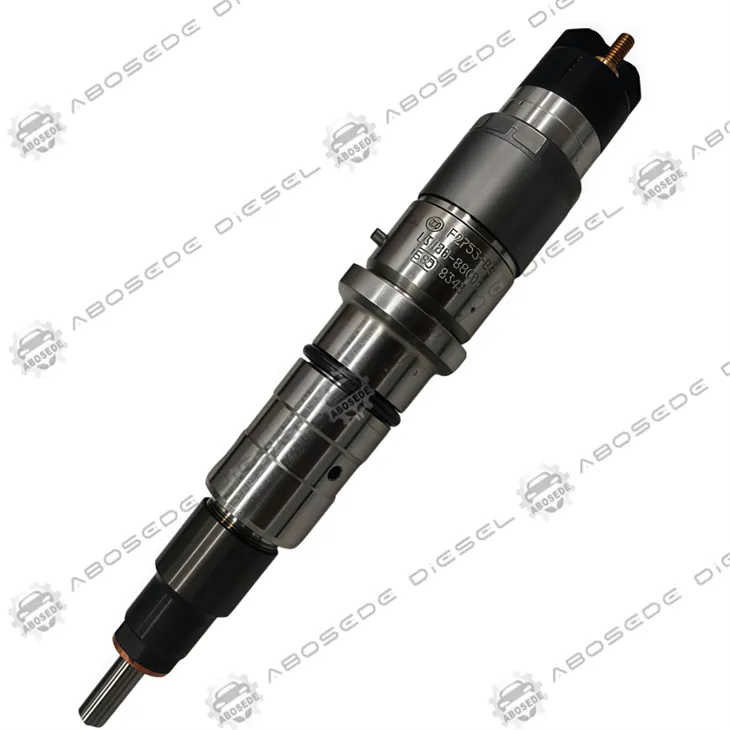
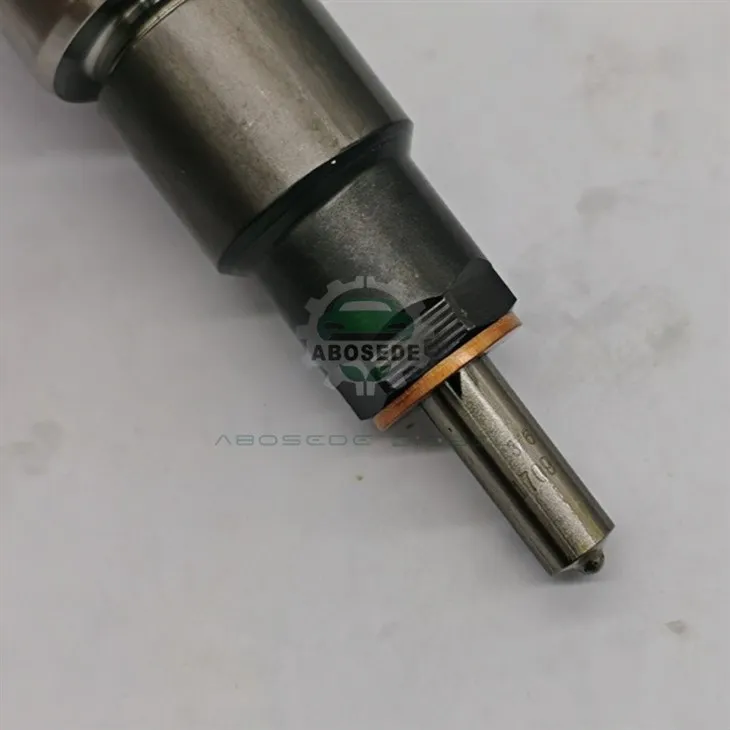
0445120236 Injector – Hydraulic Reaction Force Management & Control Chamber Pressure Balance for Consistent Opening Time
video
0445120236 Injector – Hydraulic Reaction Force Management & Control Chamber Pressure Balance for Consistent Opening Time

0445120236 Injector – Hydraulic Reaction Force Management & Control Chamber Pressure Balance for Consistent Opening Time

1. Product:0445120236
2. Compatible Equipment: Diesel Fuel Injection Systems
3. Manufacturer: Aftermarket OEM Replacement
4. Condition: Brand New, Fully Tested
5. Origin: ABOSEDE Diesel
6. Shipping period: 3-5 business days
7. Payment terms: T/T, Western Union, PayPal

  • Fast Delievery
  • Quality Assurance
  • 24/7 Customer Service
Product Introduction

The precise opening of a common‑rail injector depends on a delicate equilibrium between the solenoid's electromagnetic pull and the hydraulic reaction forces acting on the control piston and needle. The 0445120236 is a solenoid‑actuated CRI 2 injector whose hydraulic circuit has been engineered with a control piston area‑to‑needle seat area ratio of 2.14:1-a design parameter that determines how much the pressure drop in the control chamber must be to initiate needle lift. When this ratio shifts due to wear or contamination, the injector's opening time becomes inconsistent, particularly under transient conditions where rail pressure fluctuates. This injector's defining characteristic is its hydraulic force balance stability-the ratio remains within ± 1.5% of its nominal value over the service life, ensuring that the opening delay varies by no more than ± 0.035 ms across the entire pressure range. This stability directly preserves the ECU's ability to deliver the correct pilot and main quantities, preventing the idle roughness and tip‑in hesitation commonly associated with worn injectors. This article examines the hydraulic ratio design, the effects of control chamber leakage on force balance, and the diagnostic methods that reveal imbalances without removing the injectors.


⚖️ Hydraulic Ratio – The Area Relationship That Defines Opening Response

The 0445120236 uses a control piston with a diameter of 4.6 mm (area: 16.6 mm²) and a needle seat diameter of 3.2 mm (area: 8.0 mm²). The ratio of these areas (2.14:1) means that a pressure drop of approximately 55% in the control chamber is required to lift the needle. This relatively high ratio provides a strong hydraulic gain-a small pressure change in the control chamber produces a large lifting force, making the injector responsive to rapid control signals.

Parameter Value Condition
Control piston diameter 4.60 mm ± 0.005 mm
Needle seat diameter 3.20 mm ± 0.005 mm
Area ratio (piston:seat) 2.14:1 nominal
Static flow @ 1,000 bar 460 cc/30s ± 2.0 %
Opening delay (nominal) 0.27 ms @ 1,000 bar, 20°C
Control chamber leakage ≤ 0.5 ml/min @ 1,000 bar
Solenoid resistance 0.30 Ω @ 20°C
Recommended rail pressure range 200 – 1,600 bar continuous operation

The area ratio is sensitive to wear: if the control piston bore increases by 0.005 mm (from 4.600 to 4.605 mm), the area increases by 0.4%, altering the hydraulic gain and shifting the opening time by approximately 0.01 ms.

🔗 Application Coverage – Engine Families Using This Hydraulic Design

0445120236 is a widely used injector in European passenger‑car diesel engines from the mid‑2000s to early 2010s:

Volkswagen Group – 2.0 TDI (engine codes: BKD, BMM, BMN, BRD, AZV) – EA188 series, used in Golf Mk5, Passat B6, Touran, Tiguan, A3 2.0 TDI

Audi – 2.0 TDI (BKD, BMN) – A4 B7, A6 C6

Volvo – D5 (D5244T2, D5244T4, D5244T5) – S60, V70, XC70, XC90 (model years 2004‑2010)

Ford / PSA – DW10B (2.0 HDi 100‑110 kW) – Focus Mk2, Mondeo Mk4, Peugeot 307/407, Citroën C4/C5

Mazda – MZR‑CD 2.0 (RF7J) – Mazda6, Mazda3 diesel variants

This injector is not interchangeable with 0445120235, which has a different control piston diameter (4.5 mm vs. 4.6 mm). The area ratio difference would cause an opening delay deviation of approximately 0.08 ms, which the ECU cannot fully compensate.

🧭 Hydraulic Imbalance – How Wear Shifts the Ratio

The hydraulic ratio degrades through two mechanisms:

Control piston bore erosion : The bore in which the control piston slides can become enlarged due to abrasive particles in the fuel. An increase of 0.004 mm in the bore diameter raises the effective piston area by approximately 0.3%, increasing the hydraulic gain and causing the needle to open slightly earlier. This manifests as a negative fuel trim (the ECU reduces the injection duration to compensate).

Needle seat wear : As the needle seat widens (see previous article on contact band), the effective seat diameter increases. An increase from 3.20 mm to 3.22 mm raises the seat area by 1.2%, reducing the area ratio to 2.11:1. This reduces the hydraulic gain, making the needle slower to open and creating a positive fuel trim.

When both effects occur simultaneously-a common scenario in high‑mileage injectors-the net effect on the trim may appear small, but the individual hydraulic gains are shifted, reducing the injector's ability to follow rapid ECU commands. This results in a hesitation during quick throttle changes, even though the idle trims appear normal.

🧪 Diagnostic Approach – Detecting Hydraulic Ratio Shift

To detect a shift in the hydraulic ratio, you can use the following method:

Measure the injector current waveform using an oscilloscope connected to the injector harness. The current trace shows a "knee" point where the magnetic circuit saturates-this occurs when the armature reaches its full travel. If the hydraulic gain is too high (control piston area increased), the armature reaches full travel earlier, shifting the knee point forward by 10‑20 µs.

Perform a rail pressure modulation test : Using a diagnostic tool that can command the rail pressure in steps (e.g., 600 → 800 → 1,000 → 1,200 bar), observe the engine's smoothness at each step. A hydraulic imbalance will cause the idle to become rougher at certain pressure points, as the injector's opening time deviates from the ECU's expected value.

Check the difference between cold and hot fuel trims : A healthy 0445120236 shows a trim change of no more than ± 1.5 mg/stroke between 20°C and 80°C. If the change exceeds ± 3 mg/stroke, the hydraulic ratio is temperature‑sensitive-indicating that the control piston and bore are worn or mismatched.

❓ FAQ – Practical Questions on Hydraulic Ratio and Opening Consistency

Q1: How can I measure the hydraulic ratio without disassembling the injector?
Direct measurement is not possible without removing the injector. However, the opening delay (measured with an oscilloscope) is a reliable proxy. If the opening delay at 1,000 bar has shifted by more than 0.05 ms from the reference, the hydraulic ratio has likely changed.

Q2: Can a single injector with a shifted hydraulic ratio affect the entire engine?
Yes. A single injector with a different opening time disrupts the combustion balance, causing the ECU to apply large corrections to all cylinders as it tries to compensate. This often results in a generally rough idle and reduced fuel economy.

Q3: Does control piston wear affect the hydraulic ratio differently at low versus high pressure?
Yes. At low pressure (below 400 bar), the hydraulic forces are smaller, so a given area change has a proportionally larger effect. This is why hydraulic ratio issues often manifest as poor starting or rough idle-the symptoms are most noticeable at low pressure.

Q4: Can I flush the control piston bore with cleaner to restore the ratio?
Flushing may remove varnish but cannot reverse erosion. If the bore has enlarged by even 0.003 mm, the ratio has permanently shifted. Our remanufacturing process includes a bore gauge check; if the bore exceeds 4.603 mm, the injector body is replaced.

Q5: What is the typical service life before the hydraulic ratio shifts beyond tolerance?
Under standard EN590 fuel and regular filter changes, the control piston bore erosion reaches the 0.005 mm wear limit at approximately 180,000‑200,000 km. Using poor‑quality fuel can reduce this to 120,000 km.

Q6: How do I know if the shift is in the control piston area or the needle seat area?
If the injector opens too early (negative trim), the control piston area has likely increased. If it opens too late (positive trim), the needle seat area has likely increased or the control piston is sticking. A combination of both effects suggests general wear requiring a complete overhaul.


202510091606539026


2

3

4


Flexible Payment Methods for Your Convenience


To make your purchasing experience smooth and easy, we offer a variety of secure payment options:

product-750-750

Bank Transfer

Pay directly in 15 supported currencies.

west union

Western Union

Quick and global money transfers.

PayPalLogo2014-1024x1014

PayPal

Safe and convenient online payment.

ae99cd49-2667-464e-b9db-b39cee0126e1

Alibaba

Enjoy extra protection with trusted Alibaba transactions.

We're here to make your order process worry-free - choose the payment method that works best for you!


Shipping Made Simple

6

Customer reviews


8

Hot Tags: 0445120236 Injector – Hydraulic Reaction Force Management & Control Chamber Pressure Balance for Consistent Opening Time, China 0445120236 Injector – Hydraulic Reaction Force Management & Control Chamber Pressure Balance for Consistent Opening Time manufacturers, suppliers, factory, bosch injector

You Might Also Like

(0/10)

clearall