


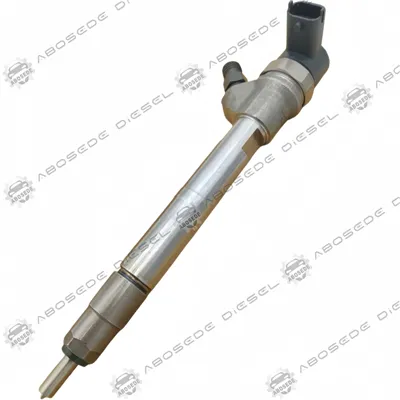
0986441566 Unit Injector – Product Page
1. Product:0986441566
2. Compatible Equipment: Diesel Fuel Injection Systems
3. Manufacturer: Aftermarket OEM Replacement
4. Condition: Brand New, Fully Tested
5. Origin: ABOSEDE Diesel
6. Shipping period: 3-5 business days
7. Payment terms: T/T, Western Union, PayPal
- Fast Delievery
- Quality Assurance
- 24/7 Customer Service
Product Introduction
In a unit injector, the start of injection is controlled by the solenoid valve closing, which traps fuel and allows pressure to build. But the end of injection is equally critical – when the solenoid opens, high‑pressure fuel spills back to the return gallery, and the needle closes. If the solenoid opens too slowly, injection continues beyond the intended moment, over‑fuelling the cylinder. If it opens too early, injection is cut short, and power drops. The 0986441566 is engineered with a fast‑release solenoid that reduces the closing delay, providing the ECU with tighter control over the end‑of‑injection point. This translates to more accurate fuel quantity metering, especially at high engine speeds where the time between injection events is shortest. The result is cleaner combustion, reduced smoke, and more consistent power delivery.
Application Coverage – VAG PD Engines
The 0986441566 is a direct replacement for unit injectors in:
Volkswagen 1.9 TDI – engine codes BKC, BLS, BXE, BJB, BSW, AXR, ATD, and AVF, used in Golf, Passat, Transporter, Caddy, and Polo.
Audi 2.0 TDI – BKD, BMN, BRE, and BWA codes in A3, A4, and A6 models.
Seat and Škoda TDI – sharing the same PD engine platform across the VAG group.
Light commercial vehicles – using VAG PD engine technology in vans and light trucks.
The injector uses a threaded mounting with a copper sealing washer at the nozzle end and an O‑ring on the upper body. The electrical connector is a 2‑pin VAG‑specific type.
Installation – Factors Affecting Solenoid Response
To achieve the specified solenoid response, correct installation is essential:
Electrical supply – The solenoid requires a stable 12 V supply. Measure the voltage at the injector connector during cranking – it should not drop below 10.5 V. Low voltage increases the closing delay, negating the pump's advantage.
Connector condition – The 2‑pin connector must be clean and fully seated. Corrosion or a loose connection adds resistance, which slows the solenoid de‑energising and extends the closing delay.
Ground path – The injector's ground return through the engine block must have low resistance. A poor ground slows the current decay, delaying the valve opening.
Torque sequence – Tighten the injector hold‑down clamp to 20 Nm, then loosen and retighten to 7 Nm, then turn 1/4 turn. Over‑torquing can distort the injector body, affecting the solenoid armature movement.
Copper washer – Always use a new copper sealing washer. A leaking washer allows combustion gas to reach the solenoid area, increasing temperature and changing the coil resistance, which affects timing.
Leak‑off lines – Ensure the return hoses are not restricted. A blocked return line builds backpressure, which opposes the solenoid opening, increasing the closing delay.
ECU adaptation – After installation, perform a fuel system adaptation reset. This clears old correction values and allows the ECU to learn the new injector's timing characteristics.
Fuel Quality and Solenoid Performance
The 0986441566 is compatible with EN 590 diesel and B7/B10 blends. Fuel quality indirectly affects solenoid performance:
Voltage stability – Contaminated fuel can cause the injector to stick, increasing current draw and causing voltage drops that slow the solenoid.
Varnish deposits – Degraded fuel can deposit on the armature, increasing its mass and slowing its movement. Regular fuel filter changes help prevent this.
Biodiesel – Higher viscosity does not significantly affect solenoid timing, but if biodiesel absorbs water, corrosion can increase armature friction.
Service Life and Timing Degradation
Under normal conditions, the 0986441566 provides 200,000–250,000 km of service. The first sign of timing degradation is often a change in the injection quantity at high RPM – the ECU will show increased fuel trim at full load. Other indicators include:
Increased smoke – under‑fuelling (lean) or over‑fuelling (rich) depending on the nature of the timing change.
Reduced power – if the injection is cut short, power drops.
ECU fault code – "injection timing out of range" appears when the closing delay exceeds the ECU's adaptive limit.
Replacing the injector with a new 0986441566 restores the timing accuracy.
FAQ – Questions About Solenoid Performance
Q1: The engine smokes more at high RPM – could the injector closing delay be the cause?
Yes. At high RPM, the injection window is short. If the closing delay is longer than expected, injection continues past the intended point, over‑fuelling the cylinder and producing smoke. The 0986441566's fast closing delay reduces this effect. If smoke persists, check the fuel filter and air intake.
Q2: How can I test the closing delay without a test bench?
You can use a diagnostic tool that captures the solenoid current waveform. The current drops when the solenoid is de‑energised, and the injector needle closes shortly after. While this does not give a direct delay measurement, an unusually long current decay indicates a slow solenoid. For precise measurement, a test bench is required.
Q3: Can the closing delay be adjusted by ECU programming?
No. The closing delay is a mechanical property of the solenoid and armature. ECU programming can change the injection timing and quantity, but it cannot change how quickly the solenoid opens. If the delay is too long, the injector must be replaced.
Q4: Does the 0986441566 work with ECUs that use a different current strategy?
The injector is designed for the standard VAG peak‑and‑hold current strategy (20 A peak, 8 A hold). If your ECU uses a different strategy, the closing delay may be different. For standard VAG PD engines, this injector is a direct match.
Q5: The injector is new, but the engine has a hesitation at mid‑RPM – is the solenoid at fault?
Hesitation at mid‑RPM can be caused by a solenoid that is opening too slowly. However, it can also be caused by a blocked fuel filter, low lift pump pressure, or a faulty fuel temperature sensor. Check these first, and if the problem persists, consult a specialist for timing diagnostics.
Q6: Does the closing delay change with temperature?
Yes, solenoid resistance increases with temperature, which can slightly extend the closing delay. The 0986441566 is designed to keep this change small – the closing delay increases by less than 0.05 ms from 20°C to 80°C. This stability ensures consistent fuel metering across all operating conditions.


Flexible Payment Methods for Your Convenience
To make your purchasing experience smooth and easy, we offer a variety of secure payment options:

Bank Transfer
Supports multiple currenciesand bank payment methods.

Western Union
Quick and global money transfers.

PayPal
Safe and convenient online payment.

Alibaba
Enjoy extra protection with trusted Alibaba transactions.
We're here to make your order process worry-free - choose the payment method that works best for you!
Shipping Made Simple

Customer reviews

Hot Tags: 0986441566 unit injector – product page, China 0986441566 unit injector – product page manufacturers, suppliers, factory, bosch injector
You Might Also Like
-

Volvo Penta 0414702025 – The Injector That Handles M...
-

0445120135 Injector – Break‑In Period Characteristic...
-

0445120178 Common Rail Injector — Advanced Fuel Prec...
-
Bosch 0445110741 Common Rail Injector – Next‑Level D...
-

Engineering Predictability — Bosch 0445120066 Common...
-

Premium Overview: 0445120020 Diesel Common Rail Fuel...
