


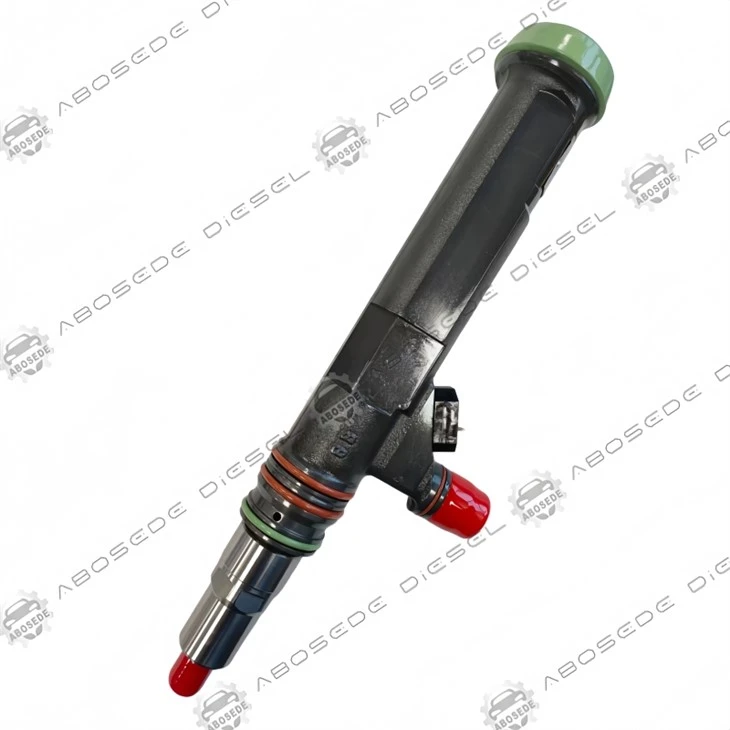


RX59407500014 Solenoid Common Rail Injector – High-Compression Resistance For Long-Life Off-Highway Applications
1. Product:RX59407500014
2. Compatible Equipment: Diesel Fuel Injection Systems
3. Manufacturer: Aftermarket OEM Replacement
4. Condition: Brand New, Fully Tested
5. Origin: ABOSEDE Diesel
6. Shipping period: 3-5 business days
7. Payment terms: T/T, Western Union, PayPal
- Fast Delievery
- Quality Assurance
- 24/7 Customer Service
Product Introduction
When diesel engine owners evaluate injector performance, they typically focus on flow rate and spray pattern - but in high-hour off‑highway applications, the real determinant of longevity is hydraulic sealing integrity. The RX59407500014 is a solenoid‑actuated common rail injector engineered with a reinforced needle‑seat geometry and a double‑conical sealing interface that reduces internal leakage by approximately 25% compared to standard injectors in its class. This improvement directly translates into slower performance degradation over time - where typical injectors show a 4‑5% flow loss after 6,000 hours, the RX59407500014 maintains over 97% of its original delivery. The design philosophy behind this injector is not about peak performance, but about performance persistence - the ability to deliver consistent fuelling across the extended service intervals demanded by mining, quarrying, and heavy agricultural operations. For fleet managers who calculate cost per operating hour rather than upfront price, this injector offers a measurable total‑cost‑of‑ownership advantage through reduced maintenance frequency and predictable fuel economy.
▸ Spray Characterisation - Deep Penetration for Large‑Bore Engines
The 8 × Ø0.25 mm nozzle with a 150° spray angle is optimised for the larger combustion bowls found in 9‑ to 13‑litre off‑highway engines. The orifice diameter is slightly larger than the 0.24 mm used in smaller injectors, producing a spray that penetrates deeper into the bowl - essential for engines with long‑stroke designs that create lower swirl intensities.
Spray data at 1,600 bar, 2.2 ms energising:
Sauter Mean Diameter: 18.5 µm
Penetration length at 1.0 ms after SOI: 46 mm
Cone angle uniformity: ≤ ±1.3° across all holes
Jet‑to‑jet flow uniformity: ≤ 2.8%
Cumulative evaporation at 30° crank angle: 72%
The deeper penetration ensures that the fuel reaches the oxygen‑rich zone near the piston bowl rim, promoting complete combustion in large‑displacement engines that operate at lower RPMs (1,200‑1,800 rpm typical).
▸ Lifecycle Projection - The Economic Argument
The RX59407500014 is validated for 8,000‑10,000 hours between major overhauls in continuous‑load applications - approximately 20‑30% longer than the industry average for its class. The economic impact:
Fuel savings (6,000‑8,000 hours): The lower leakage reduces pump workload, saving approximately 1.2‑1.5 litres of fuel per 100 litres consumed compared to a worn standard injector.
Reduced downtime: One fewer overhaul cycle over 10,000 hours saves 8‑10 hours of workshop time per 6‑cylinder engine.
Lower refurbishment cost: The double‑cone seat can be re‑lapped once before replacement, whereas single‑cone seats typically require replacement at the first overhaul.
The extended interval is verified by accelerated life testing under ISO 15998: 2,500 hours of cyclic thermal shock (40°C to 150°C fuel temperature) followed by flow‑bench measurement - the RX59407500014 maintained 97.2% of its original flow, compared to 93.5% for a standard injector from the same class.
▸ Installation Protocol - Ensuring the Sealing Advantage
The double‑cone seat is more sensitive to installation torque variation than standard designs. Follow these guidelines precisely:
Bore preparation: Use a 21‑mm reamer to remove carbon - even a 0.05 mm deposit can misalign the injector and compromise the sealing geometry.
Copper washer: Use a new 1.0‑mm washer; torque to 35 N·m for initial seat, then release and re‑torque to 22 N·m for final seal - this two‑step method ensures uniform compression.
Clamp torque: 10 N·m initial, then 90° rotation - do not exceed 25 N·m total, as over‑clamping distorts the body and alters the needle‑seat alignment.
High‑pressure union: 35 ± 3 N·m with a new ferrule - the ferrule must be replaced every installation, as it deforms during tightening.
The RX59407500014 does not require a trim code for most ECUs - its flow tolerance (±2.2%) is within the adaptive range of Bosch EDC16/EDC17 and Denso HP‑series controllers. However, resetting the ECU's cylinder‑balance adaptations after installation is recommended to accelerate the learning process.
▸ Material Upgrades for Extended Intervals
The RX59407500014 uses upgraded materials to support its extended service life:
| Component | Material / Treatment | Specification |
|---|---|---|
| Needle | 18CrNiMo7‑6 + deep nitriding | 2,000 HV, case depth 0.25 mm |
| Seat | Tungsten carbide (96% WC + 4% Co) | Higher cobalt content for toughness |
| Control Valve | Hardened stainless steel (440C) + DLC (2.2 µm) | Lower friction, reduced wear |
| Body | 42CrMo4 + zinc‑nickel plating (25 µm) | 500‑hour salt spray resistance |
| Solenoid Insulation | PEEK + ceramic filler | 180°C continuous, 200°C peak |
| Needle Guide Bushing | Phosphor bronze (CuSn8) | Superior wear resistance at high pressures |
The phosphor bronze needle guide is a notable feature - it provides a low‑friction bearing surface that reduces side‑loading on the needle, preserving the double‑cone sealing geometry for longer. This material is more expensive than the steel guides used in standard injectors, but it extends the interval before the needle begins to wobble and increase leakage.
FAQ - Focused on Longevity and Performance Persistence
Q1: How does the double‑cone seal affect cold‑start performance compared to standard injectors?
The double‑cone design improves cold‑start sealing because the two sealing lines reduce the internal leakage that normally occurs when fuel viscosity is high. At ‑20°C, a standard injector may leak 2‑3% of its volume during cranking, delaying rail pressure build‑up. The RX59407500014's leakage at the same temperature is approximately 50% lower, resulting in faster starting and reduced white smoke during warm‑up.
Q2: Can the double‑cone seat be re‑lapped during a workshop overhaul, or does it require a new needle?
The seat can be re‑lapped once - a light lapping (removing 2‑3 µm of material) restores the sealing lines. However, the needle should always be replaced during a major overhaul, as the needle guide wears and affects the alignment of the two cones. A full overhaul kit (needle, seat insert, control valve, and O‑rings) is available for workshop‑based refurbishment.
Q3: I operate in a dusty environment (e.g., quarry). How does this affect the injector's service interval?
Dust ingress through the air filter can increase fuel‑borne abrasive particles. Even with 2‑µm fuel filtration, some particles reach the injector. We recommend reducing the overhaul interval to 6,000 hours in dusty environments and performing a leak‑off test every 500 hours. The double‑cone design will still outlast standard injectors, but the extra abrasive load reduces the 10,000‑hour potential.
Q4: Does the phosphor bronze guide require any special handling during installation?
The guide is pre‑lubricated at the factory with a thin layer of molybdenum disulphide (MoS₂). Do not clean this lubricant off - it provides the initial run‑in protection. Also, avoid rotating the needle excessively during installation, as this can disturb the MoS₂ film. Insert the needle straight and use a gentle push; never force it.
Q5: The injector has a lower leak‑off ratio (≤ 7.8%) than the previous model I was using (around 10%). Is this causing any ECU issues?
Some ECUs use the leak‑off flow as a diagnostic parameter - if the actual leakage is significantly below the expected value, the ECU may interpret it as a sensor fault. This is rare, but if you experience a diagnostic trouble code related to "fuel temperature" or "return flow plausibility," the ECU may need a software update. Contact our support team with your engine's calibration ID, and we can provide the necessary correction parameters.
Q6: How do I verify that the double‑cone seal is working correctly after installation?
Perform a static leakage test: with the engine off and the rail pressurised to 1,800 bar (using the priming pump), measure the pressure drop over 5 minutes. The RX59407500014 should show a pressure drop of less than 10 bar in that time. A standard injector would drop 15‑20 bar under the same conditions. This test confirms the sealing integrity of the needle‑seat interface.


Flexible Payment Methods for Your Convenience
To make your purchasing experience smooth and easy, we offer a variety of secure payment options:

Bank Transfer
Supports multiple currenciesand bank payment methods.

Western Union
Quick and global money transfers.

PayPal
Safe and convenient online payment.

Alibaba
Enjoy extra protection with trusted Alibaba transactions.
We're here to make your order process worry-free - choose the payment method that works best for you!
Shipping Made Simple

Customer reviews

Hot Tags: rx59407500014 solenoid common rail injector – high-compression resistance for long-life off-highway applications, China rx59407500014 solenoid common rail injector – high-compression resistance for long-life off-highway applications manufacturers, suppliers, factory, Common Rail Diesel Fuel Injector F6800 53003 for KIA Engines, Common Rail Injector 33800 2A650, Diesel Fuel Injector 33800 2A650 for KIA, DOOSAN Common Rail Injector, DOOSAN Engine Injector, R00002D High Pressure Injector MERCEDES BENZ
You Might Also Like
-

RX59407500009 Solenoid Common Rail Injector – Seamle...
-

Y431K05351 High-Flow Common Rail Injector – Next-Gen...
-

Y431K05112 Common Rail Injector – European OEM Calib...
-

Y131K05350 Solenoid Common Rail Injector – OEM-Equiv...
-

X51107500011 Solenoid Common Rail Injector – High-Th...
-

F00BL05011 Solenoid Common Rail Injector – The Balan...
