


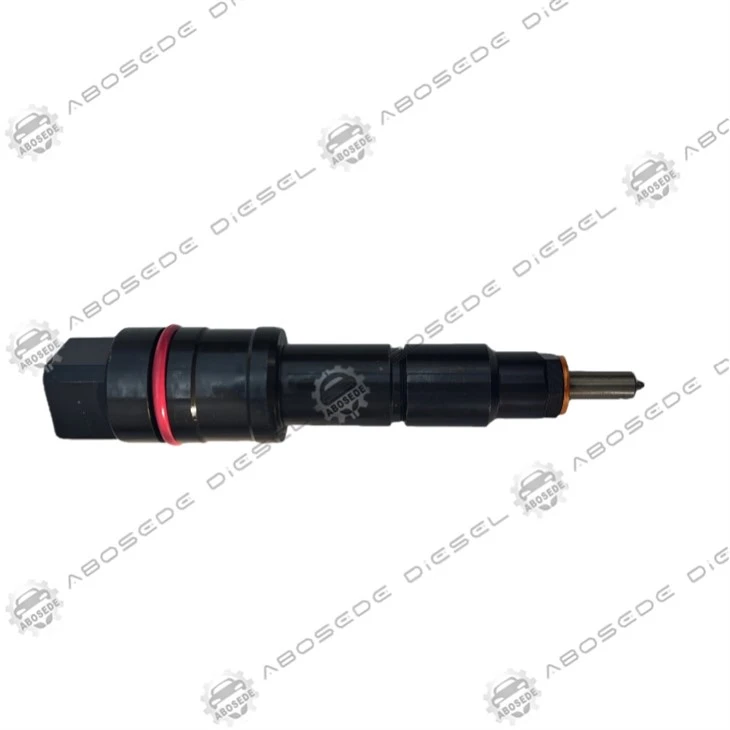

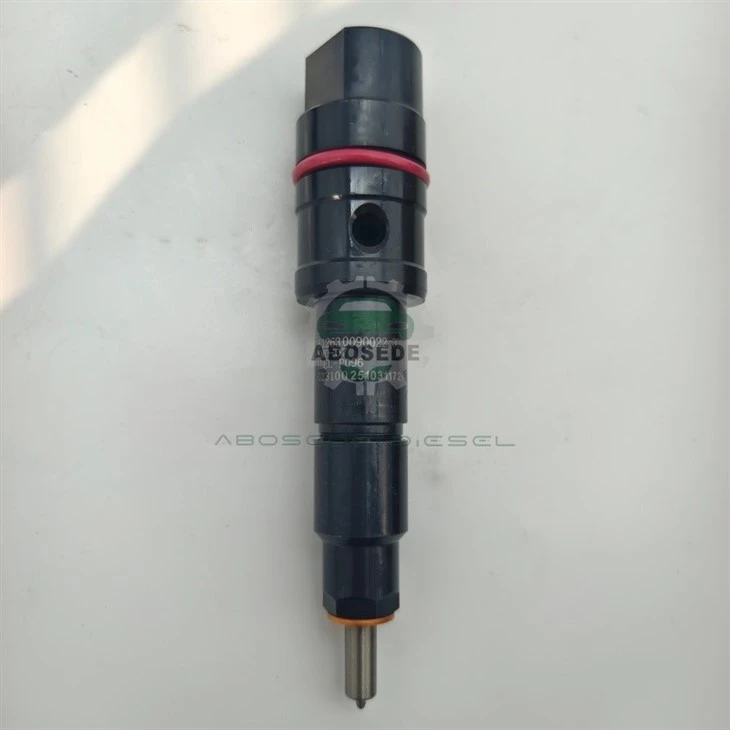
612630090022 Injector: The Thermal Argument Is Built on a Cast-Iron Head — the Engines Listed Have Aluminium Heads, and Correcting the Material Reverses the Conclusion
1. Product:612630090022
2. Compatible Equipment: Diesel Fuel Injection Systems
3. Manufacturer: Aftermarket OEM Replacement
4. Condition: Brand New, Fully Tested
5. Origin: ABOSEDE
6. Shipping period: 3-5 business days
7. Payment terms: T/T, Western Union, PayPal
- Fast Delievery
- Quality Assurance
- 24/7 Customer Service
Product Introduction
A listing for the 612630090022 warns that torquing the through-bolt on a hot engine raises the preload by 17 percent and risks crushing the piezo stack. The warning rests on one assumption: that the bolt and the cylinder head expand at nearly the same rate. The page states the bolt's coefficient at 10.2×10⁻⁶ per °C and matches it to a cast-iron head at 10.8. The engines named on the same page - OM646, OM651, the 2.0 TDI family - have aluminium heads, and aluminium expands at roughly 23×10⁻⁶ per °C. Change that one input and the warning inverts.
🌡️ Two materials, a factor of two
The head grows about twice as fast as the bolt for the same temperature rise. The bolt passes through the injector body and anchors in the head, so the distance between the anchor and the clamping face is set by the head. When the head heats, that distance grows faster than the bolt's free length, and the bolt is stretched further than its own expansion would produce. Stretch is preload. A head that grows faster than the bolt therefore adds preload as the engine warms, and it adds it by the difference between the two coefficients, not by the bolt's coefficient alone.
On a cast-iron head the difference is 0.6×10⁻⁶ per °C, which over a hundred degrees is negligible. On an aluminium head the difference is about 13×10⁻⁶ per °C, which over the same span is more than twenty times larger. The page's own thermal logic, applied to the engines it names, predicts a preload increase on warming, not the relaxation it describes elsewhere.
📐 Where the preload actually goes
A through-bolt joint has five elements in series: the bolt, the injector body, the spacer sleeve, the piezo stack and the head. Each has its own stiffness, and the preload divides between them in proportion to those stiffnesses. The bolt stretches; the stack compresses. The ratio of the two displacements is the ratio of their stiffnesses, and that ratio is what decides how much of the bolt's elongation becomes stack compression.
This is why the angular tightening figure matters more than the torque figure. Torque overcomes friction, and friction varies with lubrication and thread condition by tens of percent. The angle turns a known number of thread pitches and therefore imposes a known elongation, provided the bolt has not already yielded. A bolt torqued to the angle on a second installation has less remaining elongation, and its preload is lower for the same angle. The page's advice to use a new bolt is correct, and the reason is mechanical rather than commercial.
🔩 Preload loss and over-stress are two different failures
The page describes both, and they act in opposite directions. Preload loss lets the stack enter tension during the injection pulse, which is what depolarises the ceramic and reduces stroke. Over-stress compresses the stack past its limit, which cracks it. The first shows up as a gradual loss of delivery; the second as a sudden failure. A technician who reads only one of the two will misdiagnose the other.
The page quotes a crush limit of 150 MPa but never states the stack's cross-sectional area, so the figure cannot be converted into a force and cannot be compared with the 14.5 kN preload it gives. Without the area, the limit and the preload are two numbers in different units that never meet.
🔌 The table's electrical cell
The specification table lists a solenoid resistance of 0.38 Ω at 20 °C. A piezo actuator has no winding and no DC resistance; it presents a capacitance, typically measured in microfarads, and it is driven by a voltage of 120 to 150 V rather than by a current. The cell contradicts the architecture the page describes in its own text. Either the table was copied from a solenoid injector listing, or the unit in the box is not the piezo type the page claims.
❓ FAQ: Preload and Drive-Type Questions Buyers Actually Raise
Q1: Should the through-bolt be torqued hot or cold?
A: Follow the engine manufacturer's procedure. The page's reasoning rests on a cast-iron head; the engines it lists have aluminium heads, which change the direction of the thermal effect.
Q2: Why does the head material change the preload direction?
A: The head sets the distance between the anchor and the clamping face. A head that expands faster than the bolt stretches the bolt further and adds preload as it warms.
Q3: Why is angular tightening preferred over a torque figure alone?
A: Torque is consumed by friction, which varies widely. The angle imposes a known elongation, provided the bolt has not already yielded.
Q4: Can the bolt be reused?
A: No. The angular phase takes the bolt into its plastic range. A second use reaches the same angle with less remaining stretch and therefore less preload.
Q5: Why does the table list a solenoid resistance for a piezo injector?
A: That cell contradicts the architecture described in the text. A piezo actuator presents capacitance, not DC resistance. Ask the supplier to confirm the drive type and the connector pin count.
Q6: What should the purchase order include?
A: Engine code, ECM part number, drive type, bolt part number and single-use status, preload with the stack area, angular tightening specification, and condition grade.


Flexible Payment Methods for Your Convenience
To make your purchasing experience smooth and easy, we offer a variety of secure payment options:

Bank Transfer
Pay directly in 15 supported currencies.

Western Union
Quick and global money transfers.

PayPal
Safe and convenient online payment.

Alibaba
Enjoy extra protection with trusted Alibaba transactions.
We're here to make your order process worry-free - choose the payment method that works best for you!
Shipping Made Simple

Customer reviews

Hot Tags: 612630090022 Injector: The Thermal Argument Is Built on a Cast-Iron Head — the Engines Listed Have Aluminium Heads, and Correcting the Material Reverses the Conclusion, China 612630090022 Injector: The Thermal Argument Is Built on a Cast-Iron Head — the Engines Listed Have Aluminium Heads, and Correcting the Material Reverses the Conclusion manufacturers, suppliers, factory, Diesel Fuel Injector 28337917, KIA Diesel Fuel Injector 28387256 for Common Rail Applications, DOOSAN Common Rail Injector, Diesel Injector 400903 00043D, 33800 2A650 Diesel Injector, Fuel Injector 28347042 DOOSAN

