


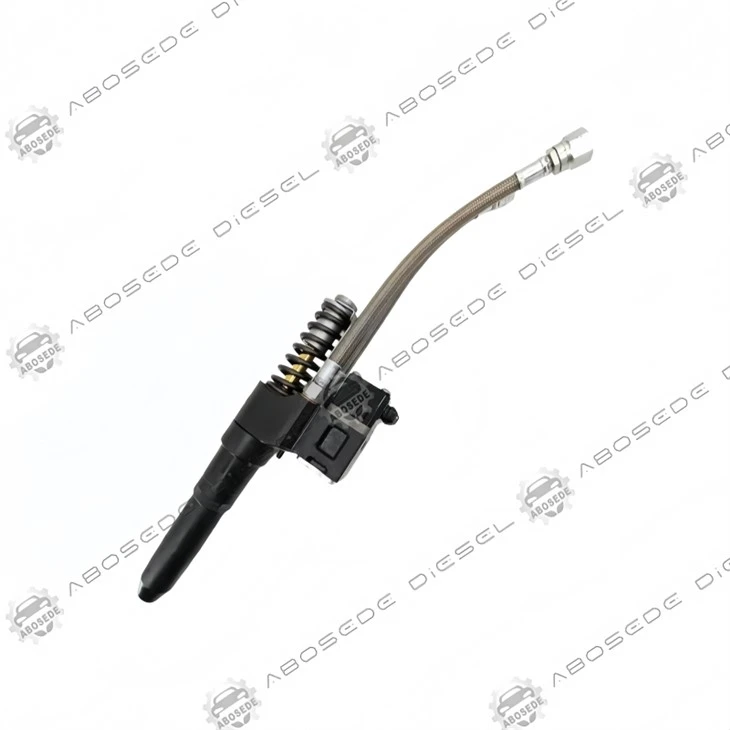

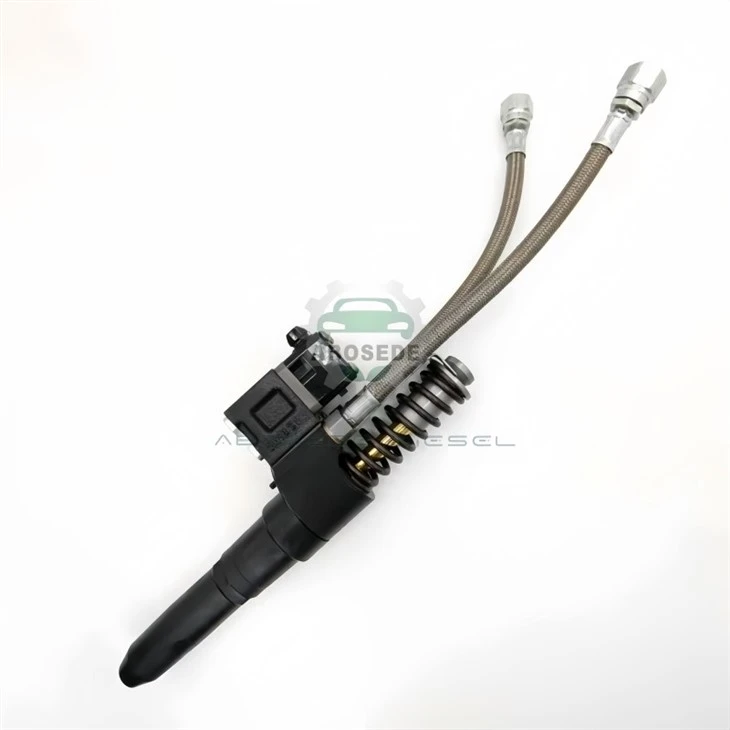
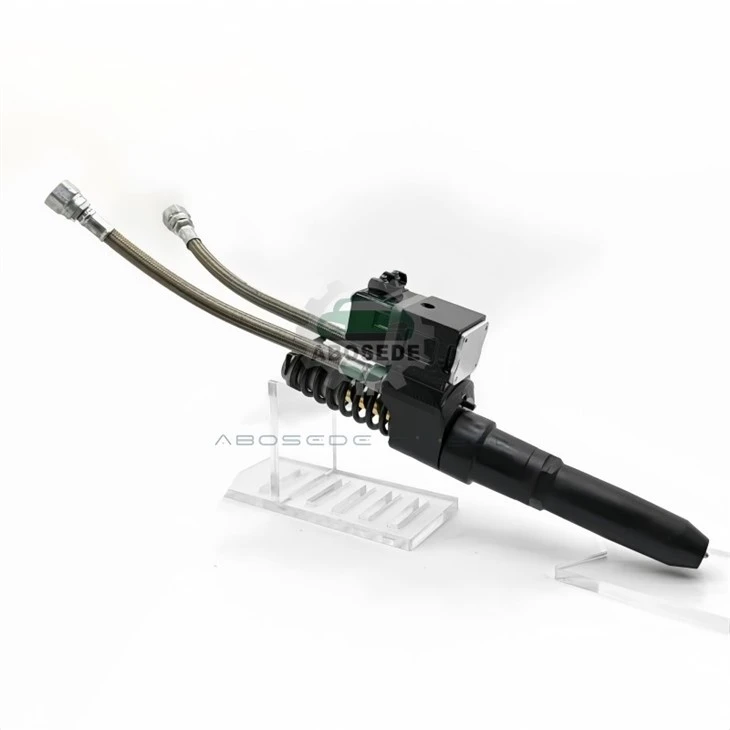
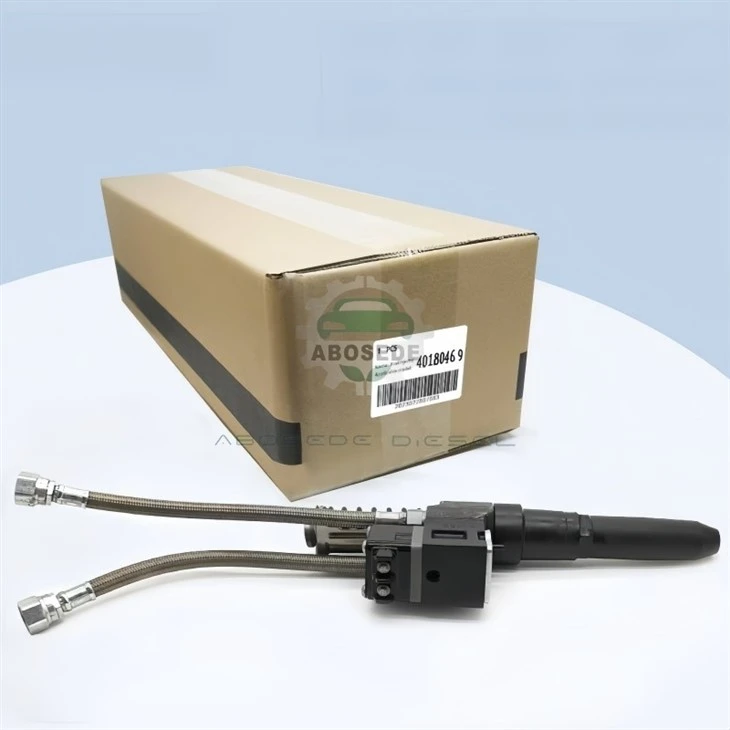
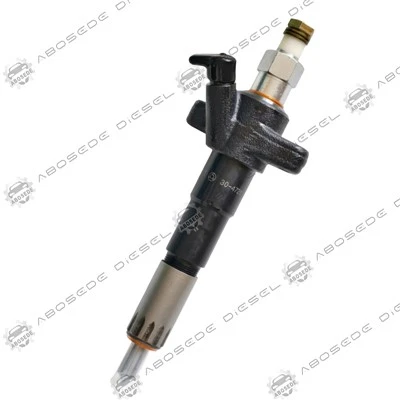
40180469 DTL Second‑Generation Solenoid Injector With Integrated High‑Pressure Pipe – Optimised For Reduced Return Flow
1. Product:40180469
2. Compatible Equipment: Diesel Fuel Injection Systems
3. Manufacturer: Aftermarket OEM Replacement
4. Condition: Brand New, Fully Tested
5. Origin: ABOSEDE Diesel
6. Shipping period: 3-5 business days
7. Payment terms: T/T, Western Union, PayPal
- Fast Delievery
- Quality Assurance
- 24/7 Customer Service
Product Introduction
The DTL injector platform has undergone significant refinement since its introduction in the early 2000s. The 40180469 represents a second‑generation DTL design, distinguished by a revised internal hydraulic circuit that reduces the return‑flow rate by approximately 18% compared to the earlier 40120514 series. This reduction in leakage is not merely a marginal improvement-it translates directly to lower parasitic load on the high‑pressure pump, reduced fuel heating, and improved injector response consistency at high operating temperatures. This article focuses on the specific performance characteristics of the 40180469, its revised internal architecture, and the practical implications for workshops and fleet operators.
⚙️ Second‑Generation Hydraulic Architecture – Lower Leakage, Faster Response
The 40180469 incorporates a re‑engineered control valve block with a reduced‑volume control chamber. The smaller chamber volume (approximately 12 mm³, down from 15 mm³) means that less fuel must be displaced to open the needle, resulting in a faster opening time and a shorter minimum energising time for pilot injections.
Key hydraulic improvements:
Control chamber volume : 12 mm³ (versus 15 mm³ in first‑generation DTL) – a 20% reduction
Return‑flow rate (at 1,600 bar, 40 °C) : 14 – 18 ml/min (versus 18 – 25 ml/min in first‑generation)
Needle opening time (energising → start of injection) : 280 μs (versus 320 μs) – a 12.5% improvement
Minimum stable pilot quantity : 0.8 mm³ (versus 1.0 mm³) – enabling smoother idle and reduced combustion noise
Solenoid specifications:
Coil resistance : 0.55 – 0.75 Ω (at 20 °C)
Peak current : 16 – 19 A (opening pulse)
Hold current : 8 – 10 A
Maximum solenoid temperature : 140 °C (short‑term, during regeneration events)
🔧 Integrated Connecting Pipe – Precision‑Matched for the 40180469
The injector is supplied with a dedicated high‑pressure pipe, calibrated specifically for the 40180469's internal volume and flow characteristics. The pipe's internal diameter and length are not interchangeable with other DTL variants-using the wrong pipe will alter the injection timing by up to 2° crankshaft angle.
Pipe specifications:
Tube outer diameter : 6.0 mm
Tube inner diameter : 2.5 mm (maintained with ±0.03 mm tolerance)
End fittings : M14 × 1.5 (rail), M12 × 1.5 (injector) – with 60° cone sealing surfaces
Fitted O‑ring : NBR (nitrile butadiene rubber), rated for high‑pressure fuel and biodiesel blends
📊 Application Mapping – Engine Families & Cross‑Reference
The 40180469 is calibrated for engines in the 4.0‑7.0 litre displacement class, including:
| Engine Manufacturer | Model Series | Typical Application |
|---|---|---|
| Cummins | ISB4.5, QSB4.5 | Light‑medium trucks, buses |
| MAN | D04, D08 (Euro V/VI) | Medium‑duty commercial vehicles |
| Mercedes‑Benz | OM904, OM906, OM926 | Atego, Axor, Econic |
| Volvo | D5, D6, D7 | Trucks, construction equipment |
| Deutz | TCD 4.1, TCD 5.0 | Off‑highway, agricultural |
| Perkins | 854F‑E34T, 1204F | Industrial, gensets |
Note: This injector is not compatible with the 40120514 without ECU calibration changes-the different flow and response characteristics will cause cylinder‑to‑cylinder imbalance if mixed in the same engine.
🔬 Diagnostic Features – Internal Pressure Sensor Compatibility
The 40180469 body is pre‑machined with a port that can accept a piezoelectric pressure sensor (not included). This port allows workshops to install a pressure sensor to capture the injector's internal pressure waveform-a powerful diagnostic tool for assessing needle lift timing and control valve function without removing the injector from the engine. The port is sealed with a blanking plug and does not affect normal operation.
❓ Frequently Asked Questions
Q1: How do I identify a 40180469 versus an older DTL injector just by looking at it?
A: The 40180469 has a distinct laser‑etched marking on the top of the solenoid housing (visible when the electrical connector is removed). It also has a slightly different control valve block profile-the return‑flow port is angled differently compared to the 40120514.
Q2: Can I use the 40180469 in an engine that originally had a 40120514, and what are the risks?
A: Not without ECU recalibration. The different internal volume and flow characteristics will cause cylinder‑to‑cylinder imbalance. If you install one 40180469 with three 40120514 units, the cylinder with the new injector will deliver less fuel (due to the lower return flow), causing rough running and potential over‑fuelling in the other cylinders.
Q3: Why is the return‑flow rate lower on the 40180469, and what does that mean for the fuel system?
A: The lower return flow is achieved through tighter clearances in the control valve and a smaller control chamber volume. This means less fuel is recirculated, which reduces fuel heating and decreases the load on the lift pump-improving overall system efficiency.
Q4: What is the correct method to check the injector's internal pressure waveform using the diagnostic port?
A: Install a piezoelectric pressure sensor into the port (thread size M6 × 0.5) and connect it to an oscilloscope. You should see a pressure trace that shows the needle opening (pressure drop) and closing (pressure rise). A slow pressure drop indicates a sticky control valve; a delayed rise indicates a worn needle guide.
Q5: How do I clean the nozzle if I suspect clogging, without removing the injector?
A: Do not attempt in‑situ cleaning-it is not effective and can cause more damage. Remove the injector, disassemble the nozzle (using the correct tool), and inspect the holes using a magnifying glass. If the holes are blocked, use an ultrasonic cleaner with a suitable solvent (e.g., diesel‑compatible cleaning fluid). Do not use wire probes-they will enlarge the holes and alter the flow rate.
Q6: What is the typical interval for replacing the O‑rings and washers on the pipe connections?
A: Always replace the O‑ring and the copper washer (if used) every time the pipe is disconnected. The O‑ring hardens over time and will not seal correctly if re‑used. Use only original‑size O‑rings-aftermarket O‑rings can be slightly thicker or thinner, affecting sealing pressure.
Basic Information about the Company


Flexible Payment Methods for Your Convenience
To make your purchasing experience smooth and easy, we offer a variety of secure payment options:

Bank Transfer
Pay directly in 15 supported currencies.

Western Union
Quick and global money transfers.

PayPal
Safe and convenient online payment.

Alibaba
Enjoy extra protection with trusted Alibaba transactions.
We're here to make your order process worry-free - choose the payment method that works best for you!
Shipping Made Simple

Customer reviews

Hot Tags: 40180469 dtl second‑generation solenoid injector with integrated high‑pressure pipe – optimised for reduced return flow, China 40180469 dtl second‑generation solenoid injector with integrated high‑pressure pipe – optimised for reduced return flow manufacturers, suppliers, factory, 33800 2A650 Diesel Injector, Common Rail Injector 33800 2A650, Diesel Fuel Injector 33800 2A650 for KIA, EJBR04401D Delphi diesel injector for SsangYong, Fuel Injector 28347042 DOOSAN, R00002D High Pressure Injector MERCEDES BENZ
You Might Also Like
-
108030-4711 Common Rail Injector – Hydraulic Servo B...
-

Komatsu 6742-11-3130 – The Injector That Maintains I...
-

Cummins 4948366 Mechanical Unit Injector – The 5.9L ...
-

Common Rail Fuel Injector W104008896693 (often Cross...
-

RE48786 = 29279 = 48786 Injector — Restoring Injecti...
-

High-Quality 0414701 Diesel Injector For Volvo Engin...
