


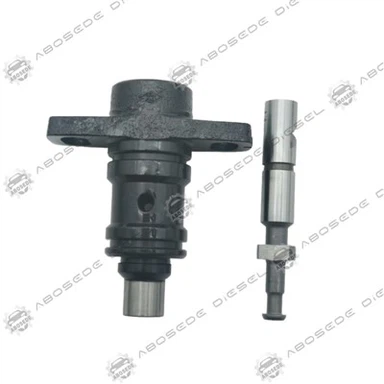
096400-1481 VE Pump Head Rotor: Phase Matching and Hydraulic Lock Prevention During Installation
1. Product: 096400-1481
2. Compatible Equipment: Diesel Fuel Injection Systems
3. Manufacturer: Aftermarket OEM Replacement
4. Condition: Brand New, Fully Tested
5. Origin: ABOSEDE DIESEL
6. Shipping period: 3-5 business days
7. Payment terms: T/T, Western Union, PayPal
- Fast Delievery
- Quality Assurance
- 24/7 Customer Service
Product Introduction
Replacing a distributor pump head rotor (096400-1481) is one of the most mechanically unforgiving tasks in diesel repair. Unlike common rail injectors that rely on electronic trim codes to correct for installation variance, a VE pump head relies entirely on exact mechanical phase alignment. If you slide the 096400-1481 onto the pump shaft just one spline off, or if you fail to properly prime the internal chambers, the engine will either fail to start, run with severe white smoke, or catastrophic internal seizure will occur within seconds of cranking. This article bypasses the theoretical physics and focuses strictly on the installation traps, phase matching, and the physics of hydraulic lock.
🧩 The Phase Trap: Why Perfect Static Timing Isn't Enough
In a common rail system, static timing is verified by cam and crank sensors, and the ECM handles the rest. In a VE pump, the head rotor contains the plunger and the distributor ports. The phase relationship between the rotating plunger, the distributor ports, and the engine's camshaft must be mechanically exact.
When installing the 096400-1481, you must verify the internal coupling phase. The pump drive shaft connects to the internal rotor via a slotted coupling. If the coupling is inserted 180 degrees out of phase, the distributor port will open to the wrong injector line. The engine will either not fire at all or fire on the exhaust stroke, causing violent backfiring and potential valve damage.
| Installation Metric | Critical Requirement | Consequence of Failure |
|---|---|---|
| Coupling Phase | Coupling slot must align with the internal plunger peg | Fuel delivered to wrong cylinder port; engine fails to fire |
| Timing Pin Fit | Pin must slide into the pump flange and internal rotor freely | Forced pin shears the distributor head; retards or advances timing drastically |
| Plunger Clearance | Plunger must slide inside the bore under its own weight with diesel film | Dry assembly = instant micro-welding and catastrophic seizure |
| Delivery Valve Torque | 45–55 Nm (typically) | Uneven torque distorts the delivery valve holder, causing line pressure drop |
🔬 The Hydraulic Lock: Why New Rotors Seize Instantly
The most common cause of premature 096400-1481 failure is not manufacturing defect; it is hydraulic lock.
The rotor and plunger operate with a clearance measured in microns (typically 2.5 to 3.5 µm). When you install a new head rotor dry, the microscopic surface roughness of the plunger and barrel creates high friction. If you crank the engine without bleeding the high-pressure lines and filling the pump head with clean diesel, the plunger is forced upward by the cam ring without a lubricating film.
The friction generates microscopic heat, causing the steel to expand. The clearance closes, the plunger grabs the barrel, and the internal drive shaft shears. You will often find metal shavings and a completely seized plunger immediately after a "new" installation.
🛠️ The Bleeding Protocol and Dynamic Verification
To prevent seizure and ensure the phase is correct, follow this strict sequence:
Pre-lubrication: Before inserting the plunger into the 096400-1481 rotor, dip it in clean, filtered diesel. It must slide in smoothly and rotate freely by hand.
Coupling Alignment: Rotate the pump shaft until the coupling slot aligns with the plunger peg. Gently slide the rotor assembly on. Do not force it.
Prime the Housing: Before cranking the engine, loosen the high-pressure lines at the injectors and crank the engine with the fuel shut-off solenoid disconnected. This prevents fuel from being injected into the cylinder while you wait for pressure to build. Once diesel weeps from the lines, torque them and reconnect the solenoid.
Verify Housing Pressure: After starting, measure the internal transfer pressure. For this rotor, it should typically be between 4 and 6 bar at idle. If it is lower, the internal vane pump is weak, and the timing advance will not function, leading to retarded injection and white smoke.
❓ FAQ: Solving the Real Installer Nightmares
Q1: I installed the rotor and set the timing, but the engine sounds like it's out of phase and won't start. What went wrong?
This is the classic "180-degree out" error. The pump shaft coupling may have been mated with the internal plunger peg half a turn off. You must remove the rotor, rotate the internal shaft to align the coupling slot precisely, and reinsert. Do not force the timing pin; it should slide in with light finger pressure.
Q2: The engine started, but it suddenly revved uncontrollably (runaway) and shut down. Is the new rotor defective?
This usually indicates a stuck control sleeve or governor linkage, not the rotor itself. During installation, the governor sleeve might have been caught on the rotor edge, causing it to bind. When the engine started, the governor could not pull the sleeve back, delivering maximum fuel. The pump must be removed and the sleeve engagement verified.
Q3: Why is there heavy white smoke at idle after the rebuild?
White smoke is unburned fuel caused by severely retarded timing. Check the cold start advance mechanism first. If the solenoid or wax element is not extending, the timing stays at base idle. Second, verify internal transfer pressure. If the vane pump is weak, the dynamic advance piston will not move, leading to retarded timing across the RPM range.
Q4: Can I reuse the old delivery valves and springs with this new rotor?
You shouldn't. The 096400-1481 rotor has new, sharp distributor ports. If you use worn delivery valves with pitted seats, they will not hold the residual line pressure required to prevent fuel from draining back to the pump. This causes hard starts and erratic idle. Always replace the delivery valves and copper washers.
Q5: Why does the engine have a rough idle that smooths out at high RPM?
This points to a phase mismatch or a leaking delivery valve. At low RPM, the pressure wave from the pump is slow, so a leaking delivery valve allows the fuel to bounce back, causing inconsistent injection quantity. At high RPM, the pump generates volume so quickly that the leak is masked. Check the torque on the delivery valve holders; uneven torque can cause micro-leaks.
Q6: What is the biggest cause of premature wear on the new rotor?
Fuel contamination. The clearance between the plunger and barrel is so tight that microscopic particles (water or rust) act like sandpaper. The rotor can be destroyed in under 1,000 kilometers if the fuel filter is not replaced and the water separator is not functioning. Always flush the fuel lines before installing a new head rotor.


Flexible Payment Methods for Your Convenience
To make your purchasing experience smooth and easy, we offer a variety of secure payment options:

Bank Transfer
Pay directly in 15 supported currencies.

Western Union
Quick and global money transfers.

PayPal
Safe and convenient online payment.

Alibaba
Enjoy extra protection with trusted Alibaba transactions.
We're here to make your order process worry-free - choose the payment method that works best for you!
Shipping Made Simple

Customer reviews

Hot Tags: 096400-1481 VE Pump Head Rotor: Phase Matching and Hydraulic Lock Prevention During Installation, China 096400-1481 VE Pump Head Rotor: Phase Matching and Hydraulic Lock Prevention During Installation manufacturers, suppliers, factory, abosede accessories
You Might Also Like
-

IW5 Plunger — Precision Pump Element For High-Perfor...
-

F176 Delivery Valve for WEIFU/WUXI Pump Families
-

0928400473 Fuel Injection Pump Regulator Metering Co...
-
U162 Original Weifu Fuel Pump Plunger Element XY95PL...
-

SP6208 Original BYC Fuel Pump Plunger Element SAY120...
-

Common Rail Injector Repair Kit F00RJ03513 For Bosch...
